
[Seminar Highlights] Prof. Chien-Te Fan, Prof. Ching-Wen Hsueh, Dr. Lih-Chyi Wen: Analyzing CBAM from Research Angle, What are the Risks and Opportunities of TW CBAM?
On January 17th, 2025, the Taiwan Carbon Solution Exchange (TCX), Center for Carbon Research and Solution (CCRS) at National Sun Yat-sen University (NSYSU), and the Taiwan Stock Exchange (TWSE) jointly organized the “2025 Taiwan Carbon Border Adjustment Mechanism (CBAM) Policy Seminar”. Representatives from academia, industry, and government attended to discuss Taiwan’s approach to CBAM, offering their perspectives and suggestions on this yet-to-be-finalized policy.
Representatives from academia and research include: Professor Chien-Te Fan, Associate Dean of College of Sustainability at National Tsing-Hua University; Ching-Wen Hsueh, Associate Professor of the Department of International Business at National Chengchi University; Tzu-Luen Lin, Associate Professor of the Department of Political Science at National Taiwan University; and Dr. Lih-Chyi Wen, Business Partner of ERM Taiwan Co. Ltd. (ERM TW).
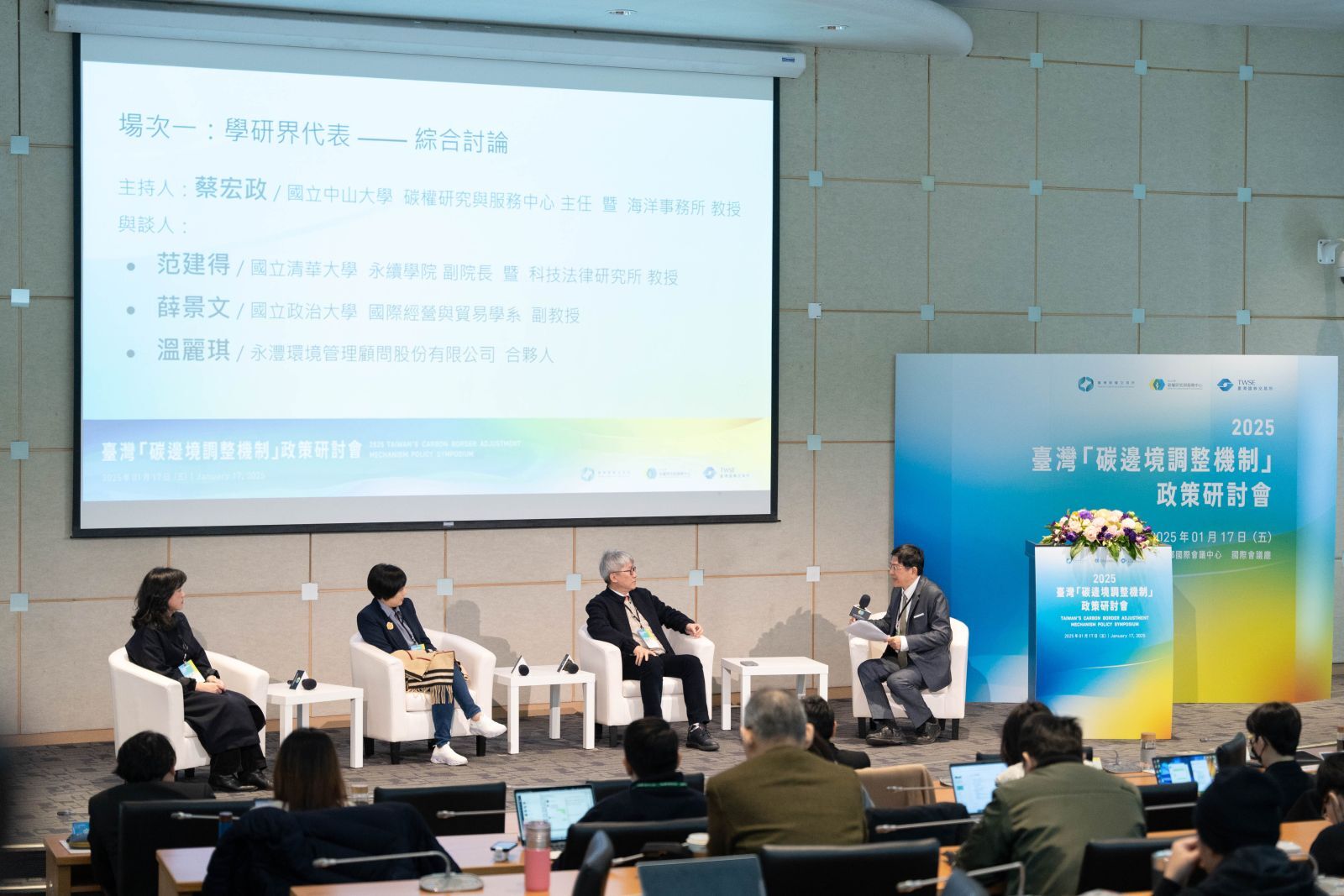
(from left) Lih-Chyi Wen, Business Partner of ERM Taiwan Co. Ltd.; Ching-Wen Hsueh, Associate Professor of the Department of International Business at National Chengchi University; Chien-Te Fan, Associate Dean of College of Sustainability at National Tsing-Hua University; Hung-Jeng Tsai, Host of the seminar and Director of the CCRS at NSYSU.
Chien-Te Fan: The purpose and challenges of implementing CBAM within the current legal framework of Taiwan
As for formulating a Carbon Border Adjustment Mechanism (CBAM) in Taiwan, Chien-Te Fan pragmatically raised two essential domestic legal prerequisites: a scientific foundation and a legal framework. He pointed out, “The most critical aspect of implementing CBAM is having an accurate understanding of the carbon content of applicable imported goods. Currently, we lack investigation mechanisms and the necessary data.”
Taiwan's primary legal basis for adopting CBAM is Article 31 of the Climate Change Response Act. “The design of Article 31 essentially corresponds to the EU ETS, incorporating a concept similar to certificates within the trading allowance, or a fee payment.” However, the implementation still faces challenges due to unclear definitions. For example, only Article 37 appears to address carbon footprint reporting for officially announced imported product categories, but it is insufficient as a basis for enforcing Article 31.
Chien-Te Fan stressed, “We must establish a set of clear rules that align with the carbon fee boundaries (i.e. scope of regulation or subject) to serve as the legal basis for requiring imported goods to declare carbon content and be taxed accordingly.” Without this, it would be difficult to define a fair cost standard for both domestic and foreign products. He admitted, “We can see that there are many gaps in the current legal framework that need to be filled.” Chien-Te Fan suggested that Taiwan should first collect carbon fees domestically before it has the “legitimacy” to launch CBAM; otherwise, Taiwan may risk violating the WTO’s principle of non-discrimination in trade.
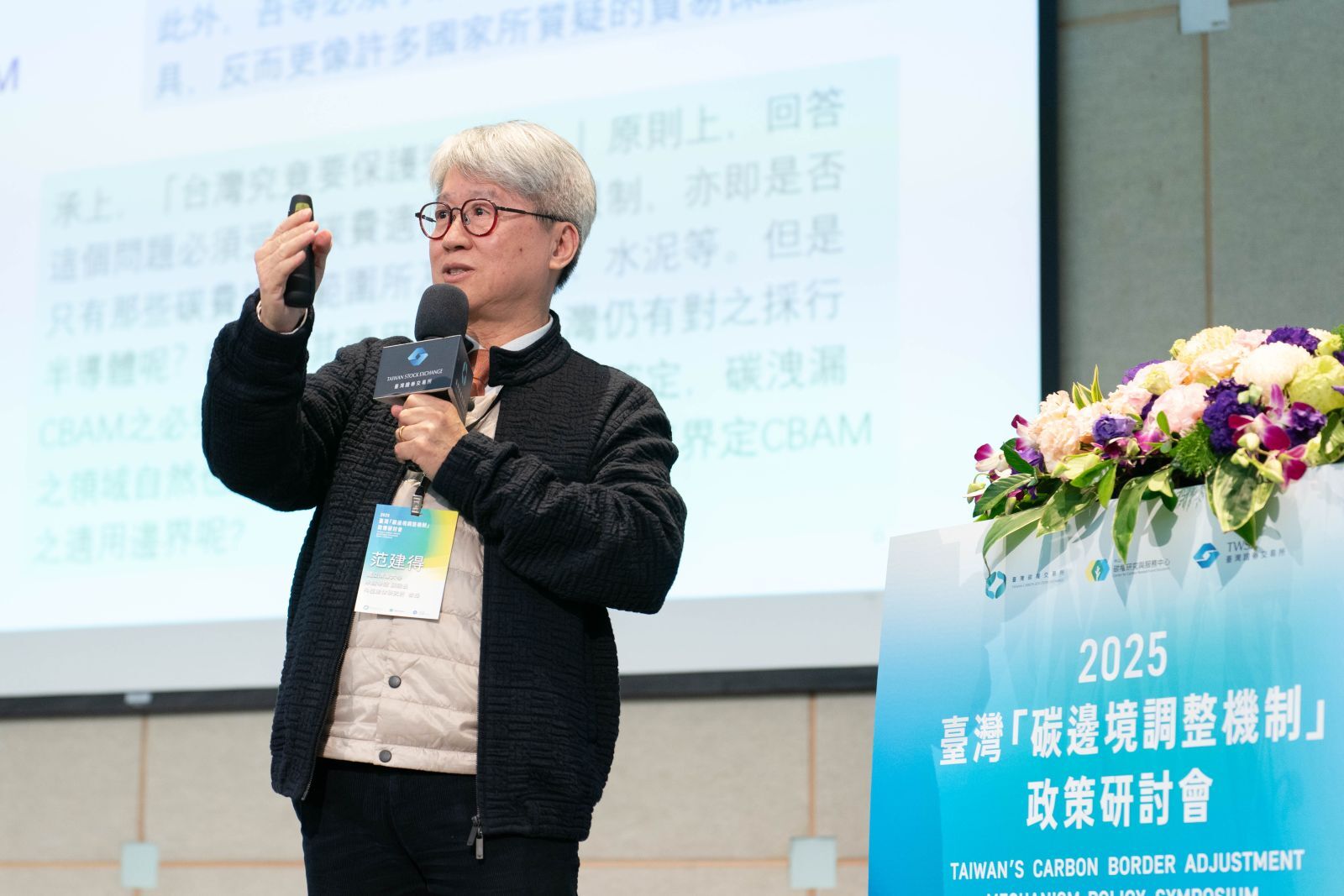
What is CBAM meant to protect?
Perhaps all sectors should take a step back and ask “why are we implementing CBAM?” Chien-Te Fan believes, “The essence of CBAM is not necessarily a carbon reduction tool; rather, it resembles what many countries criticize as a trade protection weapon.” Whether carbon tariffs should be used as a measure of trade protection is something that must be carefully considered. Part of the reasons that the EU and the UK are promoting CBAM is to resolve trade dumping and to revive their struggling manufacturing industries. However, their conditions are significantly different from Taiwan which is more vibrant in industrial development.
Chien-Te Fan candidly stated, “I honestly don’t think we have a clear understanding of what CBAM is meant to protect. If we’re not even sure what we’re protecting, then it’s difficult to define the scope of carbon leakage. So how can we clearly determine the boundaries of CBAM application? CBAM comes with a high cost, is it truly our top priority?”
Ching-Wen Hsueh: Challenges of formulating CBAM in Taiwan through the lens of Brussels Effect
The “Brussels Effect” refers to the phenomenon where the EU extends its regulations beyond its borders through market mechanisms, leading to global practices. Ching-Wen Hsueh explained, “We are essentially a rule-taking country. Our system of carbon taxes, carbon fees, and now the CBAM, has all stemmed from the EU’s initiative, which has caused impacts at the global scale.”
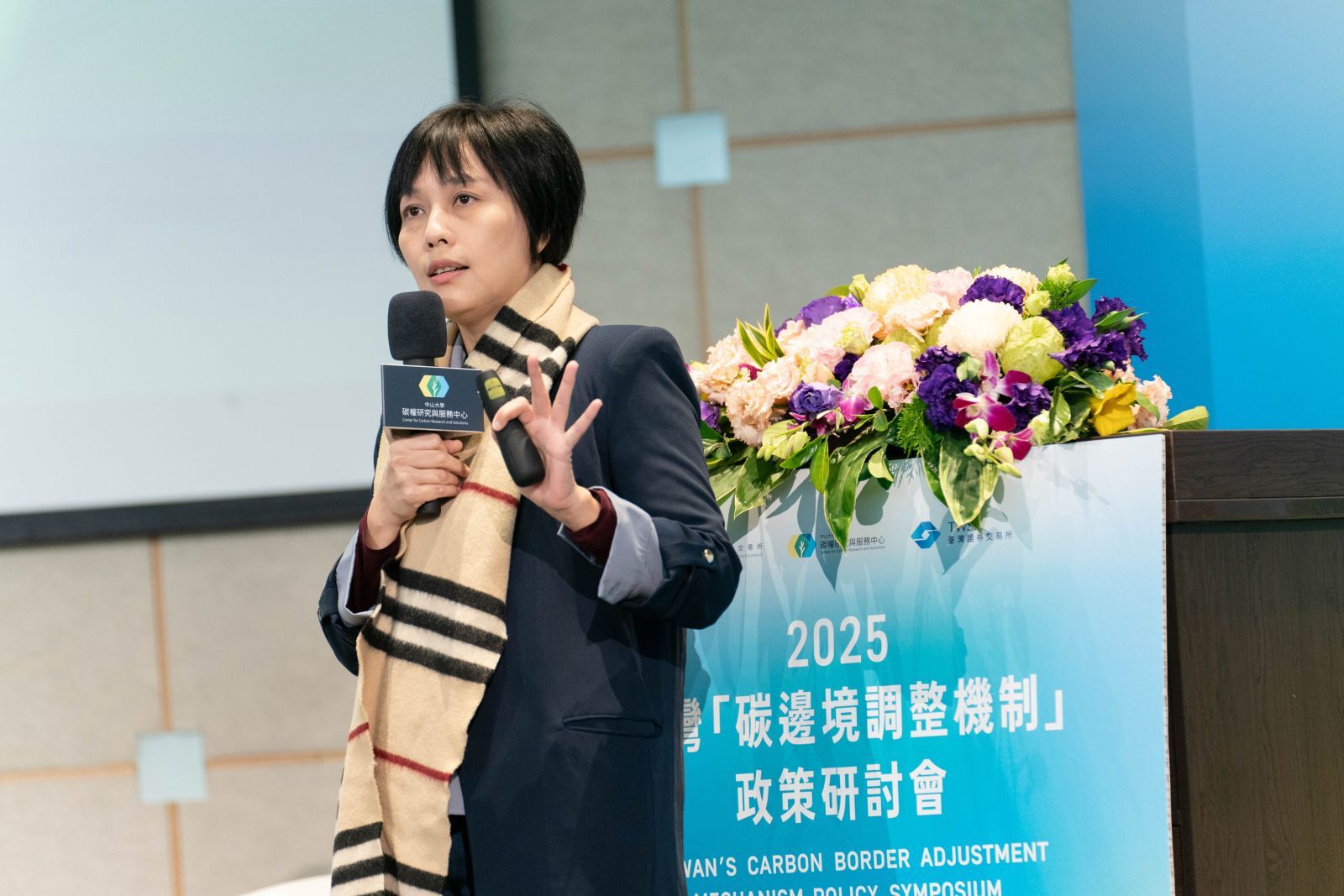
Is it necessary for Taiwan to implement CBAM alongside carbon taxes or carbon fees? What considerations should be taken into account?
-
The Brussels Effect may weaken: the expansion of industries covered by CBAM could cause decline in market influence, and various regions might circumvent regulations by producing EU-specific products. Also, the EU CBAM regulations may diverge from WTO rules or some other countries.
-
Triggering a trade law crisis: If Taiwan follows the ETS and CBAM models, calculation issues may arise. ETS calculates and imposes charges based on emitters or emission sources, while CBAM is product-based. Once the system shifts to product-based charges, it falls under WTO regulations and may face national treatment challenges. How can we ensure the same emission calculation methods are used? How can we guarantee consistency in the formulas different countries use to impose carbon charges? How should carbon inventory and offsetting be carried out?
-
Administrative capacity for border management: It is still unclear whether CBAM should be classified as a border measure or a domestic measure. If it is a border measure, who will be the authorized declarant? Which agency has the capability as the verifier? How can the competent authority effectively inspect and verify products?
Ching-Wen Hsueh admitted that how the EU will appropriately transition between CBAM and ETS remains unsure. She suggested that it may not be the right time for Taiwan to follow yet, and it would be better to wait and observe.
Tzu-Luen Lin: Analysis on the impact of CBAM, with perspectives from international environmental politics
Looking back at the evolution of CBAM, when the EU proposed the Green Deal in 2019, CBAM was already included. In fact, as early as 2008 to 2009, the EU connected the policies of energy and climate for the first time, but it's only until 2020 to 2021 that the EU introduced the “20-20-20” targets, aiming to increase renewable energy by 20%, reduce carbon emissions by 20%, and improve energy efficiency by 20%. The EU claimed to implement CBAM in order to protect domestic industries, prevent carbon leakage, and promote the ETS mechanism.
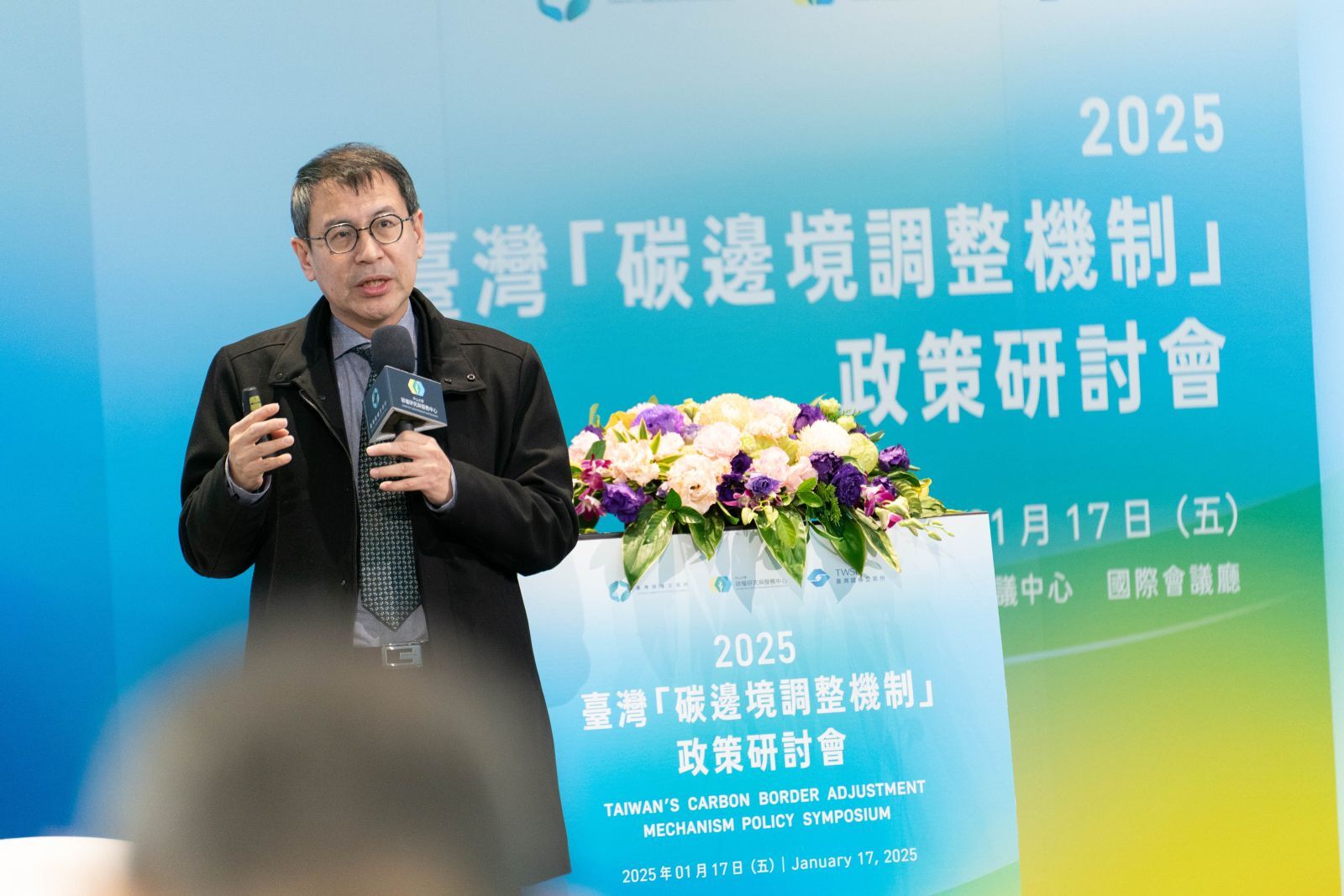
Political and economical challenges of CBAM
Tzu-Luen Lin pointed out that the EU CBAM still faces many challenges, including:
-
(1) The complexity of management is extremely high: the scope of covered industries, emission calculations, and implementation costs all pose significant challenges.
-
(2) Causing emission shifts: Currently, carbon pricing systems cover only 20% of emission sources. The contribution and effectiveness of CBAM in reducing global emissions may be less than 1%.
-
(3) Trade disputes: The BRICS countries have criticized CBAM as a form of discrimination against developing nations, creating significant pressure. Countries may begin to implement similar trade protection mechanisms, potentially leading to regional or international trade wars.
After U.S. President Trump takes office, the world will enter a new state of climate politics. Although the EU has firmly declared that CBAM will be implemented in 2026, the details of its actual execution remain unclear. Tzu-Luen Lin stated, “I don’t think CBAM is a complete solution, but it is a strategic carbon pricing tool, perhaps a way to link Taiwan’s carbon market.” However, ensuring transparency and fairness in its implementation, and avoiding trade conflicts, will be a highly challenging task.
Lih-Chyi Wen: Economic impacts and analysis of CBAM
Even though many remain cautious about whether Taiwan should begin formulating a CBAM now, Lih-Chyi Wen still emphasized that CBAM is more than needed, it's necessary, “CBAM truly aims to prevent carbon leakage and enable fair competition in the global economic market.” She pointed out that over the past 50 years, global biodiversity has declined by 69%, and current regulations and governance systems around the world are not able to respond swiftly enough to crises and transitions.
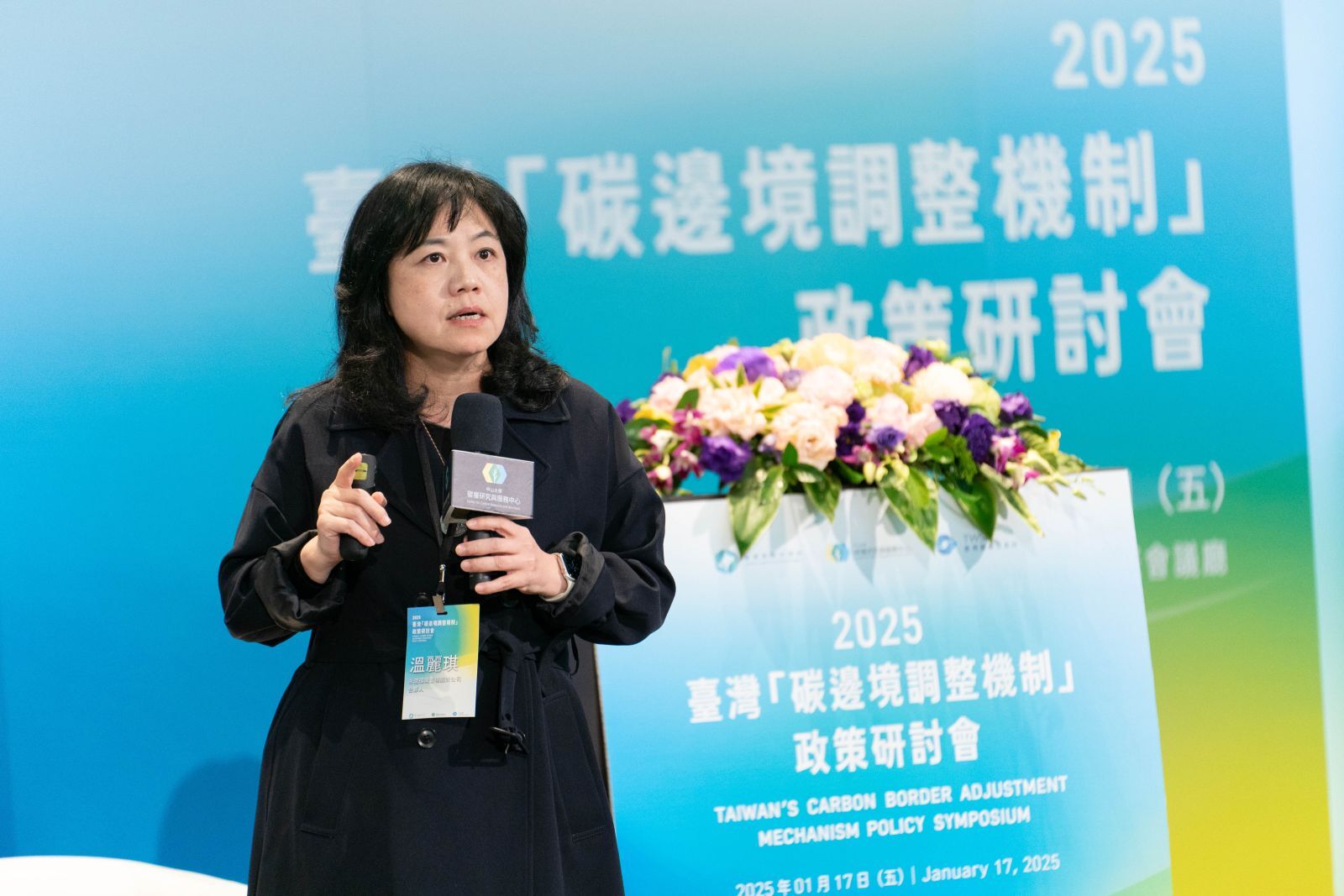
The impact of carbon pricing is immense
To keep global warming within 1.5°C, the carbon price must exceed 200 USD per ton. However, the current pricing in Taiwan is only 10 USD, while Europe's is approximately 100 USD. The G7 has established the "Climate Club" aiming to set a target carbon price internationally and impose a uniform carbon tariff among all non-member countries.
Lih-Chyi Wen shared, “The pressure that corporations are receiving from their clients is intense. Clients are demanding carbon inventories and numerical data, far beyond what most people could have imagined.” As a country heavily reliant on foreign trade, Taiwan’s industries will be significantly affected by the implementation of the EU CBAM, becoming a source of burden and anxiety. Companies must precisely calculate products’ carbon emissions per ton. If they can pay the carbon fee domestically, they can reduce the cost of paying the EU.
Taiwan should establish systems that help facilitate access to data from upstream emissions
Lih-Chyi Wen also believes that the carbon fee boundary and coverage should not be limited to Scope 1 (direct emissions) and Scope 2 (indirect emissions, such as electricity), but should also include Scope 3 (supply chain emissions). “If the emissions from a product occurred in other countries during earlier stages of production, and Taiwan doesn’t have a CBAM, how can you obtain clear data sources?”
Therefore, Taiwan should establish a “cap-and-trade system” and "Taiwan version of CBAM" as early as possible, with calculation methods aligned with international standards. Lih-Chyi Wen emphasized, “If our system can help our corporations make these demands to their suppliers, improve the quality of our data, and reduce business and future costs, I believe that would be an immensely valuable national policy.” She added, “This is about to become the biggest battle affecting the development and competitiveness of Taiwan’s industrial economy, and it will significantly impact our corporations’ ability to respond.”