[Seminar Highlights] Deputy Trade Representative Huai-Shing Yen: Observation on CBAM and International Economics & Trade Negotiations
Dr. Huai-Shing Yen is the Deputy Trade Representative of the Office of Trade Negotiations under Executive Yuan, and the Chairperson of Taiwan Council for US Affairs.
As the implementation date of the EU Carbon Border Adjustment Mechanism (CBAM) draws nearer, many major trading nations are closely monitoring the situation. How will Taiwan respond to the international developments? On January 17th, 2025, the Taiwan Carbon Solution Exchange (TCX), the Center for Carbon Research and Solution (CCRS) of National Sun Yat-sen University (NSYSU), and the Taiwan Stock Exchange (TWSE) jointly hosted the “2025 Taiwan Carbon Border Adjustment Mechanism Policy Seminar”, inviting representatives from academia, industry, and government to share their insights and advices.
In the session featuring government representatives, Ling-Yi Tsai, Director General of Climate Change Administration under the Ministry of Environment; Huai-Shing Yen, Deputy Trade Representative of Office of Trade Negotiations under Executive Yuan; Christoph Saurenbach, Head of Trade Section of the European Economic and Trade Office in Taiwan; and Je-Liang Liou, Director of the Center for Energy and Environmental Research at the Chung-Hua Institution for Economic Research, each shared their observation and suggestions.
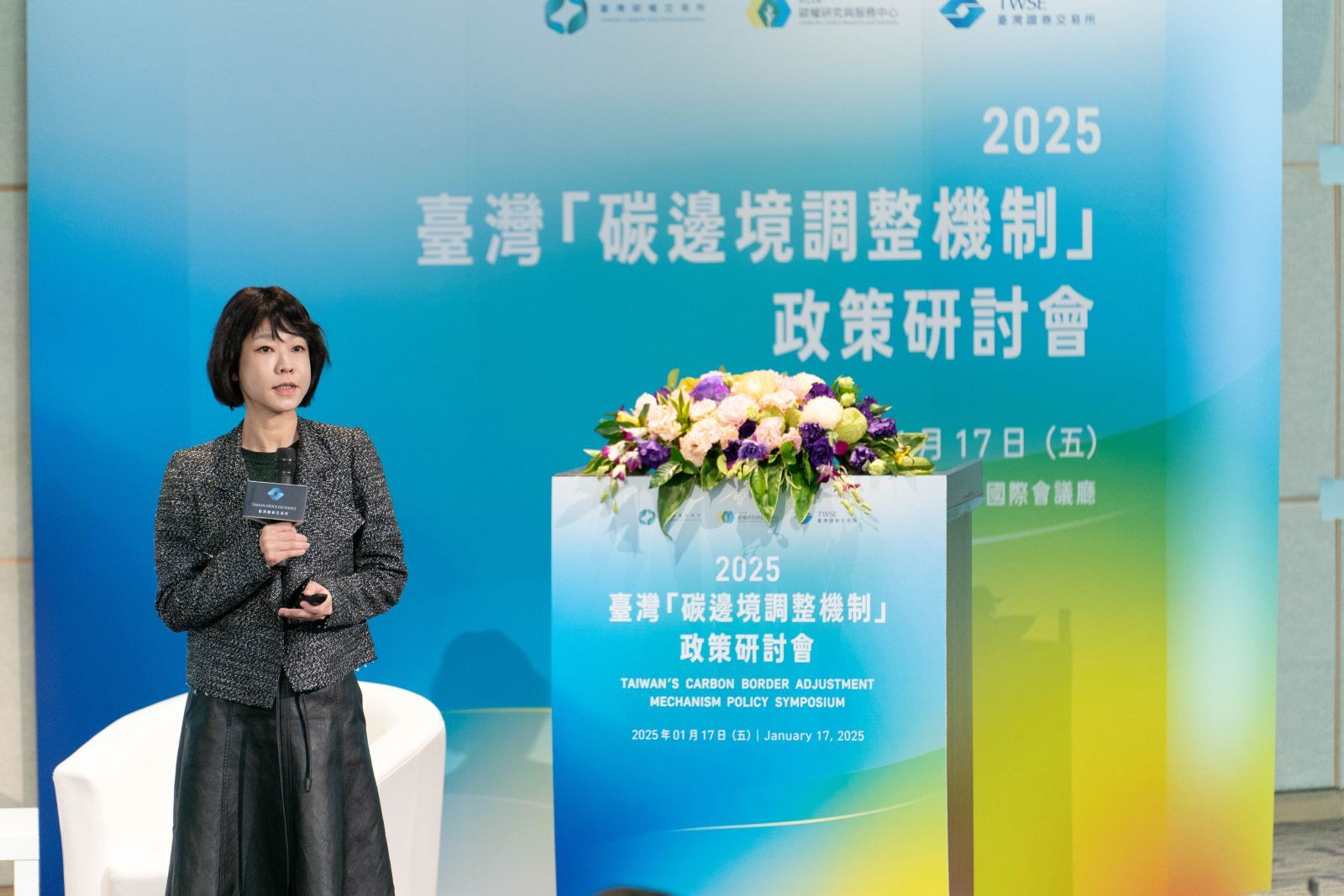
If Taiwan implemented a Taiwan version of CBAM, what concerns and considerations might foreign corporations raise? What should Taiwan prioritize in preparing for such a policy? Huai-Shing Yen shared her observations, “When the EU and the UK implemented their CBAM systems, they spent a long time on data collection and preparation, to prove that the policy wasn’t about protecting their own industries, but rather about pursuing global environmental justice. Therefore, establishing a transparent mechanism is a crucial part in the preparation process.”
If Taiwan plans to implement its own version of CBAM next year, the related authority must publicly announce the action points planned for the next 12 months, the direction of implementation, and the potential impacts on international trade and investment. At the same time, an appropriate public comment period must be provided, including for foreign stakeholders.
The devil is in the details: practical considerations that cannot be overlooked
The major principle in CBAM is a fair treatment between domestic and foreign products. If domestic products are subject to a carbon fee, then imported products should likewise be charged the same. But are there any concerns in EU CBAM under the international trade law? Huai-Shing Yen admitted that we’ll only know for sure once it is officially implemented. However, she pointed out several details that may require attention:
-
How should carbon emissions be determined? How can the taxes and fees levied on domestic products be aligned with those on foreign products to ensure equivalence? The calculation of emissions is a key component.
-
Fees imposed on imported products should be limited to the scope in which Taiwanese products are also subject to carbon fees. Currently, there are several transitional measures in Taiwan, and when applying fees to foreign products, any free allowances granted domestically must be deducted in order to calculate the equivalent burden.
-
How should default emission volumes be calculated? If a product's emission data is not submitted, can it be replaced by the average volume of the exporting country? Should it be based on the average of the worst-performing 10% of facilities in the exporting country, or should it be Taiwan’s national average?
-
How should the deductible rate for imported goods be determined? To qualify for a deduction under Taiwan’s policy, a product must have been subject to effective taxes or fees in its country of origin, and there must be no export rebates or subsidies involved. However, if a foreign corporation has purchased voluntary carbon credits overseas, can those be used to offset Taiwan’s carbon fee? And is there a necessary verification mechanism in place?
-
Are the verification bodies in Taiwan recognized by the EU? Is it necessary to rely on EU-accredited institutions for verification? That would involve significant costs. Likewise, should products imported into Taiwan also be required to submit third-party verification?
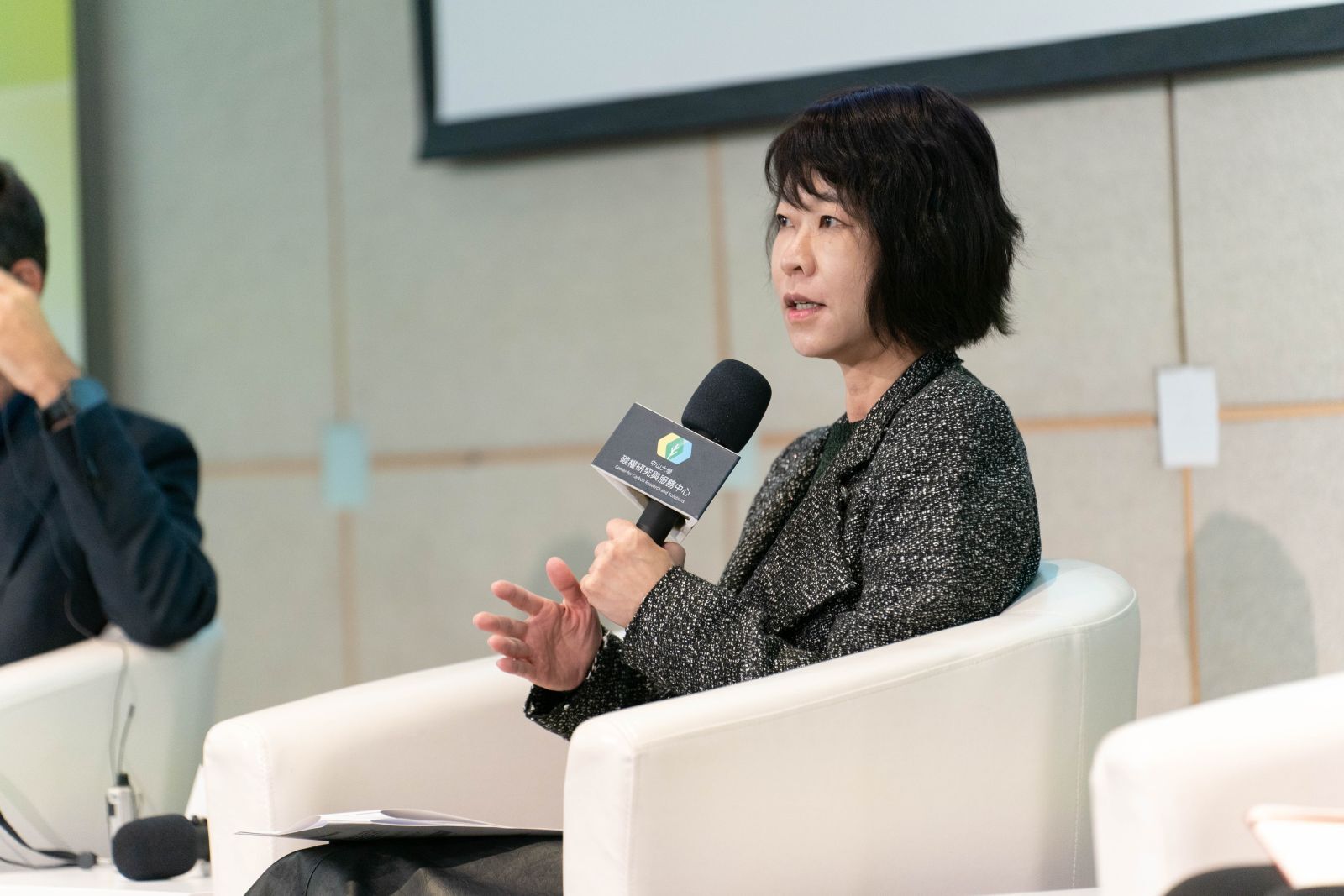
“There are many complex industrial chain structures in Taiwan, with several sectors possibly positioned at the very end of the supply chain, needing to share the increased costs associated with various products or raw material sources.” Huai-Shing Yen suggested, “we should first focus on steadily building our own experience, and then assess the future requirements of a Taiwan version of CBAM.”