
[Seminar Highlights] Professor Chien-Yuan Sher: Voluntary Carbon Market Observation Report: 2024 Annual Review
February 21st, 2025, the Taiwan Carbon Solution Exchange (TCX), Center for Carbon Research and Solution (CCRS) at National Sun Yat-sen University (NSYSU), and Taiwan Stock Exchange (TWSE) co-hosted the “2025 Voluntary Carbon Market Observation and Trend Analysis Seminar”, gathering representatives from academia, industry, government and experts of various fields, to share insights upon the trend analysis of international voluntary carbon market and actual experience.
In the beginning of the seminar, Chien-Yuan Sher, the Team Leader of the CCRS and Associate Professor of the Business Management Department of NSYSU, presented the key research findings of the “Voluntary Carbon Market Observation Report: 2024”, providing the participants with analysis of the current status and future outlook of both international and domestic carbon markets.
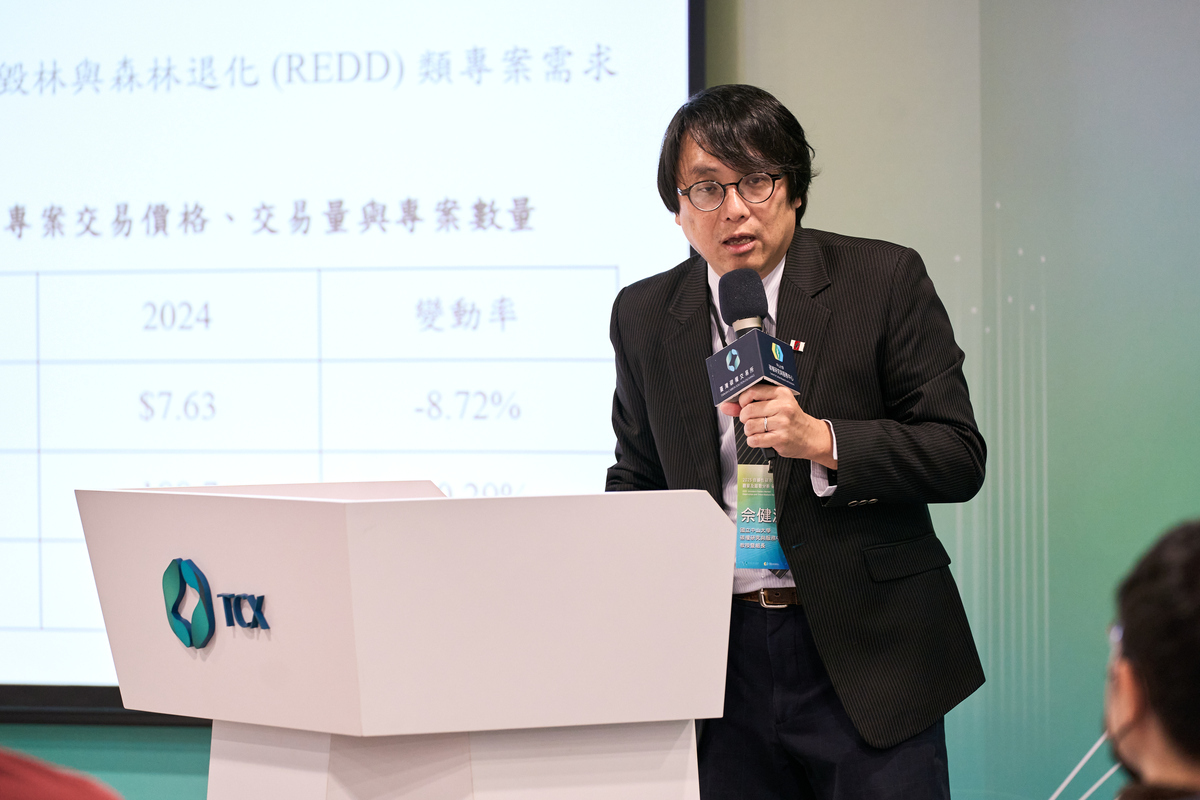
Associate Professor Chien-Yuan Sher: “Voluntary Carbon Market Observation Report: 2024”
This report focuses on trends in the international voluntary carbon market, primarily drawing on data from the Allied Offsets database in London, which covers nearly 90% of global carbon offset projects. In addition to analyzing the overall status of carbon credit issuance and retirements in international markets, the report further examines Taiwan’s participation in the global carbon market and concludes with a special feature highlighting project categories with strong development potential in Taiwan.
Chien-Yuan Sher explained, “'Issuance volume' refers to the transferable credits obtained after greenhouse gas reduction has been carried out and certified. 'Retirement volume' refers to the amount of credits used for carbon neutrality, to offset emissions.” However, the international carbon market lacks transparency, and issuance prices are difficult to access. Therefore, Allied Offsets, the database company, estimates the prices based on data from annual credit retirements, so the overall average prices presented in the report still maintain a high degree of accuracy.
According to the report, the international voluntary carbon market in 2023 and 2024 experienced “shrinking volume and falling prices”, with a noticeable decline in demand for purchasing carbon credits. The trading volume in 2024 actually dropped 40% compared to 2023. The primary reason was a series of in-depth investigations conducted in 2023 by The Guardian (UK), DW (Germany), and the journalist team from SourceMaterial, exposing that there are serious issues in many carbon credits from carbon offset projects aimed at "reducing emissions from deforestation and forest degradation” done in developing countries, commonly known as REDD+. The investigation boldly claimed that “90% of rainforest carbon credits lack real emission reduction benefits". As a result, the carbon market responded by establishing the Integrity Council for the Voluntary Carbon Market (ICVCM) to enforce stricter evaluation of carbon offset projects. This led to a significant decrease in the issuance of credits, and the retirement volumes dropped by 33%.
The participation of Taiwanese buyers and developers
According to observations, Taiwan is gradually withdrawing from the international voluntary carbon market, with the volume of retired credits in 2023 and 2024 dropping significantly compared to 2022. However, data also indicates that various types of Taiwanese enterprises are beginning to show increasing interest in voluntary carbon credits on the international market.
However, Chien-Yuan Sher found that the overall issuance volume of Taiwan’s carbon offset projects is declining. “The volume in 2020 and 2021 were quite high, around 600,000 and 500,000 respectively, mainly from wind energy, but it dropped significantly in 2022, and by 2023 and 2024, Taiwan had not listed any projects on the international carbon market, nor had it issued any credits.” This indicates that Taiwan's participation in the international voluntary carbon market is declining.
Chien-Yuan Sher believes that, “although the market still faces many challenges such as information asymmetry, guiding corporate funding into local carbon offset projects remains a promising direction.” It is due to technical limitations, causing industries to inevitably rely on carbon offsets to achieve carbon neutrality in the final stages of emission reduction. Therefore, carbon offset mechanisms still play an essential role.
Associate Professor Chien-Yuan Sher and his research team examined the potential domestic market for voluntary carbon reduction in Taiwan, and presented their findings as a special feature on a biogas collection project.
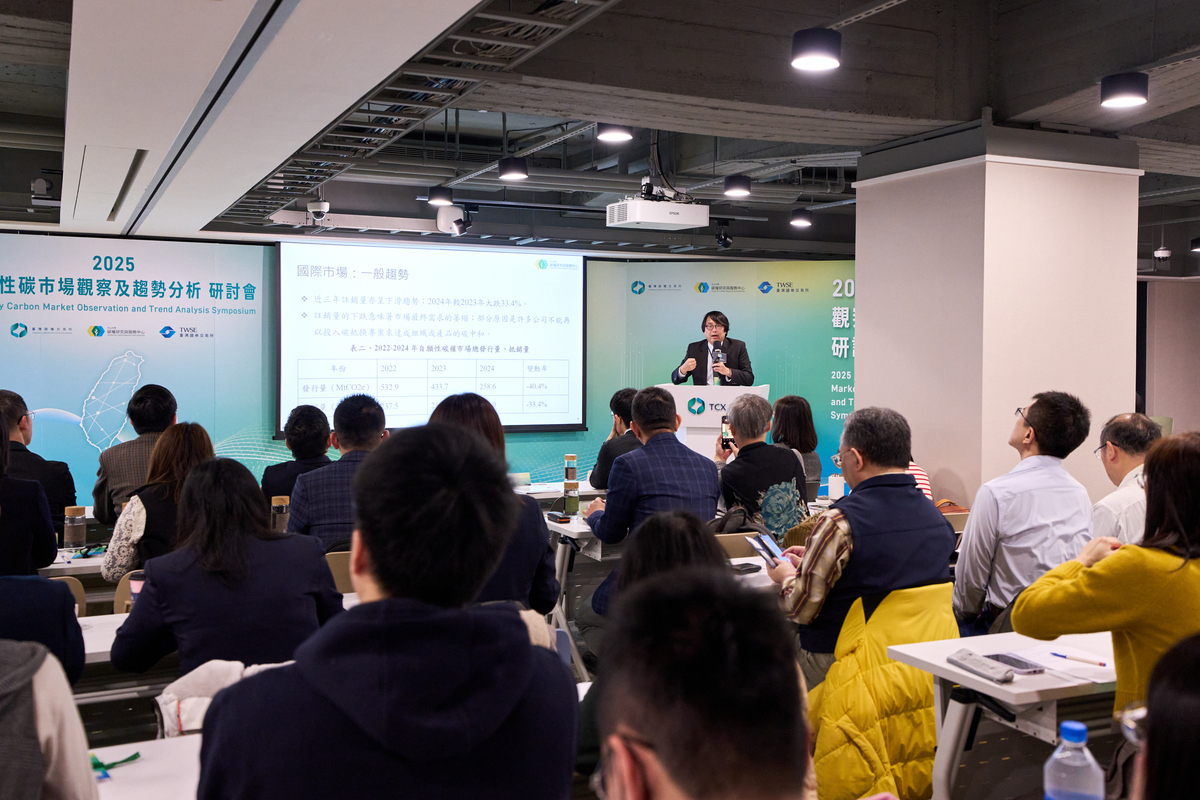
The development potential of biogas collection projects in Taiwan
In October 2024, the TCX officially listed six domestically generated voluntary carbon credit projects, including energy-saving lighting replacements, electric vehicle replacements, energy efficiency improvements and fuel switching in manufacturing processes, as well as biogas reuse in the livestock sector. The report focuses on biogas collection projects from pig farms since it is currently the most accessible in terms of public statistical data in Taiwan, and then further analyzes the development potential and market scale.
According to Taiwanese regulations, pig farms with more than 20 pigs are required to conduct wastewater treatment, which involves three stages: solid-liquid separation, anaerobic treatment, and aerobic treatment. The anaerobic treatment stage produces a large amount of methane, and biogas collection refers to capturing this methane, which falls under the category of waste management. Once methane is collected, it will be combusted and converted into carbon dioxide, thereby reducing its greenhouse effect. The heat generated from burning methane can be used for power generation, making it a form of renewable energy that can be connected to the power grid.
Pig farms in Taiwan are largest in Changhua, Yunlin, and Pingtung, with significant operations also in Chiayi, Tainan, and Kaohsiung. Based on estimation of 20 liters of wastewater generated per pig each day, the total annual emission reduction potential across Taiwan is approximately 340,000 to 520,000 tons.
Currently, aside from Changhua and Pingtung, there are no regulations in Taiwan mandating the installation of biogas collection systems. Therefore, there must be economic incentives or subsidies in order to encourage pig farms to adopt such systems. Chien-Yuan Sher added, “a pig farm needs to be large enough for power generation to be economically viable. If the use of thermal energy can qualify for carbon credits, it could increase the willingness of smaller scale pig farms to invest in biogas collection.”
There are still many challenges to implementing biogas collection projects. Chien-Yuan Sher said, “you need both knowledge and funding, you have to draft a project proposal, go through verification and approval processes. This procedure is extremely complex and costly in administration, so individual small-scale pig farms are unlikely to participate in such projects.”
How can this bottleneck be resolved?
Chien-Yuan Sher suggested:
- Someone should take the lead in integrating small-scale pig farms across different regions to submit a joint registration, which could help spread out the cost.
- Share knowledge about registration and verification processes.
- Optimize the registration procedures and simplify the verification process.
With sufficient incentives and by overcoming procedural obstacles, this could become a feasible path forward. Through this seminar, Chien-Yuan Sher gathered participants’ comments and insights, which he will consolidate and refine into a formal report to be published in March 2025.
>>> Fill out the online form to receive the report <<<
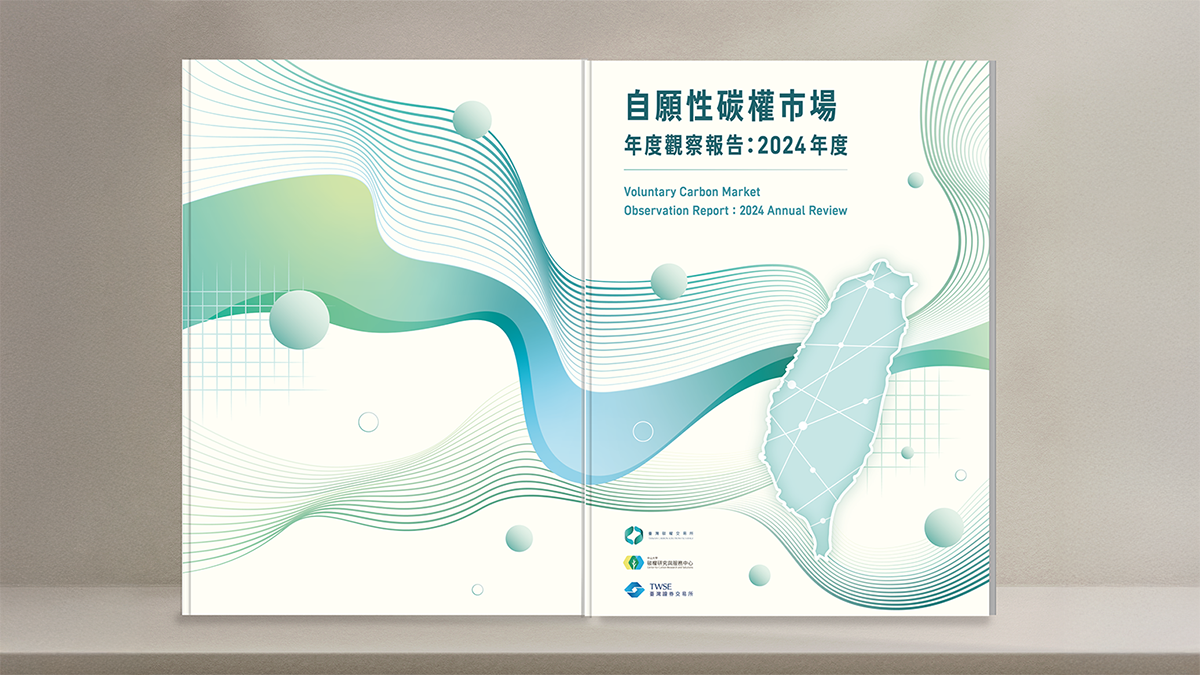
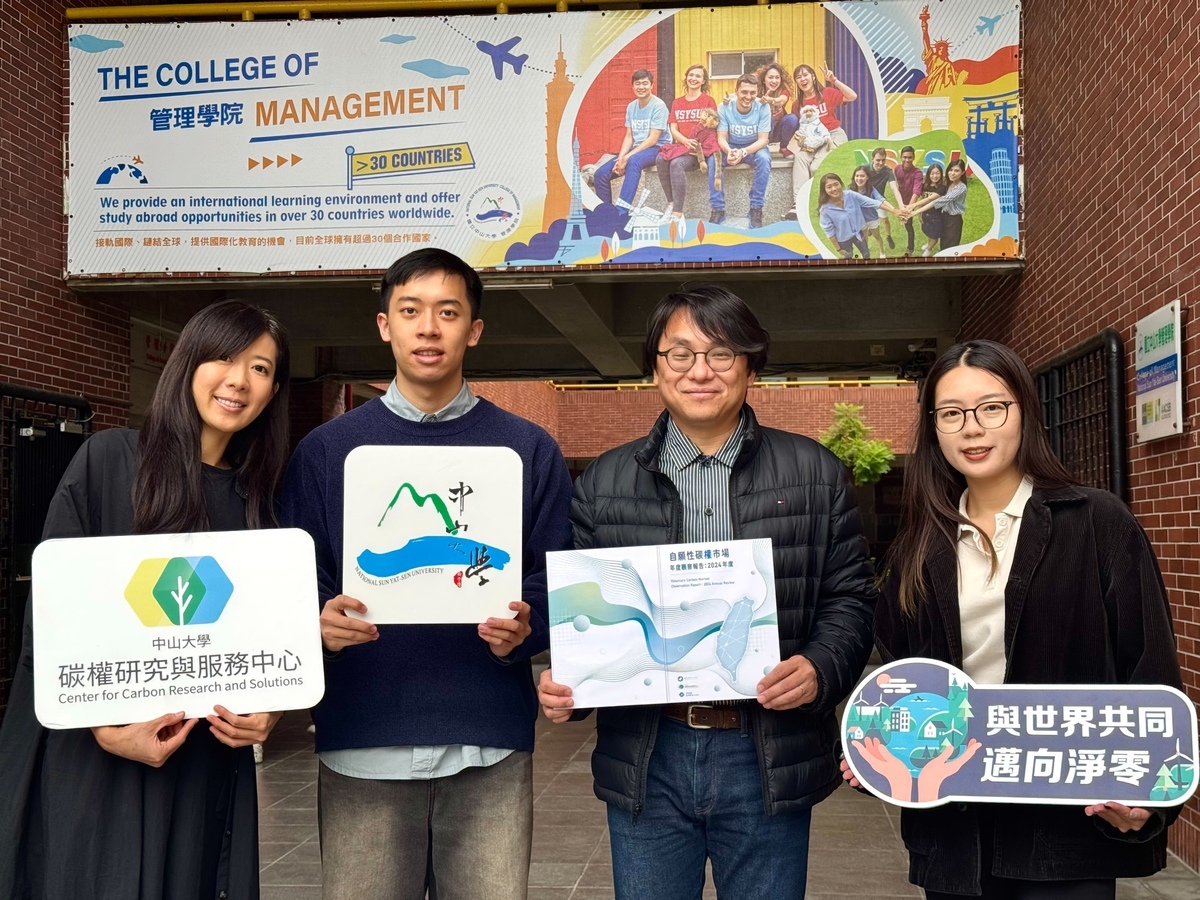
Associate Professor Chien-Yuan Sher led the research team in drafting the "Voluntary Carbon Market Observation Report: 2024". Graduate students: (from left) Pei-Yun Yu, Jui Chu, Associate Professor Chien-Yuan Sher, and Chu-Ying Chen.