
APh ePower Received International Certification for Carbon Credit Methodology on Green Elevator
APh ePower’s innovative green elevator carbon credit methodology (Methodology Code: 445) was officially certified by the international carbon credit standard “Gold Standard” on April 1st 2025, becoming the first certified energy saving project of its kind globally. This methodology is applicable to any elevator operation site, and the performance presentation was held on June 10th.
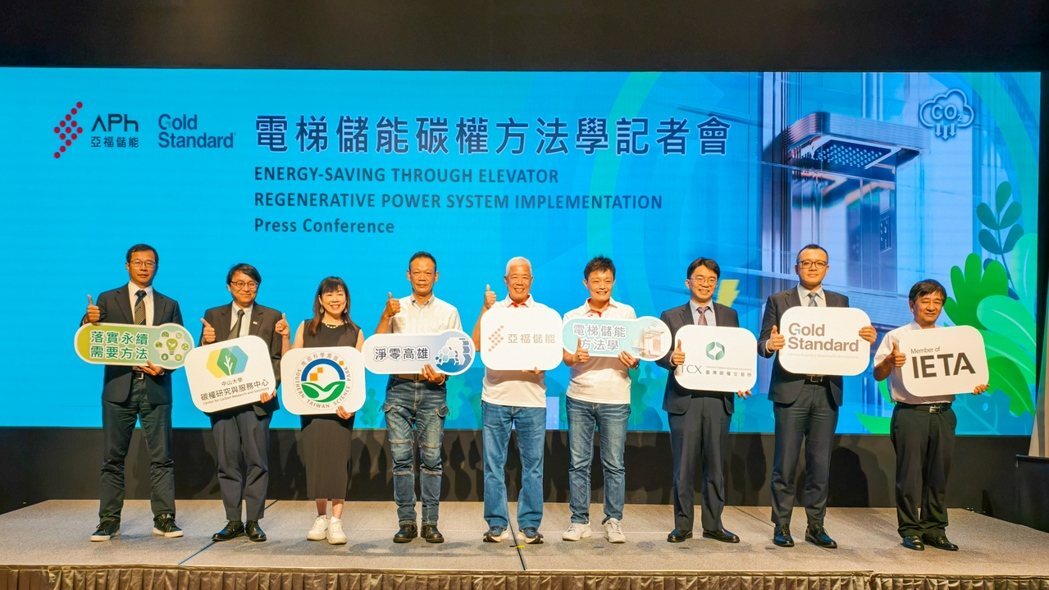 APh ePower held the “Green Elevator Carbon Credit Methodology” Performance Presentation on June 10th, 2025. A group photo was taken for the Managing Director Joe Chen (middle), Corp. Development Director Sean Su (6th from left), and the Deputy Secretary General of Kaohsiung City Government Chia-Hsing Chang (4th from left). Representatives from the CCRS at NSYSU, TCX, Southern Taiwan Science Park, Bank SinoPac, and Sernta Elevator, participated and witnessed this significant moment. (photo provided by APh ePower)
Carbon credit applications don't just rely on energy saving results, but also require a scientifically validated and replicable methodology to generate carbon credits with tradable value. The principle behind APh ePower's green elevator methodology lies in capturing regenerative electricity produced when an elevator operates with "heavy load descending and light load ascending". This energy is recycled and reused through an aluminum battery storage system, which improves energy efficiency, and the energy saving result can also be converted into carbon credits according to standardized calculation formulas.
Real testing shows that implementing the aluminum battery energy storage system can reduce elevator electricity consumption by over 40%. With approximately 330,000 elevators across Taiwan, this system could save up to 3.61 billion kwh of electricity annually, and generate 1.785 million tons of carbon credits, this is equivalent to the total annual electricity consumption of about 915,000 households.
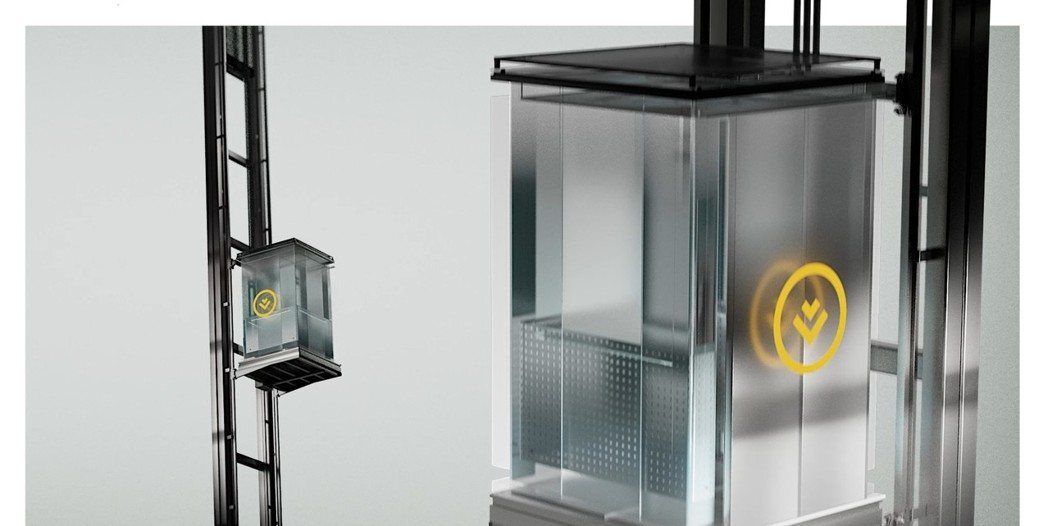 Energy storing elevators stores and reuses wasted electricity, which reduces 40% of energy consumption and can be generated into carbon credits. (photo provided by APh ePower)
Sean Su, the Corporate Development Director of APh ePower stated that the aluminum battery energy storage system provides uninterrupted power supply, ensures elevator operation during unexpected power outages, and enhances building safety and resilience. The system is expected to generate approximately 1.785 million tons of carbon credits annually. Based on the first domestic carbon trading price of 3,500 NTD per ton on December 9th 2024, the potential market value could reach 6.25 billion NTD. These carbon credits can be used for internal offsetting or traded on domestic and international markets. This methodology is part of the international voluntary carbon market mechanisms, which is applicable to around 15 million elevators worldwide, with an estimated carbon credit potential of 81 million tons per year.
Gold Standard CEO Margaret Kim affirmed APh ePower's innovative methodology based on elevator regenerative power, and stated that the scalable and highly credible energy-saving solutions is a key development direction for the carbon market.
APh ePower is currently in discussions with elevator manufacturers to implement a "painless transition" model, where the investment is recovered through electricity cost savings. With maintenance contracts and carbon credit revenue sharing, each elevator operation will turn into a small step for carbon reduction and a big step forward for the planet.
🔗Article Source:Money.udn