
How can SMEs Implement ESG? Dr. Eva Kang from Taiwan Institute of Economic Research Demonstrated Self-Assessment Tools
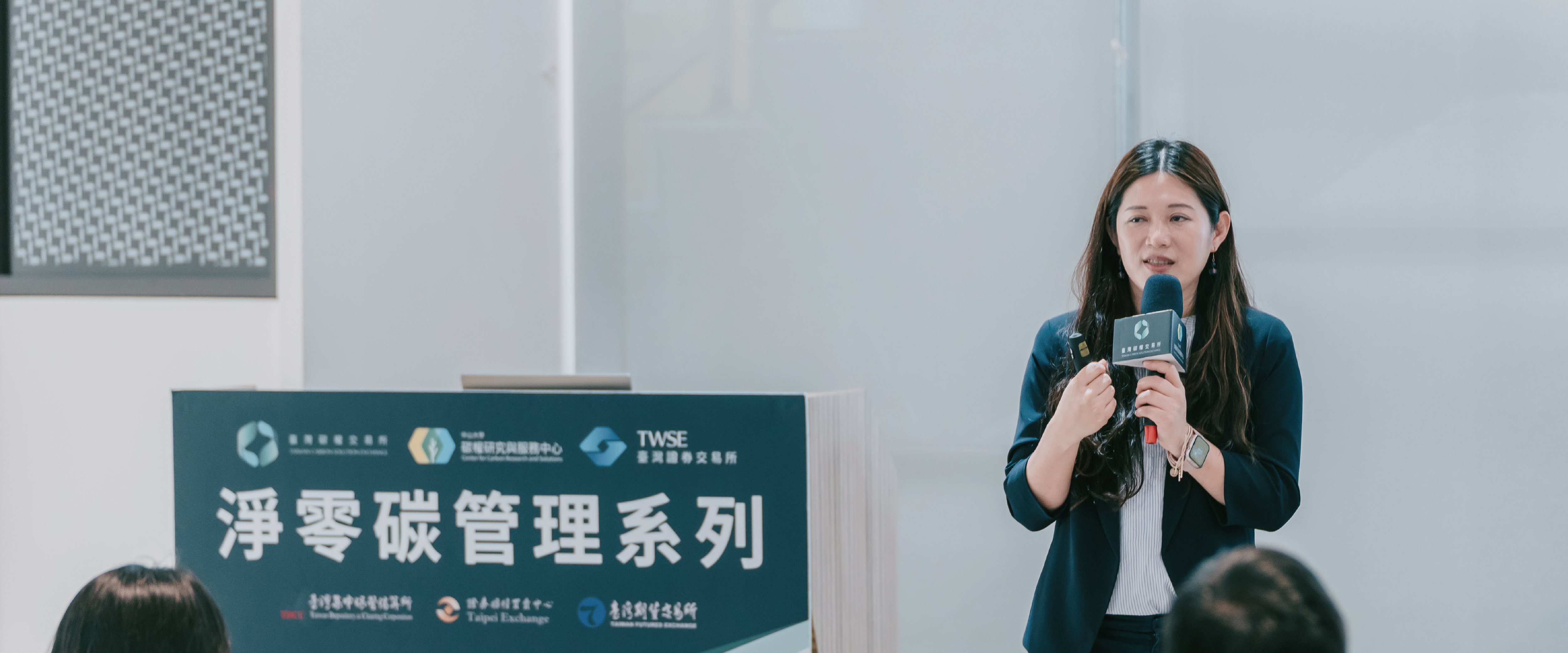
Dr. Eva Kang from Taiwan Institute of Economic Research, gave a presentation titled “How can SMEs Implement ESG?”, with analysis of policy direction and practical strategies.
As climate legislation is driving corporate sustainability-related policies in Taiwan, carbon reduction, sustainability, and ESG have become hot topics for corporations. However, unlike publicly listed companies regulated by the Financial Supervisory Commission, small and medium-sized enterprises (SMEs) in Taiwan can choose whether to implement ESG practices. According to surveys by the Taiwan Institute of Economic Research, as many as 90% of domestic SMEs have not yet taken concrete actions for ESG. SMEs are a crucial component of Taiwan’s economic development. In order to raise awareness and support SMEs in investing ESG efforts, the Center for Carbon Research and Solution (CCRS) at National Sun Yat-sen University (NSYSU) hosted an outreach program, inviting Dr. Eva Kang, Deputy Director of Research Division VIII at the Taiwan Institute of Economic Research and Director of the ESG and Sustainable Development Center, to share insights under the topic “How Can SMEs Implement ESG? From Assessment to Implement.

Hung-Jeng Tsai, Director of the CCRS at NSYSU gave an opening speech for the event, emphasizing the importance of internalizing ESG to corporate sustainable management.
During the opening speech, Hung-Jeng Tsai, Director of the CCRS at NSYSU, stated that the essence of ESG lies in the need for enterprises to consider social and environmental costs while pursuing profits. When a company internalizes social, environmental, and external costs into its operating model, operational costs may increase, however, failing to implement ESG could result in pressure from international supply chains and even affect the company’s opportunities to obtain sustainable financing.
Deputy Director Kang began by pointing out that the government has made significant progress in promoting ESG policies. From the initial 12 key strategic trajectories to the new policies announced this March, the biggest change has been the integration of resources and functions across six major ministries. Although past discussions on issues such as carbon emissions led to misunderstandings, there is now considerable consensus across sectors, with active responses to net-zero goals and efforts to enhance corporate competitiveness. Key government initiatives include the development of green energy and a dual-axis transformation strategy focused on digitalization and net-zero, with particular emphasis on a “just and fair transition” to support vulnerable enterprises and individuals. These policy innovations are included in the latest comprehensive review action plan, providing an abundance of resources for reference and application across sectors.
To help enterprises understand the current state of ESG development, the Taiwan Institute of Economic Research (TIER) developed the “TEST” (TIER ESG Self-assessment Tool) based on the "FTSE Russell" ESG model and supplemented with common indicators from the MSCI and Dow Jones Sustainability Index (DJSI), helping enterprises identify their ESG development stage and areas for improvement. The innovative tool created by the TIER enables companies to understand and implement an ESG evaluation framework. It is designed based on the FTSE Russell’s 14 thematic models, covering assessment questions related to environmental and social dimensions. A key feature of this tool is its ability to assist enterprises in benchmarking within their industry, providing a clear view of their performance in sustainable development. The system displays the company’s current ESG development stage and offers comprehensive evaluation results along with scores for individual indicators.


The corporate representatives attending the course raised many questions focusing on the practical challenges and reactive strategies of sustainable transformation.
According to an investigation done by TIER, company size is positively correlated with ESG scores, the larger the company, the better the performance. As for industries, the food manufacturing industry which must comply with international standards, generally scores higher, while traditional industries such as furniture, electricity, and leather score relatively lower. Among them, companies involved in export business have significantly higher ESG scores than those without. As long as a company is involved in exports, regardless of the proportion, it tends to be more proactive in advancing ESG. It shows that international trade is one of the key drivers for companies to prioritize sustainable development.
Regarding practical directions for implementation, Deputy Director Kang suggested, “For SMEs that want to implement ESG, the first step is to clarify the purpose, particularly in response to urgent needs such as supply chain requirements or regulatory standards.” In the past, companies often took the initiative to practice ESG out of a sense of mission or during second-generation succession. However, many SMEs today are facing mandatory obligations. Deputy Director Kang advised that enterprises should first comply with basic regulations and supply chain demands by undertaking foundational tasks such as ISO certification and carbon inventory, while also making good use of government resources and subsidy programs. For enterprises that have not yet started, they can look at the practices of large enterprises or align with the requirements of sustainability lending from financial institutions to gradually build relevant information and understanding.
In concluding the lecture, Deputy Director Kang emphasized, “Although ESG is a complex issue, it should ultimately return to ‘beginning with the end in mind’, remembering that sustainable development is the core focus rather than merely pursuing scores or indicators. When addressing ESG issues, we aim to help companies identify appropriate channels and resources. In collective collaboration to advance ESG, the most important thing is to have the courage to take the first step and begin taking action.” She encouraged enterprises to engage in sustainable transformation as early as possible.

This outreach program was organized by the CCRS at NSYSU, aiming to strengthen enterprises’ understanding and capability on sustainability issues, assisting enterprises to grasp the key insights of sustainable transformation, and build concrete and feasible strategies for sustainable development. For more information on related events, please refer to the "News" page on the CCRS official website.