
Support Carbon Credit and Emission Reduction in Taiwan, NSYSU Joins Force with TCX and TWSE to Organize a Seminar
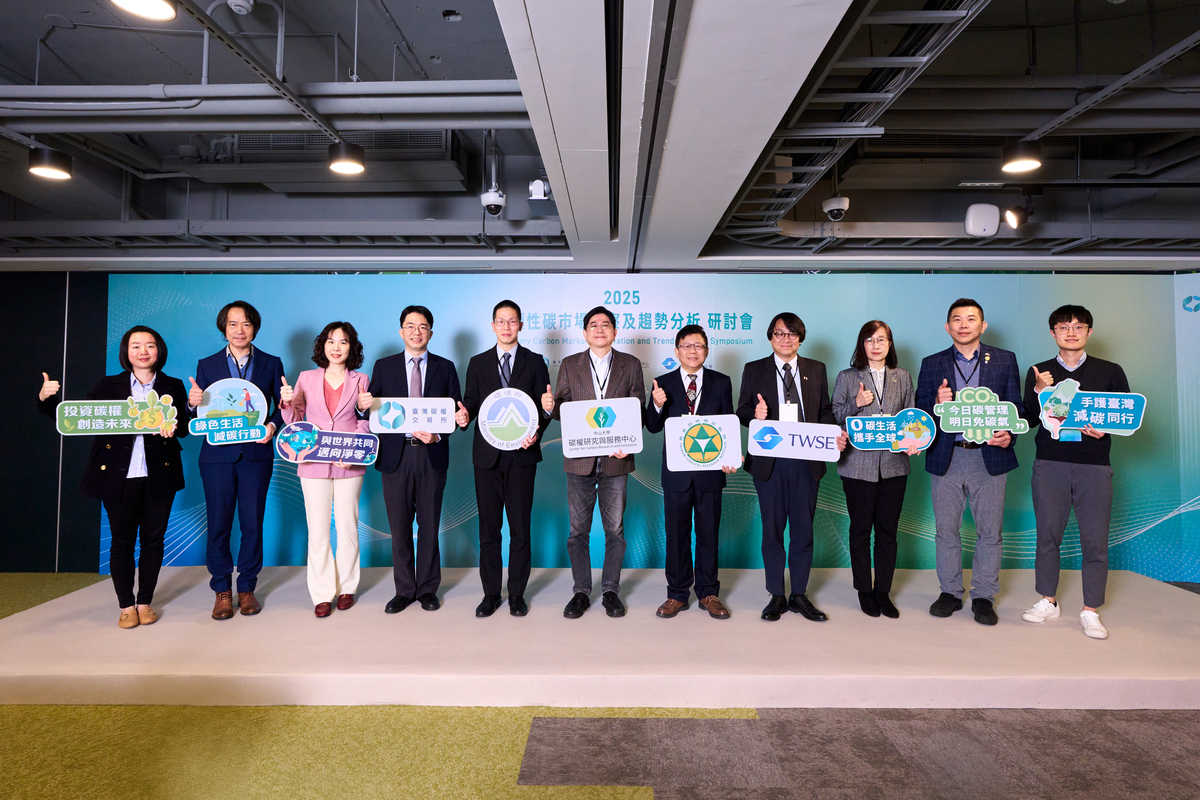
The “2025 Voluntary Carbon Market Observation and Trend Analysation Seminar” invited speakers from industry, government, academia and research fields, to delve into the status and development of the voluntary carbon market. (left to right) R&D Manager of the Industrial Green Technology Group of the Industrial Technology Research Institute Central Region Campus - Ying Chi Hsu, Team Leader of the CCRS of NSYSU - Assistant Professor You-Ren Wang, General Manager of the Jan Cheng Lighting Co. Ltd. Southern Division - Dr. Chenwei Huang, General Manager of TCX - Joshua Tien, Director of Emissions Reduction and Trade Division of the Climate Change Administration of the Ministry of Environment - I-Yun Su, Director of the CCRS of NSYSU - Professor Hung-Jeng Tsai, Chief Secretary of the Taiwan Forestry Research Institute - Jiunn-Cheng Lin, Team Leader of the CCRS of NSYSU - Associate Professor Chien-Yuan Sher, Professor at the Graduate Institute of Environmental
Engineering of National Taiwan University - Pei-Te Chueh, General Manager of Color Park International Group - Jia Sing Cheng, Analyst at the Green Economy Research Center of the Chung-Hua Institution for Economic Research - Tsung-Yu Lin.
In order to speed up the development of carbon reduction credit market, the CCRS of NSYSU, TCX and TWSE co-hosted the “2025 Voluntary Carbon Market Observation and Trend Analysation Seminar”, inviting representatives from industry, government, academia and research fields, to delve into discussions on three major topics: voluntary carbon market annual observation report, the potential scale of domestic carbon reduction credit market, and the experience of carbon reduction project application and examination.
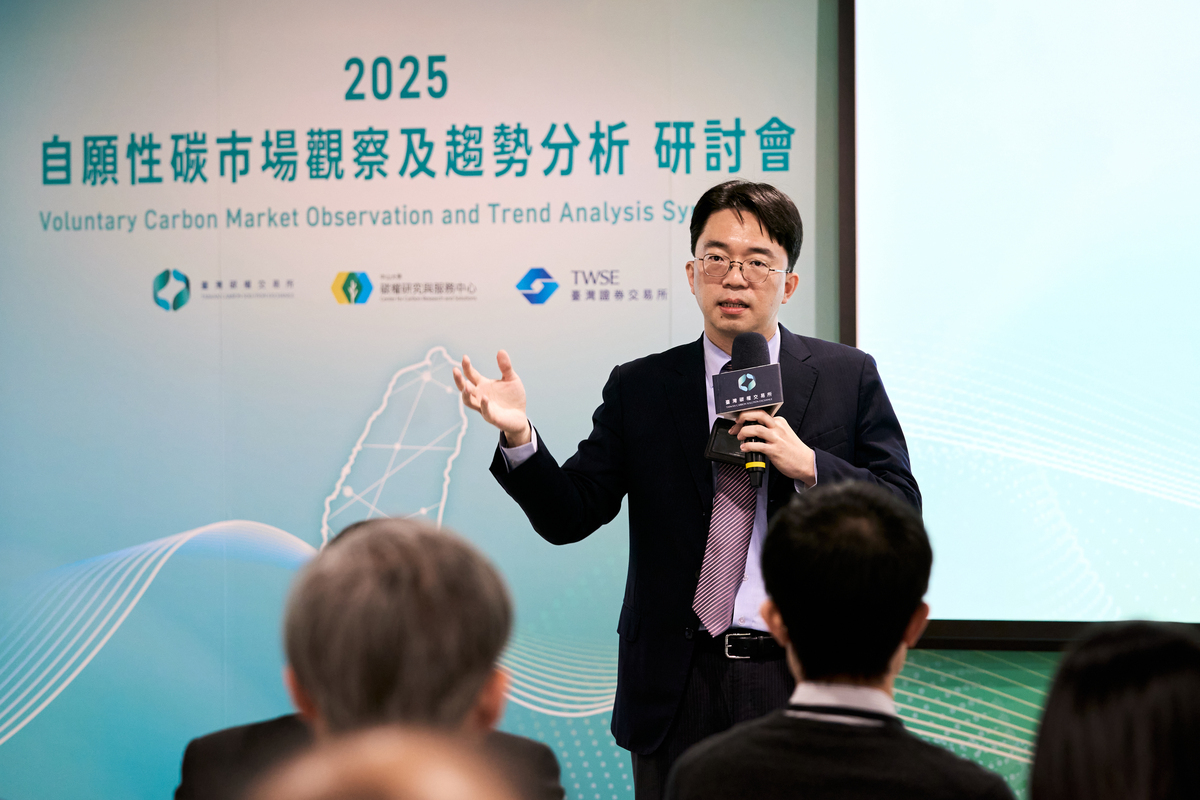
Joshua Tien, General Manager of TCX spoke for the opening of the seminar.
Joshua Tien, the general manager of TCX stated that although the transaction volume of carbon reduction credit is not large in Taiwan so far, with the gradual increase in awareness of carbon pricing and the approval of local natural carbon sink methodologies, enterprises will be encouraged to invest in voluntary carbon reduction projects. Natural carbon sink projects have substantial benefits on carbon removal and have begun to incorporate the common benefits brought by the ecological environment and community aspects. In the future, natural carbon sink projects will become mainstream and have the opportunity to help enterprises align with international sustainability standards such as TNFD (The Taskforce on Nature-related Financial Disclosures).
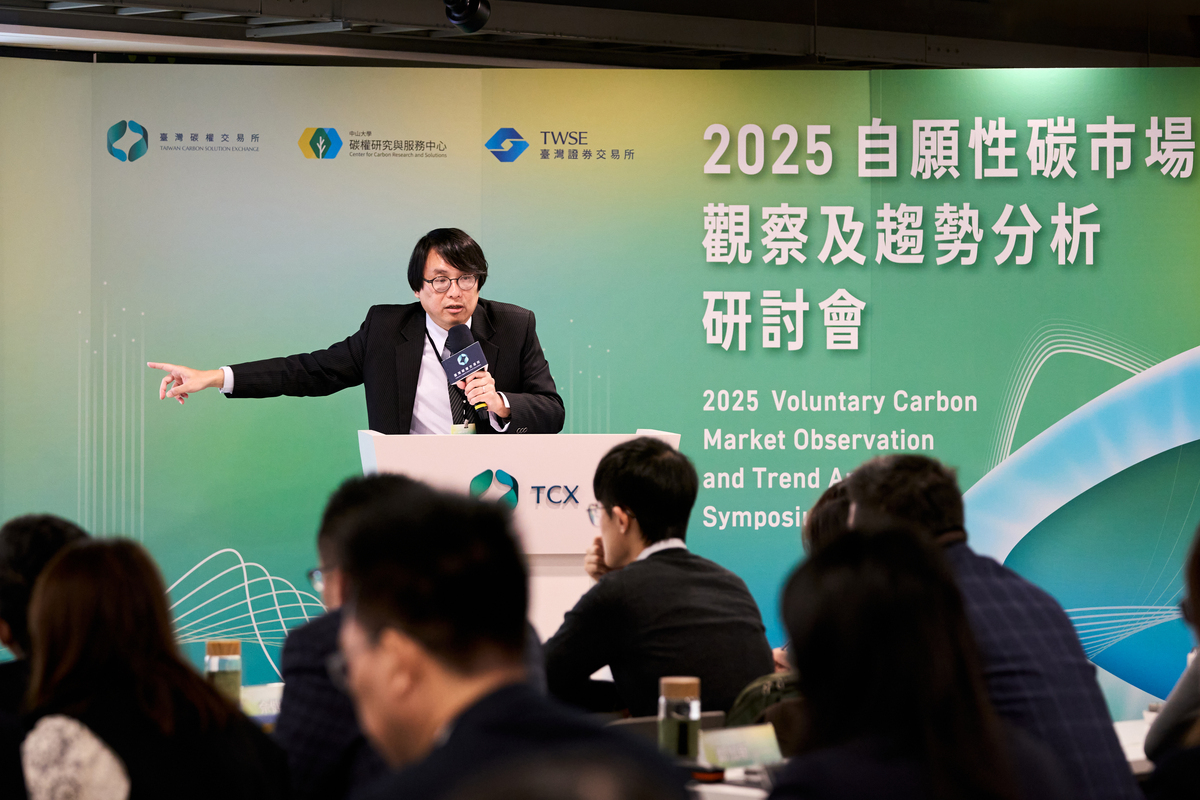
Chien-Yuan Sher, Associate Professor of Business Administration Department of NSYSU and Team Leader of the CCRS of NSYSU, presenting the result of the "Voluntary Carbon Reduction Market Observation Report" at the seminar.
Associate Professor Chien-Yuan Sher, team leader of the CCRS of National Sun Yat-sen University, pointed out that there is information asymmetry in the domestic carbon credit registration process, and the supply and demand of the domestic voluntary carbon market is relatively unbalanced, leading to high in supply cost and a significant gap between supply and demand in the domestic voluntary carbon market. In 2024, the international carbon market showed a decline in volume and price, Taiwan's participation in the international market slowed down, and the supply of domestic carbon credit almost stopped. Nevertheless, there's still potential in carbon reduction projects development in Taiwan, such as the pig farm biogas collection project, which shows potential of collecting 340,000 to 520,000 tons of CO2e per year. However, the registration examination process requires expertise and faces high cost challenges.
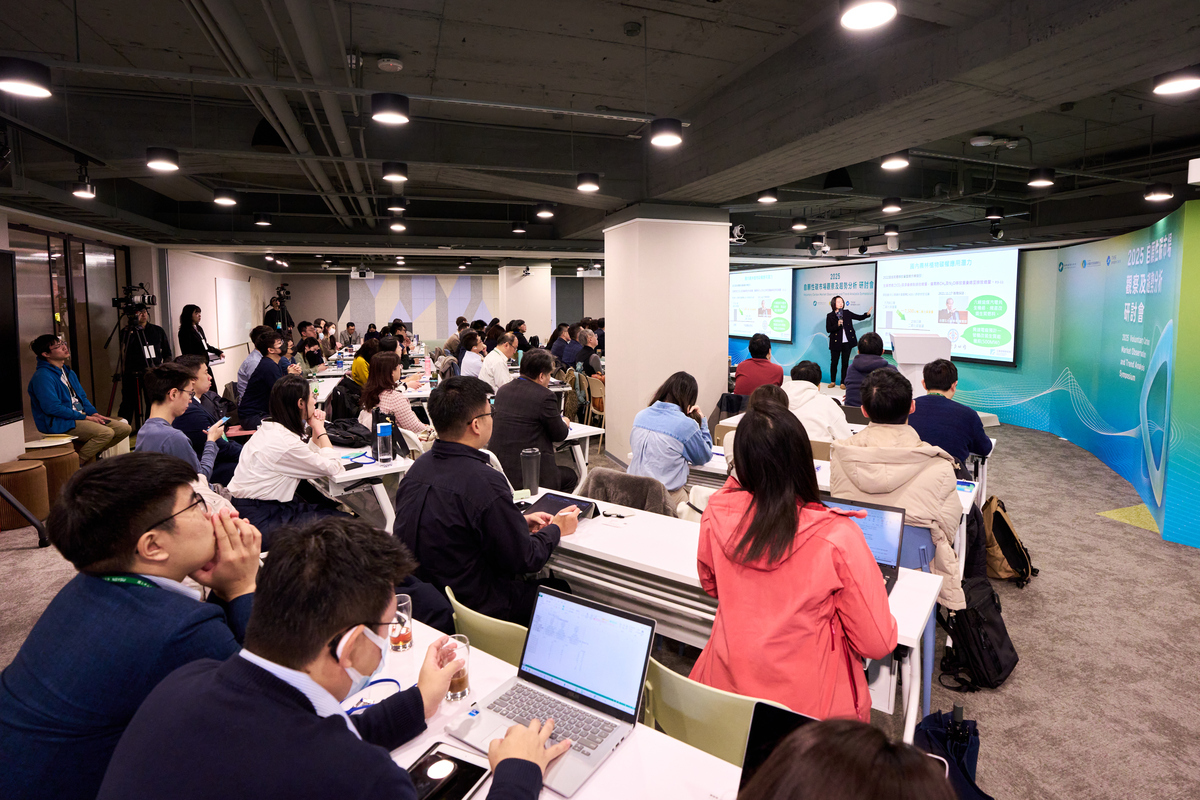
Participants who are concerned about Taiwan's voluntary carbon market gathered together to listen to experts' analysis and sharing.
Jiunn-Cheng Lin, Chief Secretary of the Taiwan Forestry Research Institute, Ying Chi Hsu, R&D Manager of the Industrial Green Technology Group of the Industrial Technology Research Institute Central Region Campus, and Dr. Chenwei Huang, General Manager of the Jan Cheng Lighting Co. Ltd. Southern Division, were invited as guest speakers. They presented professional analysis and discussions in their respective fields on the three major project types: forest carbon sinks, biomass energy, and high-efficiency light sources. Jiunn-Cheng Lin mentioned that natural carbon sinks are the key to achieving net-zero goals, and emphasized that forests need to be managed to effectively improve the carbon sink benefits, and carbon credit projects of natural carbon sinks generally have co-benefits such as biodiversity improvement. Ying Chi Hsu said that the application of pig biogas and industrial biogas has the potential to become biomass energy carbon credits. The advantage includes that it creates the company's own circular economy, and it is easy to obtain policy support subsidies, which can provide a high market potential.
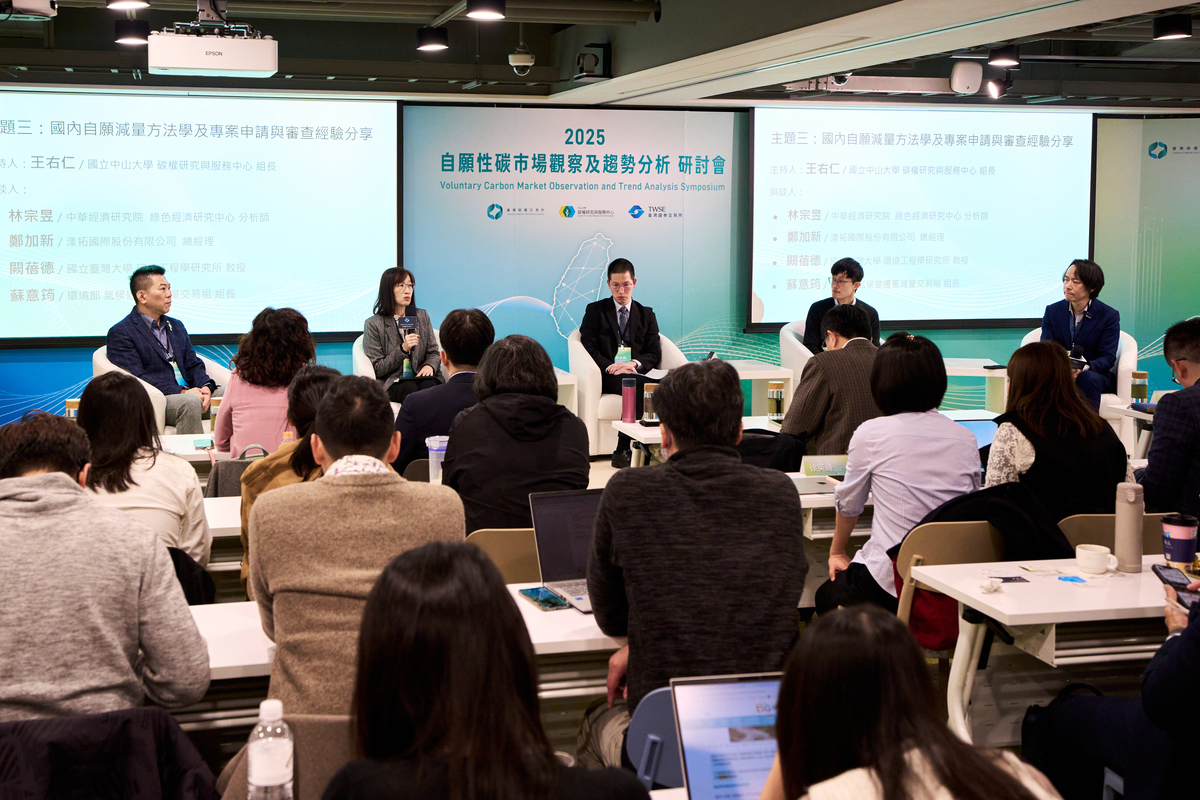
Representatives from industry, government and academia at the 3rd session "The Domestic Voluntary Carbon Reduction Methodology and Experience on Project Registration and Examination", and initiated discussions. (left to right) General Manager of Color Park International Group - Jia Sing Cheng, Professor at the Graduate Institute of Environmental Engineering of National Taiwan University - Pei-Te Chueh, Director of Emissions Reduction and Trade Division of the Climate Change Administration of the Ministry of Environment - I-Yun Su, Analyst at the Green Economy Research Center of the Chung-Hua Institution for Economic Research - Tsung-Yu Lin, Professor You-Ren Wang from CCRS of NSYSU.
Focusing on the experience of domestic voluntary carbon reduction methodology and project registration and examination, representatives from industry, government and academia shared their experiences from different perspectives. Tsung-Yu Lin, an analyst at the Green Economy Research Center of the Chung-Hua Institution for Economic Research, introduced the registration practices of domestic voluntary carbon reduction projects, and he encouraged enterprises to use recently approved registration cases as reference. Jia Sing Cheng, general manager of Color Park International Group, shared his own experience on project registration to remind enterprises about the regulation and data monitoring challenges they may face. Pei-Te Chueh, professor at the Graduate Institute of Environmental Engineering of National Taiwan University, shared her experience in project examination and the details that should be paid attention to when implementing a project, ensuring that the methodological requirements are met, in order to secure the validity of carbon credits. I-Yun Su, director of Emissions Reduction and Trade Division of the Climate Change Administration of the Ministry of Environment, said that registrations for carbon credits have increased in the past year, and the number of voluntary carbon reduction project registration is four times of offset projects, of which "efficiency improvement" is account for 70% of types, and natural carbon sink cases have grown significantly, indicating that enterprises are expanding their investment in carbon reduction actions. In the future, while the scope of the carbon verification industry expands, more cross-sector or public-private collaboration should take place. She also pointed out that Taiwan's carbon reduction projects have been included in the World Bank's carbon pricing trend report, and the quality of the projects is also under the world's attention.
The comprehensive discussion was hosted by You-Ren Wang, the team leader of the CCRS of NSYSU. The participants agreed that the essence of carbon reduction projects is to reduce carbon emissions. On top of that, enterprises should rigorously evaluate their own conditions, project effects and purpose before investing resources into a project. Professor Hung-Jeng Tsai, director of the CCRS, concluded the seminar by emphasizing that the development of carbon reduction on industrial processes is relatively mature, and natural carbon sinks will become the future trend. While implementing the project, governments and industries should strengthen social communication and public participation, and pay more attention to environmental impact, biodiversity and local community rights.
The NSYSU and TCX will actively promote the development natural carbon sink projects, and encourage more domestic carbon reduction projects to be listed, motivating domestic enterprises to value carbon reduction actions; support the development of the domestic carbon market, providing demonstration reference for enterprises to perform carbon reduction, exchange experience and collaborate, and help Taiwan's industries to move steadily towards net-zero emission targets.
🔗Article Source:NSYSU NEWS