[Seminar Highlights] Je-Liang Liou: Analysis on Financial Adjustment for CBAM
As the implementation date of the EU Carbon Border Adjustment Mechanism (CBAM) draws nearer, many major trading nations are closely monitoring the situation. How will Taiwan respond to the international developments? On January 17th, 2025, the Taiwan Carbon Solution Exchange (TCX), the Center for Carbon Research and Solution (CCRS) of National Sun Yat-sen University (NSYSU), and the Taiwan Stock Exchange (TWSE) jointly hosted the “2025 Taiwan Carbon Border Adjustment Mechanism Policy Seminar”, inviting representatives from academia, industry, and government to share their insights and advices.
In the session featuring government representatives, Ling-Yi Tsai, Director General of Climate Change Administration under the Ministry of Environment; Huai-Shing Yen, Deputy Trade Representative of Office of Trade Negotiations under Executive Yuan; Christoph Saurenbach, Head of Trade Section of the European Economic and Trade Office in Taiwan; and Je-Liang Liou, Director of the Center for Energy and Environmental Research at the Chung-Hua Institution for Economic Research, each shared their observation and suggestions.
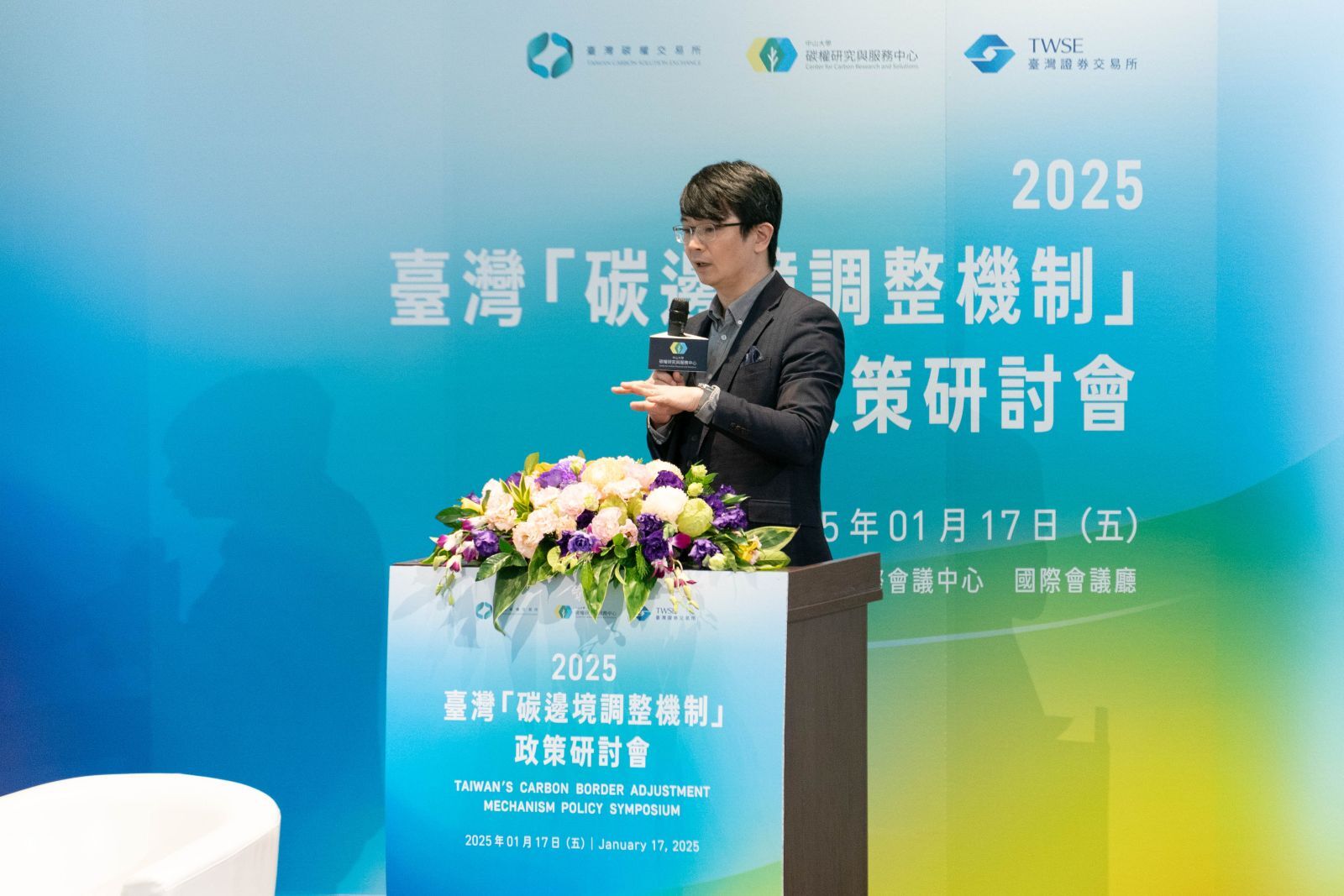
The EU's "cap and trade" system focuses on regulating the total emission from installations within its territory, allowing the right to emit a certain amount of greenhouse gases, and any excess emissions must be offset by purchasing allowances, which becomes a cost for the corporation. Taiwan, on the other hand, imposes carbon fees on both direct and indirect emissions from regulated entities.
Je-Liang Liou pointed out that “the EU can only regulate what is covered within its own jurisdiction.” In the first phase, regulated products include electricity, cement, hydrogen, aluminum products, steel products, and fertilizers. Among these, Taiwan mainly exports aluminum products, steel products, and fertilizers to the EU, with steel products accounting for the largest portion, worth about 50 to 60 billion NTD in exports.
Can Taiwan’s carbon fees be deducted under the EU CBAM?
If Taiwan and the EU use different methods to levy carbon fees, can they still be mutually deductible? Je-Liang Liou explained, "as long as you’ve paid a carbon cost in your country of production or in a third country, whether it’s through taxes, levies, duties, or fees, it can be deducted. So in fact, Taiwan is already included in this framework.”
In fact, the regulatory subject of the EU and Taiwan are essentially the same, both focus on emissions from factories, except Taiwan refers to them as "enterprises", while the EU calls them "installations". However, there is a significant difference in the scope of regulation. In Taiwan, both direct emissions and indirect emissions (such as electricity usage) are subject to carbon fees, whereas in the EU, most regulated products are only responsible for direct emissions. In both Taiwan and the EU, emissions are calculated based on the total emissions of a factory, with the overall emission cost allocated across all products. "But if a factory produces ten different products, how do you allocate the total emission cost fairly among them? That’s the practical challenge we face," he added.
Moreover, even though the EU’s carbon price is around 2,000 NTD per ton, while Taiwan’s standard rate is only 300 NTD, this doesn’t mean that Taiwan’s regulated exports to the EU will need to pay an extra 1,700 NTD. Je-Liang Liou explained, “what CBAM actually compares is the carbon cost borne by each product, not the market carbon price you see.”
How should Taiwan make financial adjustments for carbon costs?
Je-Liang Liou stated, “you must first have a stable carbon pricing mechanism that reflects actual costs, along with carbon emission data for each product category. Only with both in place can CBAM be properly implemented.” Is a payment always required? He explained, “not necessarily. It depends on whether your product is regulated under the EU system, and how it’s regulated. That’s what determines how much you’ll need to pay.”
In conclusion, Je-Liang Liou advised, “the way to approach the EU CBAM is to interpret the policy reasonably, so you can respond appropriately and work toward transformation early, then there’s no need to suffer from carbon anxiety.”
How should corporations prepare for CBAM?
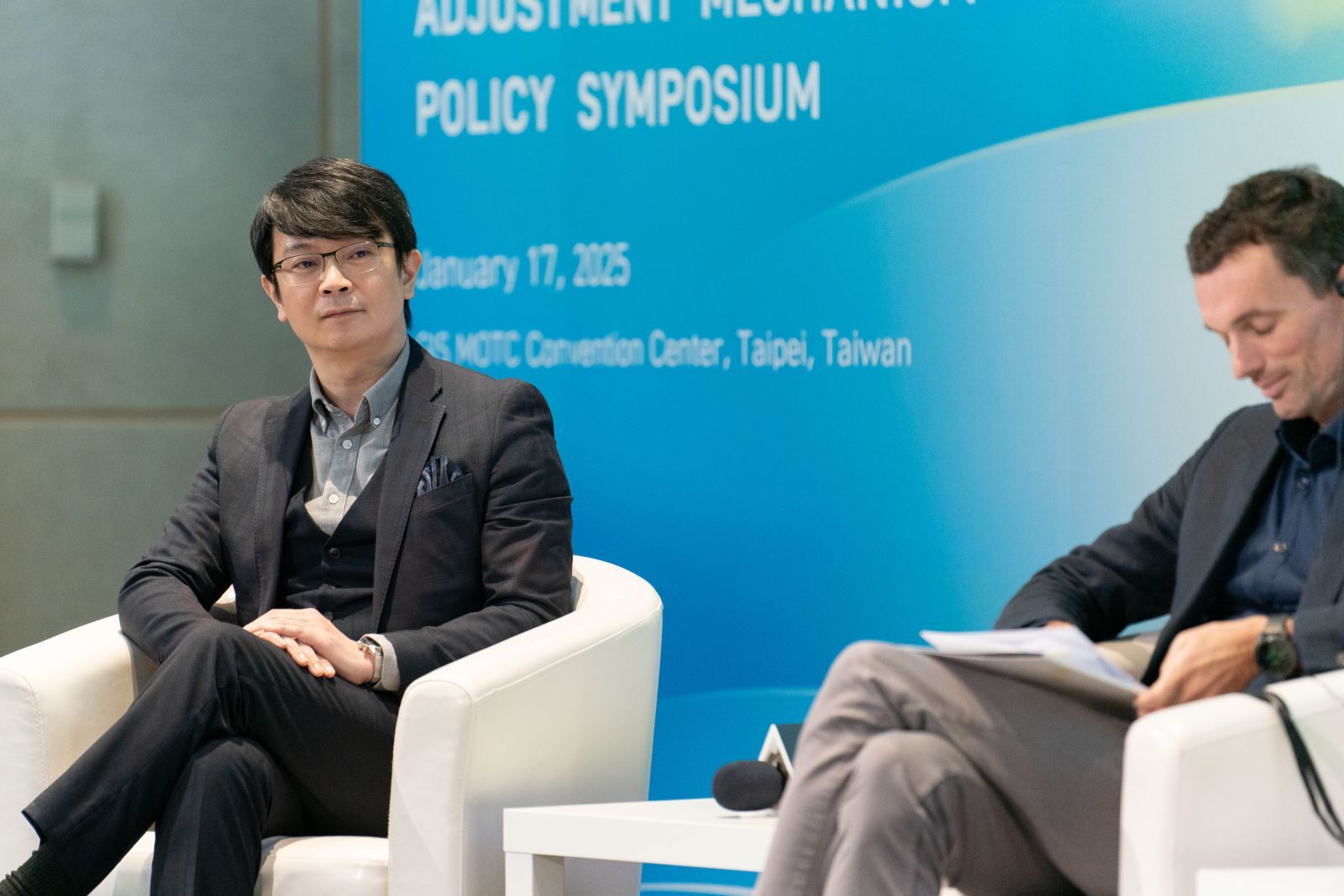
For the upcoming CBAM, corporate owners don’t need to panic. Je-Liang Liou believes, “the strategy should be to consider the timeline and think long-term. Low-carbon transformation and moving toward net-zero is a global trend that we’ll all have to follow eventually, because our KPI is to reach net-zero by 2050 globally.” To achieve a low-carbon transformation, the four key milestones are: inventory, reduction, carbon neutrality, and net-zero.
Upstream suppliers in the supply chain won’t face any immediate requirements, but it is recommended to take some time to understand the rules and whether your products will be regulated in the near future. Je-Liang Liou said, “if you find that you are indeed a regulated entity, then quickly start conducting an inventory at the product level. Before any regulations apply to you, you still have ample time to make the transition, but that doesn’t mean you shouldn’t transform.”
If you need to start implementing emission reductions, Je-Liang Liou suggests, “you should definitely begin with the low-cost measures first, start with energy and electricity savings. The second phase should focus on production process optimization, such as planning work schedules. Use the logic of ‘from cheap to expensive’ to lay out your overall strategy; never start with the expensive options, as the costly ones will become cheaper over time. Sooner or later, the supply chain will start requiring us to move toward net-zero.”