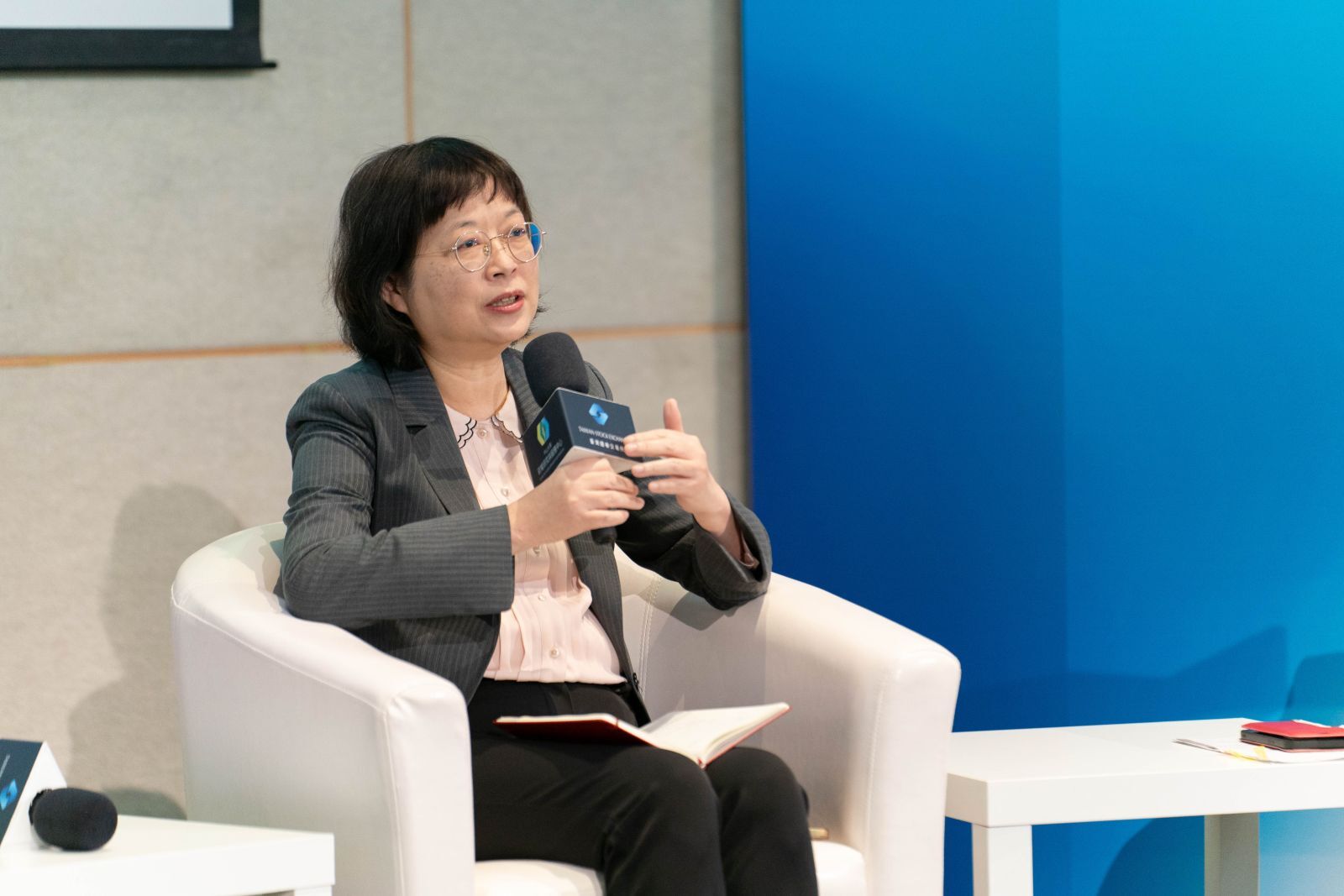
[Seminar Highlights] Dr. Ling-Yi Tsai: Climate Change Response Act and CBAM
As the implementation date of the EU Carbon Border Adjustment Mechanism (CBAM) draws nearer, many major trading nations are closely monitoring the situation. How will Taiwan respond to the international developments? On January 17th, 2025, the Taiwan Carbon Solution Exchange (TCX), the Center for Carbon Research and Solution (CCRS) of National Sun Yat-sen University (NSYSU), and the Taiwan Stock Exchange (TWSE) jointly hosted the “2025 Taiwan Carbon Border Adjustment Mechanism Policy Seminar”, inviting representatives from academia, industry, and government to share their insights and advices.
In the session featuring government representatives, Ling-Yi Tsai, Director General of Climate Change Administration under the Ministry of Environment; Huai-Shing Yen, Deputy Trade Representative of Office of Trade Negotiations under Executive Yuan; Christoph Saurenbach, Head of Trade Section of the European Economic and Trade Office in Taiwan; and Je-Liang Liou, Director of the Center for Energy and Environmental Research at the Chung-Hua Institution for Economic Research, each shared their observation and suggestions.
Direct General Ling-Yi Tsai: “Climate Change Response Act” and CBAM
Regarding the EU CBAM, Ling-Yi Tsai believes, “we need to have an accurate understanding of the EU CBAM, so we don’t become unnecessarily flustered.” She explained that the EU imposes fees on carbon-intensive products produced within its borders and also requires imported high-emission products to bear equivalent carbon costs, in order to support cap-and-trade emissions control and fair trade, making CBAM a very important tool for carbon reduction.
During the transitional period before full implementation, the EU has begun to collect data on imports reported by various countries, linking it to its domestic cap-and-trade system (ETS). However, Ling-Yi Tsai added, “when it comes to tackling climate change, all countries share common but differentiated responsibilities. The EU cannot expect other countries to bear the same carbon costs, because each country has different conditions, such as production levels and national income. Once the implementation begins, imported products from third countries will also receive corresponding deductions. The specific calculation method may only be finalized sometime this year (2025).”
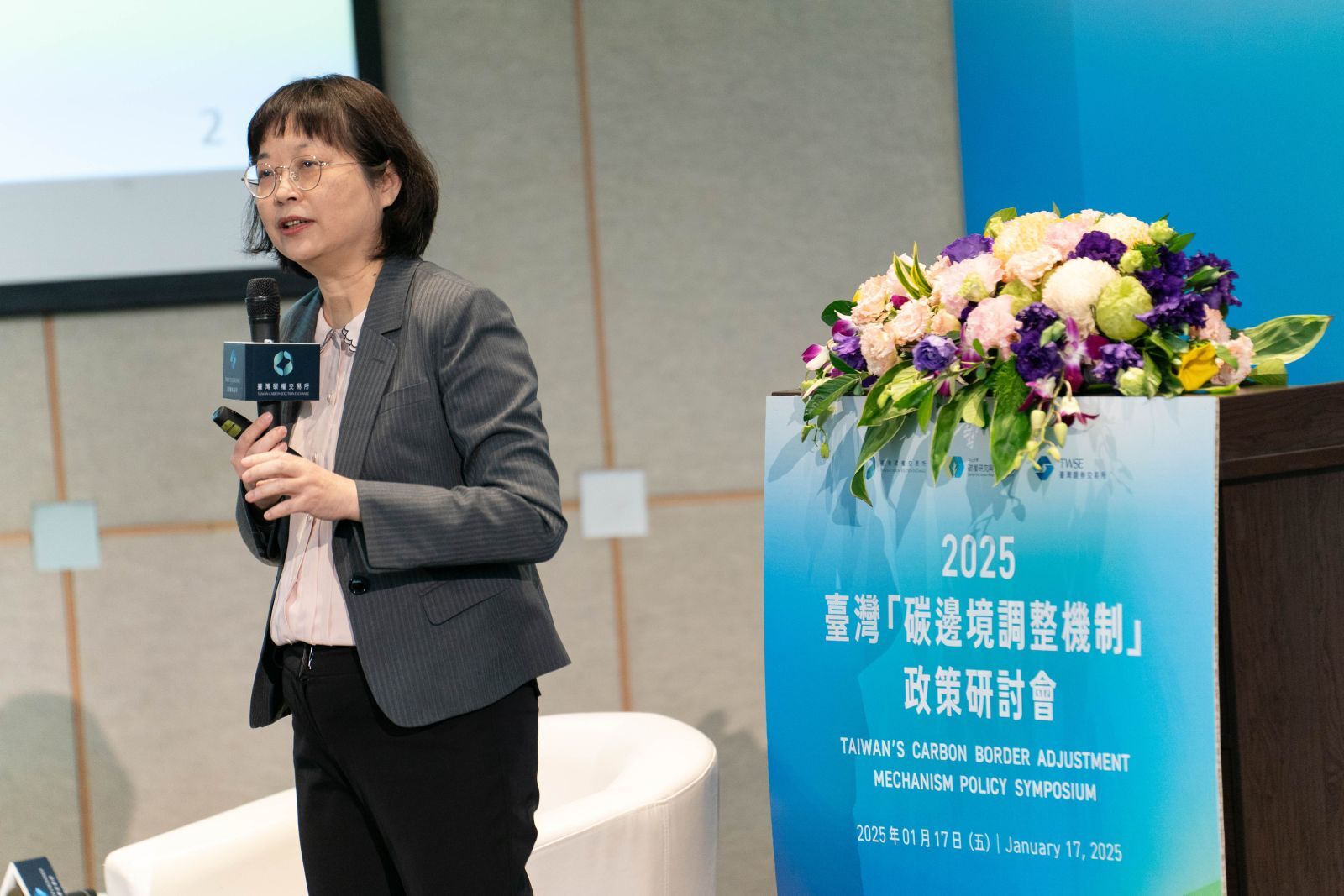
How should Taiwan's carbon fee mechanism react? Who are the primary targets of the levy?
When Taiwan’s Climate Change Response Act was passed in 2023, it also included regulations related to carbon fees, indicating that the main targets of the levy are emission sources that emit more than 25,000 tons of greenhouse gases per year. There are around 280 enterprises and their associated factories fall within this scope in Taiwan. Currently, the standard carbon fee rate is 300 NTD per ton, yet, if a regulated entity submits a voluntary reduction plan and its 2030 reduction target meets the requirements set by the Ministry of Environment, it can enjoy a preferential rate for only 100 NTD per ton, or even as low as 50 NTD per ton for more ambitious goals. Ling-Yi Tsai added, "our aim is to use these preferential rates to encourage factories to expand their carbon reduction efforts.”
Ling-Yi Tsai also emphasized, “we must implement carbon pricing in Taiwan. If we don’t take responsibility for the carbon cost of our own production, how can we have meaningful communication with the EU?”
Charging fees is not the goal, reducing carbon emissions is
In the starting phase, the EU grants nearly 100% free allowances to industries with high risk of carbon leakage, known as industries with high emission intensity and high trade exposure. However, by 2030, only 51% of the allowances will remain free, and by 2034, all emissions will be subject to carbon fees. This phased approach is designed to prevent carbon leakage. Similarly, Taiwan applies a coefficient of 0.2, meaning that enterprises only need to pay for 20% of their carbon emissions, this approach is to help reduce the competitive burden compared to imported products.
Ling-Yi Tsai explained, “Under this set of tools, the actual carbon fees we can collect will be very minimal. However, by 2030, we estimate that it could lead to a carbon reduction of 37 million tons.” She also noted that 88% of the regulated entities in Taiwan are willing to submit voluntary reduction plans.
In order to ensure fair trade, Taiwan still needs to carefully consider which imported products should be subject to declaring emission data and how to verify reduction amounts. Ling-Yi Tsai emphasized, “the goal of CBAM is to encourage global carbon reduction. So, we should take this as an opportunity to strengthen our capabilities in carbon inventory and verification for emission sources and factories, and to implement carbon pricing in Taiwan. More importantly, our industries must move toward low-carbon production and actually achieve emission reductions.”