
Industry, Government and Academia Experts Gathering at the CBAM Seminar, the Discussion for TW CBAM Begins
Representatives from industry, government, academia and research fields participated in the “Taiwan CBAM Policy Seminar”. (left to right) Team Leader of the CCRS of NSYSU - Associate Professor Chien-Yuan Sher, Consultant of ERM Taiwan Co. Ltd. and Chung-Hua Institution for Economic Research - Dr. Lih-Chyi Wen, Director of the CCRS of NSYSU - Professor Hung-Jeng Tsai, Deputy Minister of Ministry of Environment - Wen-Chen Shih, General Manager of TWSE - Edith Lee, General Manager of TCX - Joshua Tien, Associate Dean of College of Sustainability, National Tsing Hua University, Professor Chien-Te Fan, National Chengchi University Department of International Business - Associate Professor Ching-Wen Hsueh, Team Leader of the CCRS of NSYSU - You-Ren Wang.
With the implementation of carbon fee in Taiwan, and the EU CBAM expected to be officially implemented in 2026, in order to react to the impact of the global carbon pricing era, the TCX, TWSE, and the CCRS of NSYSU held the "2025 Taiwan Carbon Border Adjustment Mechanism Policy Seminar", inviting important representatives from industry, government, academia and research fields to discuss the impact of carbon fee on domestic industrial development and policy formulation. The seminar attracted the participation of more than 100 industry professionals.
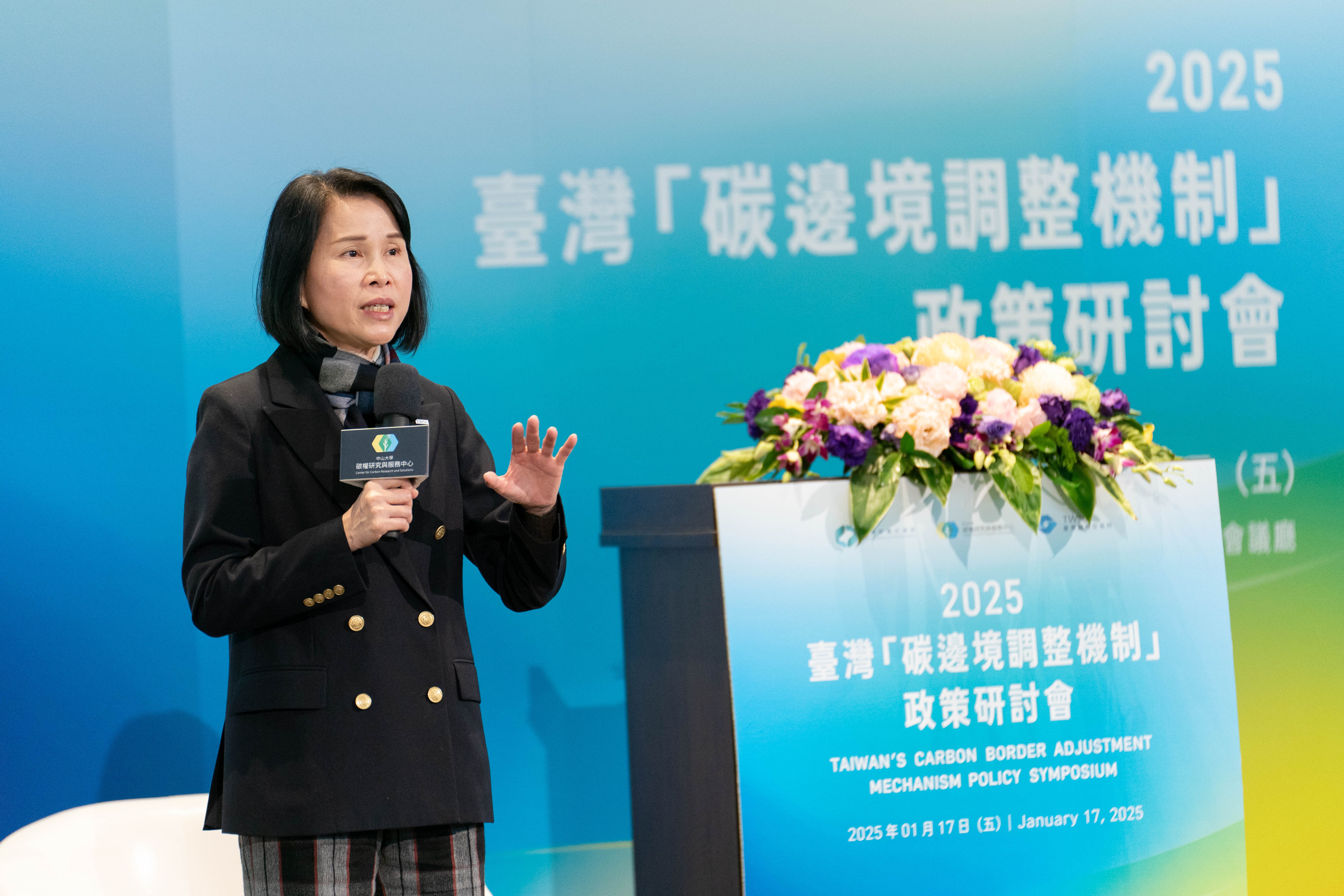
Edith Lee, the General Manager of TWSE stated that the implementation of a carbon pricing system has become a global trend. In addition to paying attention to carbon reduction issues, companies urgently need to maintain their own industrial competitiveness at the same time.
Edith Lee, the general manager of TWSE said that global climate action is accelerating and carbon pricing mechanisms have become an international trend. Recently, Li-chiun Cheng, the Executive Yuan Vice Premier pointed out that Taiwan's carbon fee system will accelerate the transition to the cap and trade mechanism (Emission Trading Scheme, ETS), which is expected to be implemented in 2026, thereby speed up the formation of the Taiwan version of CBAM, creating a fair operating environment for Taiwanese enterprises and enhancing their competitiveness in the international market.
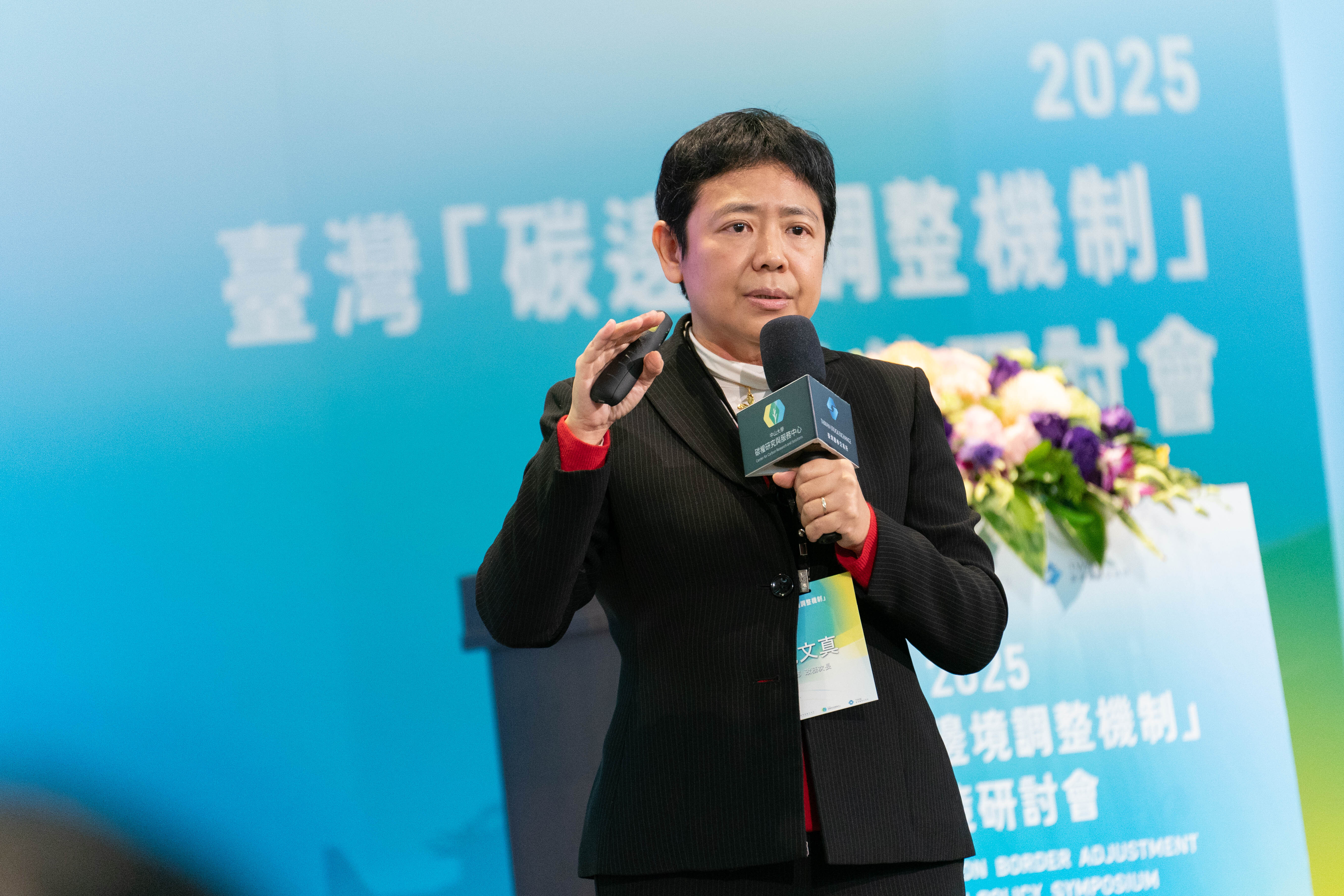
The seminar invited the Deputy Minister of the Ministry of Environment, Wen-Chen Shih to give an opening speech. She approached the issue from an international economic and trade perspective, explaining border adjustment measures under the WTO rule of law. Deputy Minister Shih first analyzed the design of the EU CBAM, and then proposed the legal considerations that should be taken in designing a CBAM towards Taiwan's carbon fee, in order to maintain fair competition between domestic and foreign industries while reducing the risk of carbon leakage.
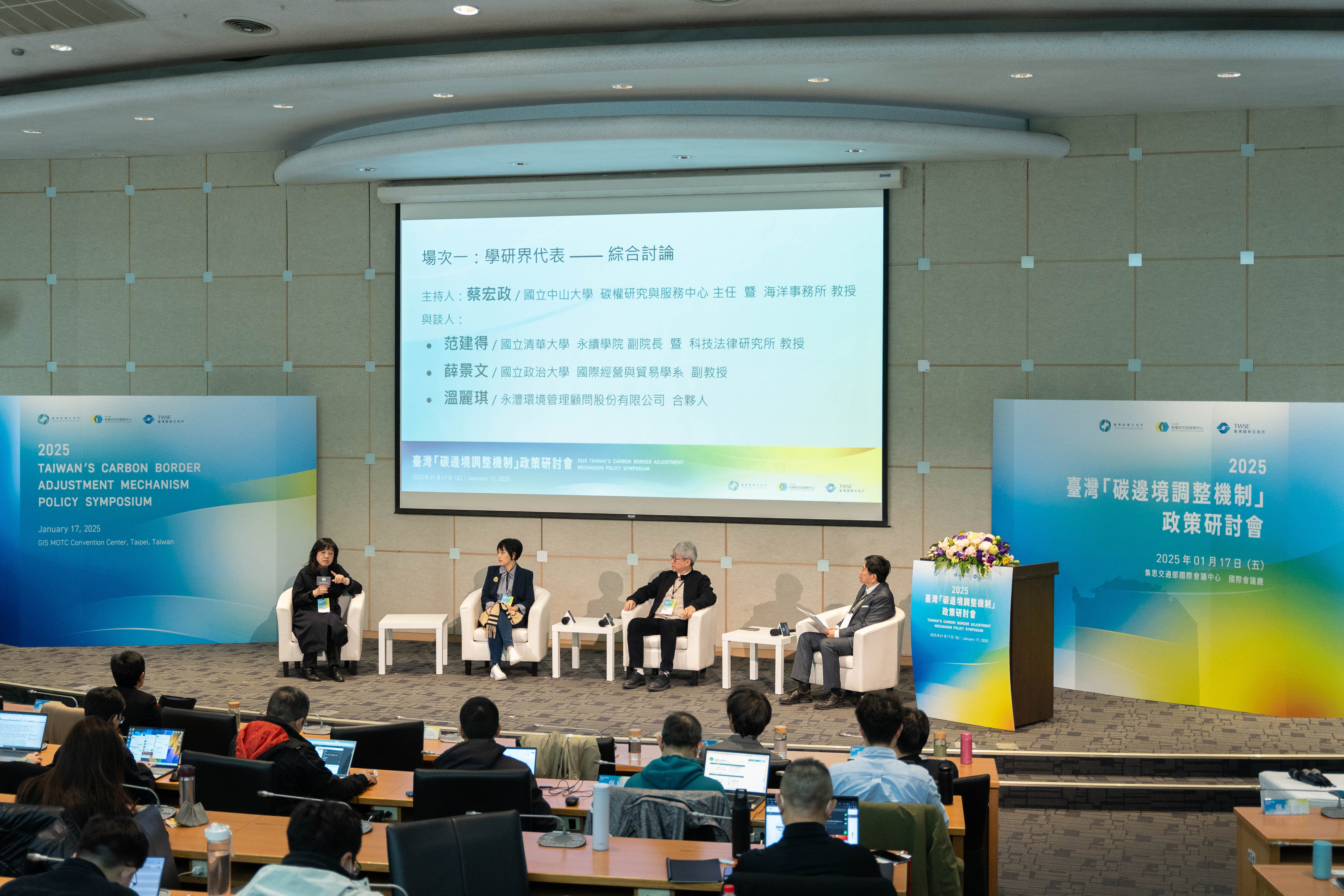
In the first comprehensive discussion of the seminar, expert representatives from the academic and research fields held the conversation. (left of right) Consultant of ERM Taiwan Co. Ltd. and Chung-Hua Institution for Economic Research - Dr. Lih-Chyi Wen, National Chengchi University Department of International Business - Associate Professor Ching-Wen Hsueh, Associate Dean of College of Sustainability of National Tsing Hua University - Professor Chien-Te Fan, and the host of the discussion, Director of the CCRS of NSYSU - Professor Hung-Jeng Tsai.
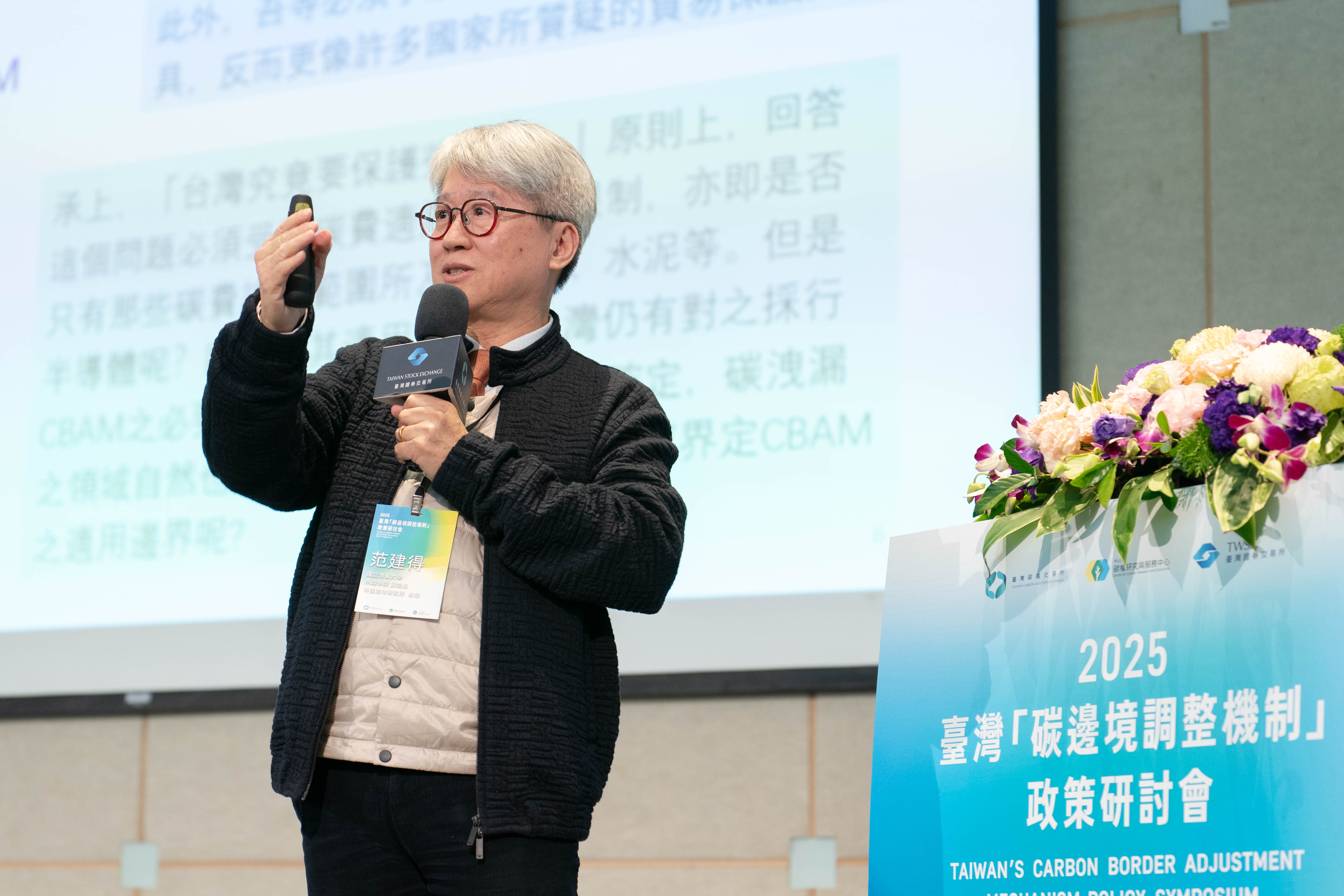
Professor Chien-Te Fan, the Associate Dean of College of Sustainability of National Tsing Hua University, pointed out that Article 31 of the Climate Change Response Act has a similar mechanism design with carbon emission fee, and legal authorization for products imported into Taiwan. However, the progression of the Taiwan version of CBAM under the carbon fee system puts greater pressure on industry compliance. Whether to introduce the Taiwan version of CBAM at this stage should be comprehensively and carefully evaluated. Ching-Wen Huseh, associate professor of the National Chengchi University Department of International Business, discussed the rationality and necessity of implementing the Taiwan version of CBAM from the perspective of international economic and trade law, and proposed that the regulating subjects of Taiwan's carbon fee system is different from the EU CBAM. It will be a big challenge in terms of carbon emission calculations and conversions. Tzu-Luen Lin, Associate Professor of the National Taiwan University Department of Political Science, affirmed that CBAM can add new momentum to carbon pricing and enhance the competitiveness of domestic industries, from the perspective of the global environmental political economy. However, it still faces the challenge of high administrative complexity. Dr. Lih-Chyi Wen, consultant of ERM Taiwan Co. Ltd. and Chung-Hua Institution for Economic Research, emphasized from a sustainable perspective that CBAM is a price war in the carbon pricing market and a quantity war on carbon emissions. Taiwan should establish a local ETS and CBAM system as soon as possible to help enterprises cope with the impact of global climate policies.
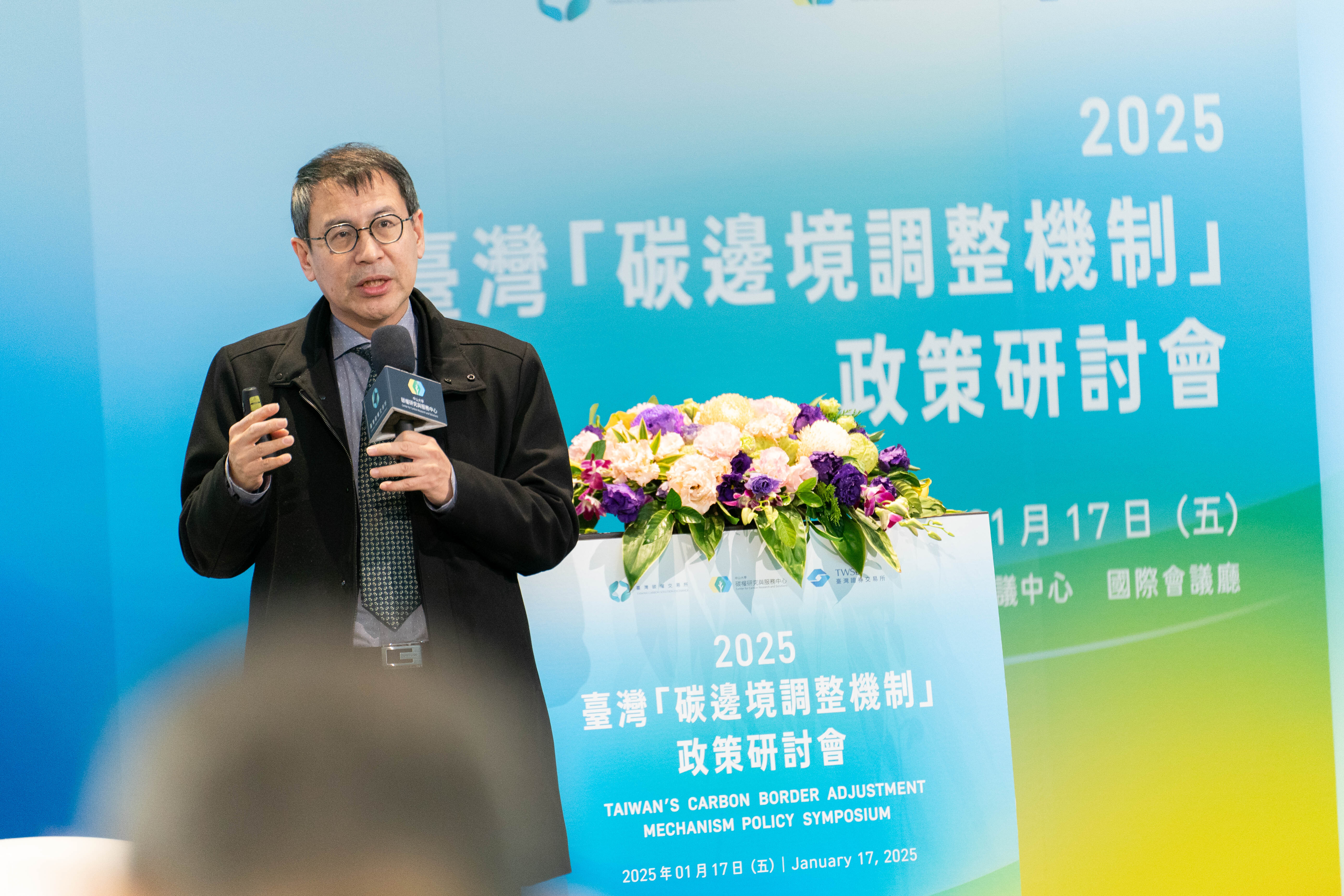
Yu-Jun Yeh, deputy general manager and chief sustainability officer of the Taiwan Cement Corporation, emphasized that the cement industry is currently facing domestic regulations that lead to restrictions to the use of low-carbon cement, and imported cement does not have to bear import tariffs, which dumped more pressure onto the domestic cement industry. Therefore, she strongly suggested the formulation of Taiwan CBAM and claimed the necessity of the declaration of carbon emissions from imported high-carbon emission products to create a fair competition environment for the low-carbon transformation of enterprises in Taiwan. Chih-Wei Chang, team leader of the Environmental Protection Department of China Steel Corporation (CSC), shared the company's experience in responding to the EU CBAM and low-carbon transformation. In addition to internally adopting dual-target carbon management measures for total greenhouse gas emissions and carbon emission intensity, CSC also worked with the downstream supply chain to provide customers with declaration information that is better than the EU CBAM standards. Jang-Hwa Leu, secretary general of the Chinese National Federation of Industries, said that a carbon pricing response group was established this year to promote the collection of opinions from various industries. He suggested that the domestic carbon pricing system should take into account the fairness and practical feasibility of industries' cross-border competition, formulate complete supporting measures, and implement the Taiwan version of CBAM simultaneously.
Jen-ni Yang, Executive Yuan Officer hosted the comprehensive discussion for the government representatives session. Dr. Ling-Yi Tsai, Director General of Climate Change Administration of the Ministry of Environment, said that they will formulate a timeline for the implementation of the Taiwan version of CBAM, starting with the declaration of carbon emission intensity of high-carbon leakage products (such as steel, cement, etc.), and solicit public opinions on carbon emission calculations and verification methods of products, then follow by evaluating and amending domestic regulations. Huai-Shing Yen, Deputy Trade Representative of Office of Trade Negotiations of Executive Yuan, explained that if the Taiwan version of CBAM is implemented, issues concerned by foreign stakeholders should be considered, such as obligation of procedure transparency, and avoiding trade barriers when implementing third-party verification requirements. Christoph Saurenbach, Head of Trade Section at European Economic and Trade Office, pointed out that the EU CBAM system is not for tariff purposes and is in line with WTO regulations, and it is to aim for the opportunity to pursue decarbonization with trading partners. Je-Liang Liou, Director of the Center for Energy and Environmental Research of the Chung-Hua Institution for Economic Research, emphasized that the EU CBAM does not directly measure the financial impact by using the EU emission credit market price and Taiwan's carbon fee rate, but rather compares the carbon cost borne by each unit of product. He also explained that the carbon pricing cost should be stabilized first, and then the carbon data of traded products should be available before further consideration of the implementation of the CBAM is possible.
Professor Hung-Jeng Tsai, Director of the CCRS of NSYSU, said that this seminar brought together industry, government, academia and research fields to discuss the challenges and opportunities in Taiwan's promotion of CBAM, hoping to help industries in Taiwan to maintain their competitiveness and to gear up with international standards. In the future, the CCRS will continue to collaborate with the TCX and the TWSE to cooperate with national policies, using its expertise and resources, guide all sectors to brainstorm more sustainable and innovative ideas, jointly encourage climate transition, and help Taiwanese industries steadily move towards the 2050 net-zero emission target.
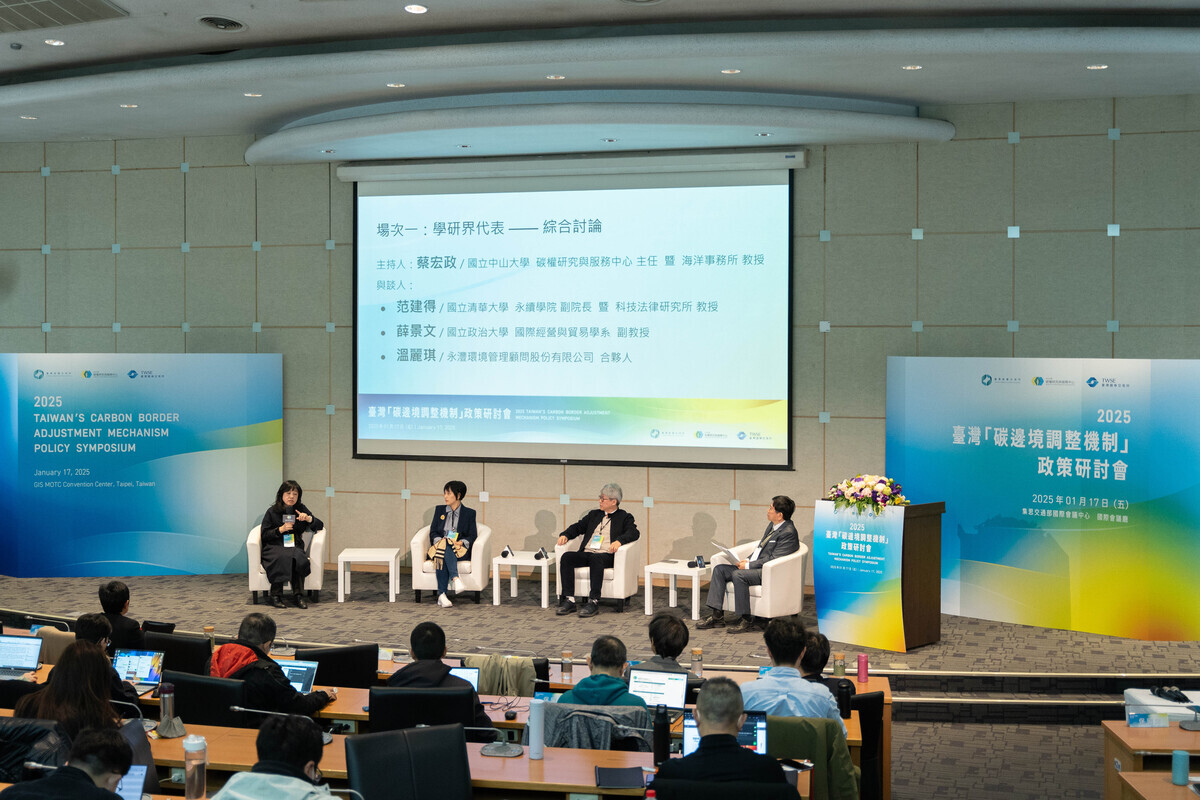
The seminar attracted the participation of more than a hundred industry owners and policy researchers who were concerned about the country’s net-zero direction, and they aimed to obtain first-hand information on the latest policy planning and mindset.
🔗Article Source:NSYSU NEWS