
Global Net-Zero Target is in Great Need of New Generation Innovation, Chief Secretary of the Ministry of Economic Affairs Talks about Energy Transition
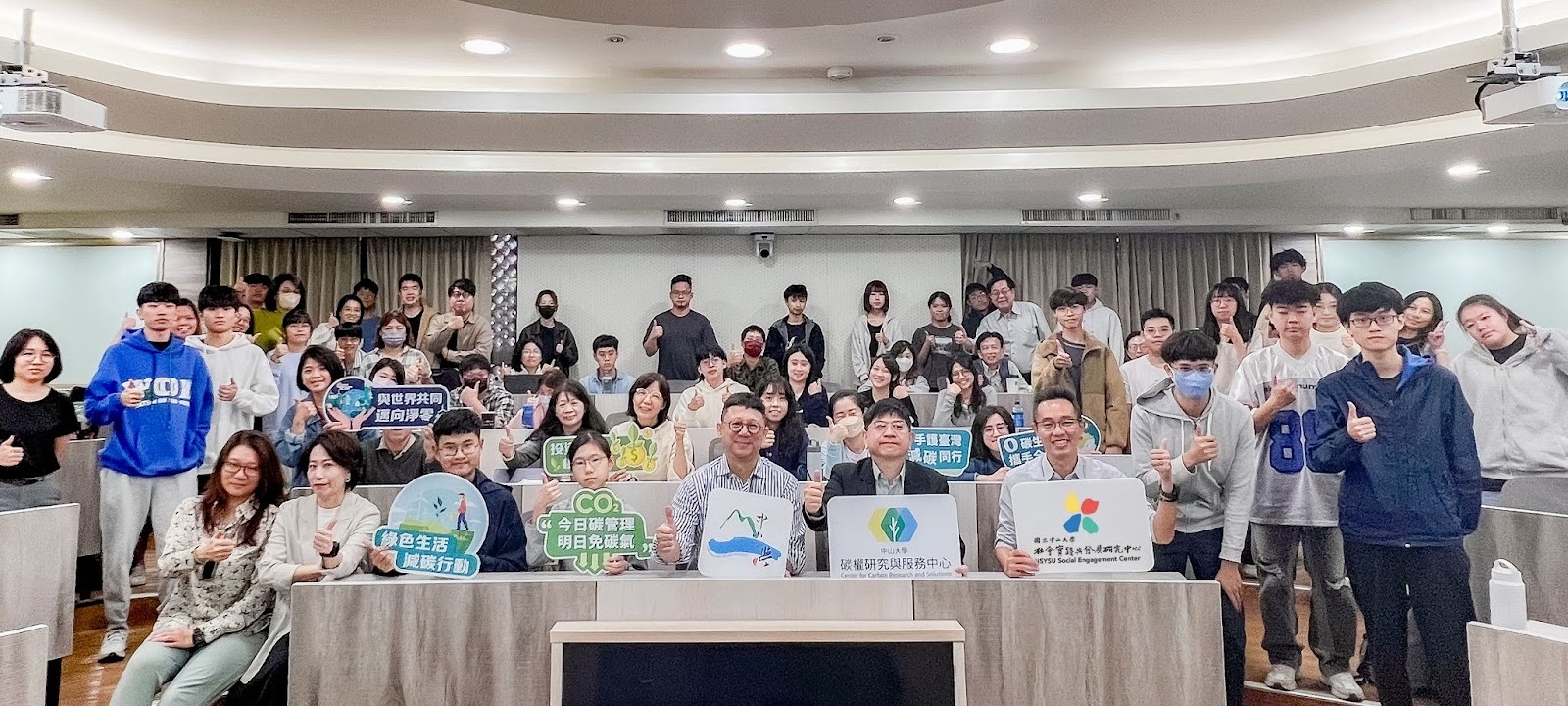
The Center for Carbon Research and Solution (CCRS) of National Sun Yat-sen University (NSYSU), in collaboration with the College of Management, hosted a special lecture “Net-Zero Carbon Planning and Management”. To deepen understanding of the transitional challenges that Taiwan is facing, and the net-zero strategies proposed in response, the event invited Ming-Chih Chuang, Executive Secretary of the Ministry of Economic Affairs, to deliver a speech on “The 2050 Net-Zero Challenge and Transformation Opportunities – Global and Taiwan’s Response Strategies”. From a policy perspective, Ming-Chih Chuang shared with teachers and students the challenges and responses at the national level in net-zero governance.
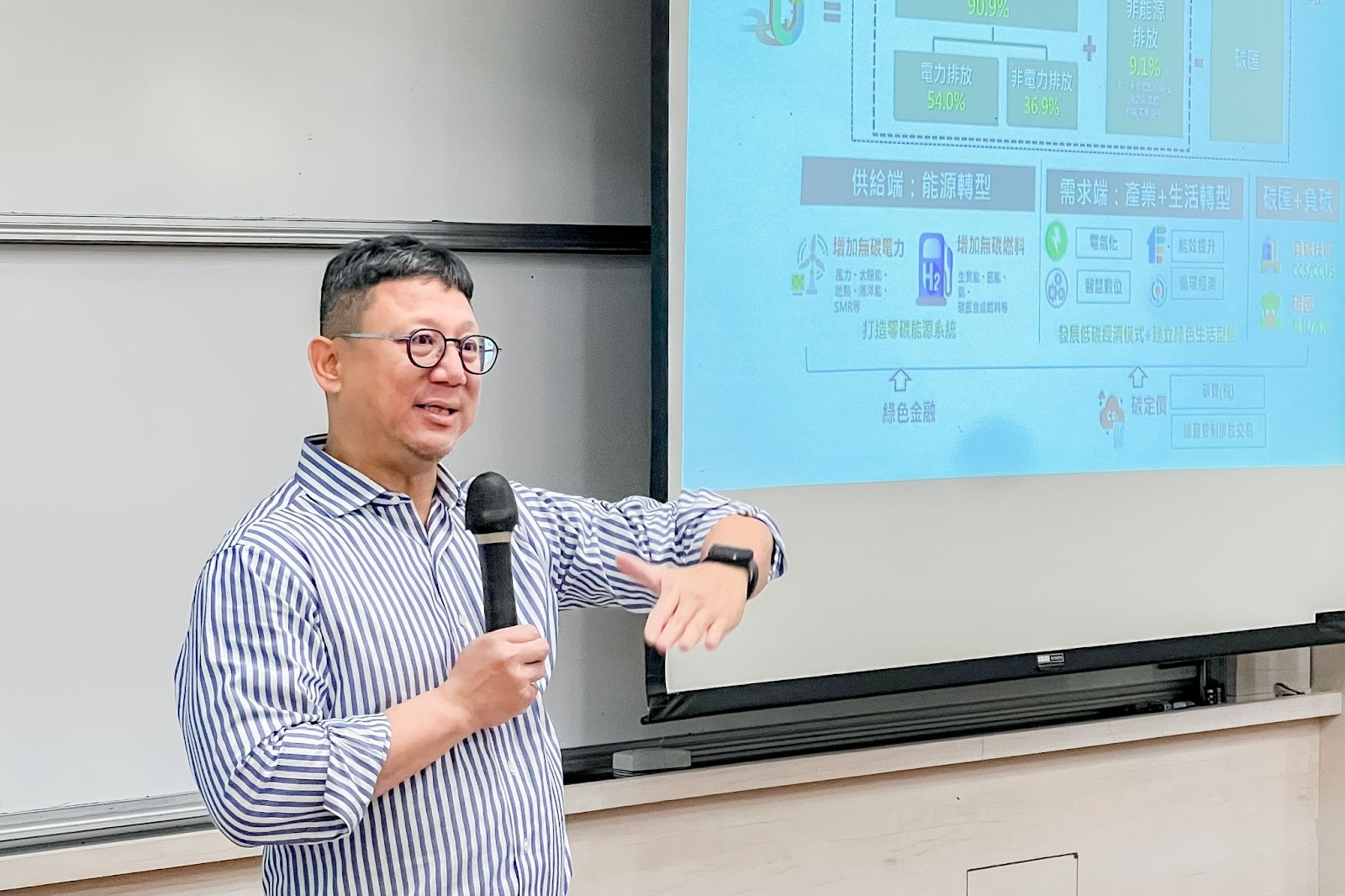
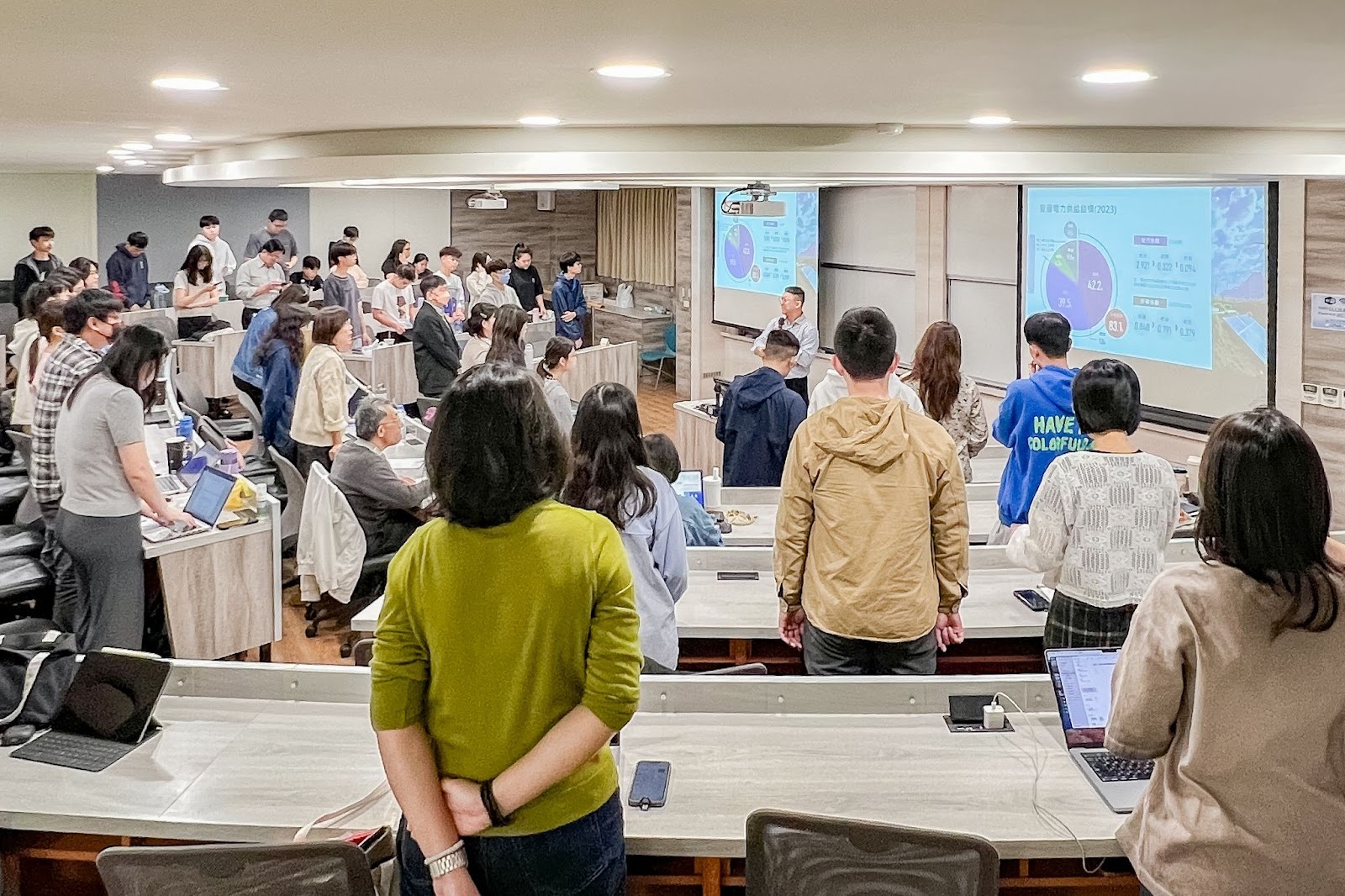
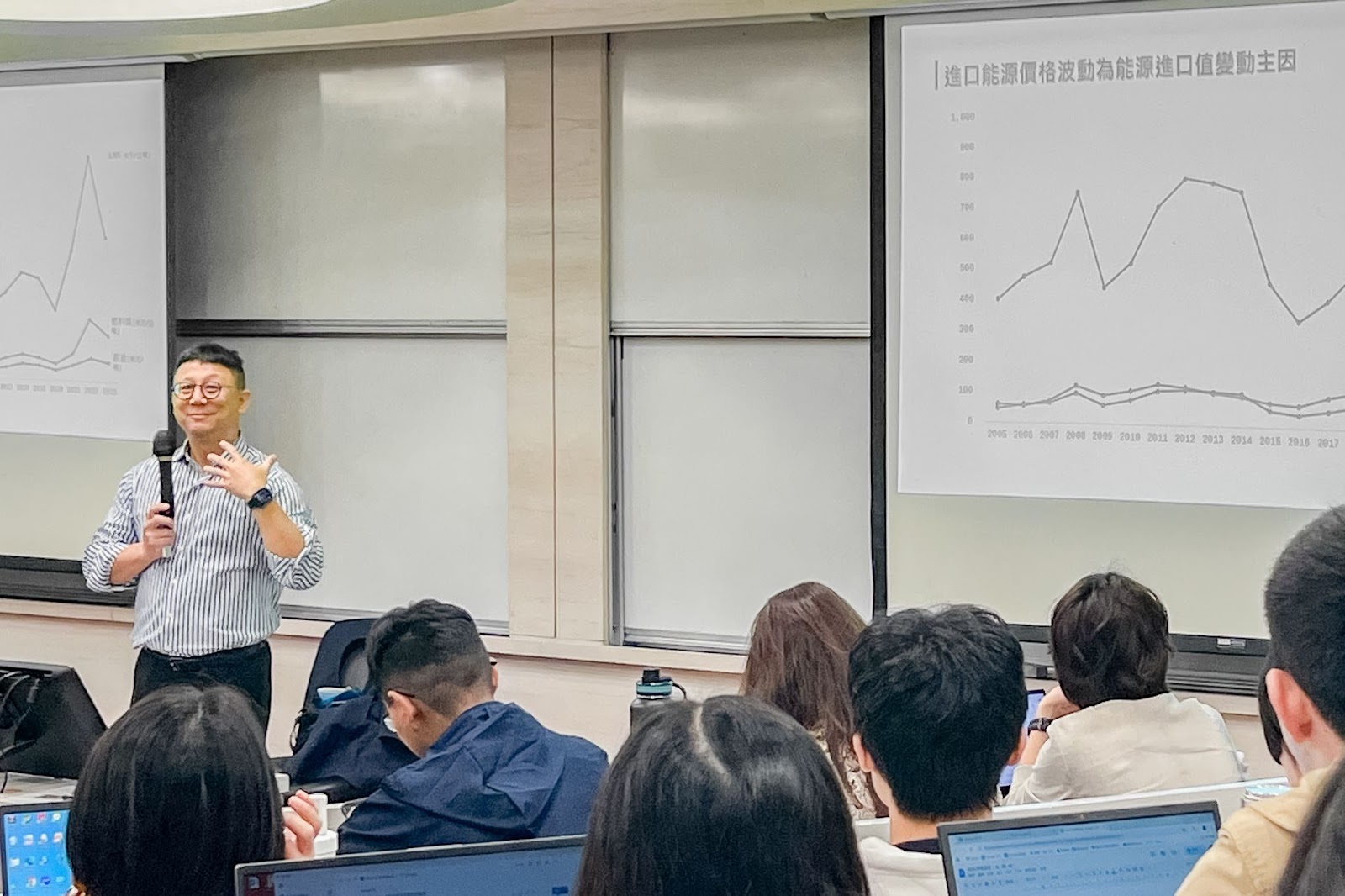
Greenhouse gas emissions from global energy production and consumption account for the largest share of total global emissions. Ming-Chih Chuang, who has extensive cross-sectoral experience in national energy development strategy and greenhouse gas reduction efforts within the Ministry of Economic Affairs, emphasized that to achieve the goal of limiting global warming within 1.5°C by 2050, net-zero transformation of the global energy system plays a critical role. Ming-Chih Chuang began the lecture with a quiz game to guide students into the context of energy issues in a fun and interactive way. He gradually analyzed the relationship between energy and greenhouse gas emissions, starting from Taiwan’s energy supply structure, energy import dependency, and the proportion of energy consumption of the industrial sector, to the country’s electricity emission factor. He also highlighted the complexity of energy issues, which are closely tied to various industrial structures and economic considerations.
Ming-Chih Chuang pointed out that the world must undergo significant transformation and change over the next 26 years to achieve net-zero emissions and react to the impacts of climate change. He noted that while change inevitably brings uncertainty, it also creates many new possibilities. These represent the opportunities and choices that the students attending the lecture will face during the prime years of their lives over the next two decades. The reports from the International Energy Agency (IEA) show that 40% of the world’s carbon reduction potential still relies on technologies that are not yet commercially mature. Therefore, doubling on and accelerating the enhancement and investment in clean energy technology innovation is essential to make global net-zero goal a reality. Starting from now, understanding net-zero trends and the critical technology gaps will serve as a turning point for young students to drive change in their respective fields, and hopefully make contributions to global sustainability.
Under the global consensus on achieving net-zero emissions by 2050, accelerating corporate decarbonization and net-zero transformation has become a new trend for enhancing competitiveness and preparing for the future. To help boost employment competencies employment for NSYSU students, and guide them upon global sustainability issues, the CCRS and the College of Management at NSYSU have joined efforts to achieve the national goals set by the Ministry of Environment for cultivating green-collar talents; and by the Ministry of Economic Affairs for training net-zero professionals. Professor Hung-Jeng Tsai, Director of the CCRS, launched a course with credits on “Net-Zero Carbon Planning and Management” inviting experts and scholars from various fields to give lectures and guide NSYSU students in exploring the world of sustainability and net-zero transformation.
🔗Article Source:NSYSU NEWS