First Time in Kaohsiung, NSYSU Organizes Development Research Annual Conference for Net-Zero Transition
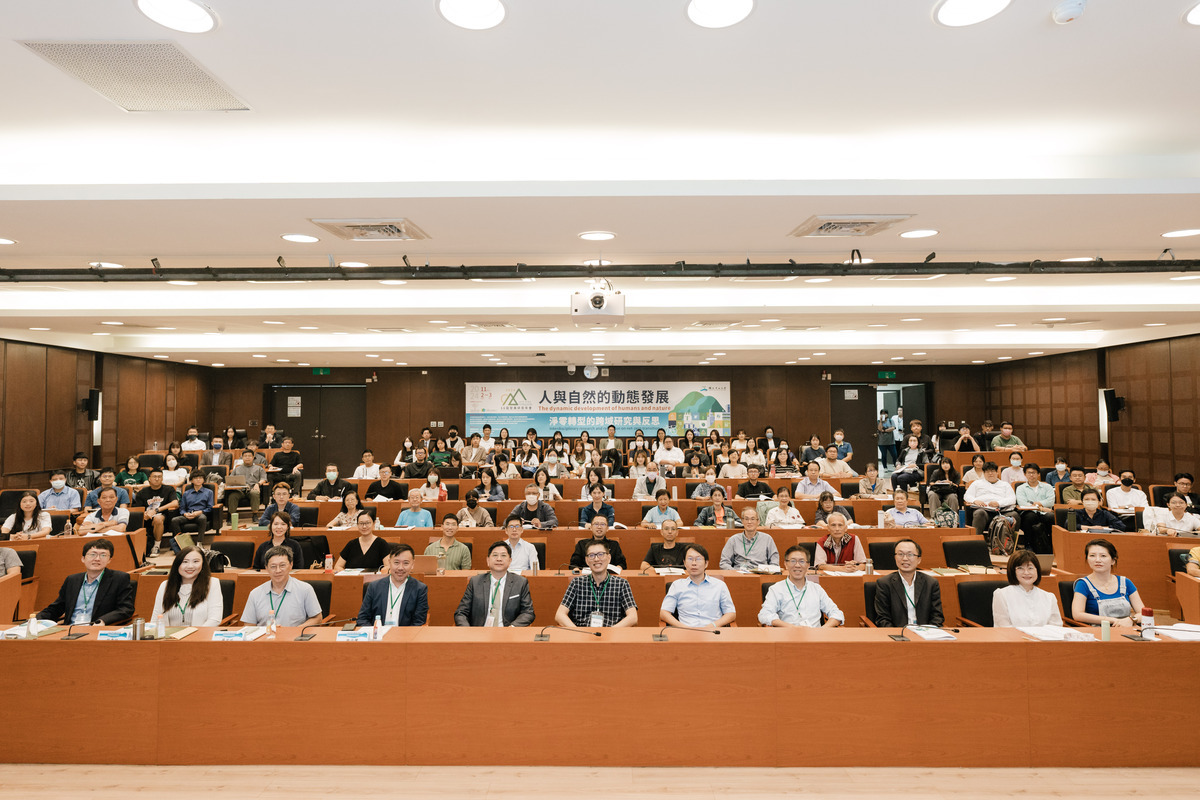
The "2024 16th Annual Conference on Development Studies – The Dynamic Development Between Human and Nature: Interdisciplinary Research and Reflections on Net-Zero Transition" was held in southern Taiwan for the first time. Co-hosted by the Center for Carbon Research and Solution (CCRS), the Institute of Public Affairs Management at National Sun Yat-sen University (NSYSU), and the Taiwan Association for Development Studies, the conference received a record-breaking number of submissions and attracted nearly 400 participants to Sizihwan, engaging in discussions on net-zero transition and delved deeply into local issues such as Kaohsiung’s urban transformation and environmental governance.
This year’s conference featured a diverse range of themes, covering critical issues such as global climate change and energy transition, carbon credits and carbon trading, global governance and international cooperation, University Social Responsibility (USR), as well as regional and urban-rural development. On July 2nd and 3rd, the conference was held at National Sun Yat-sen University, consisted of 28 sessions and featured presentations of 108 research theses, attracting nearly 400 attendees from academia, industry, government, and the general public, with a high level of engagement and participation. In the vibe of active interaction, the conference successfully provided a cross-regional and cross-generational platform for communication, it also sparked numerous innovative research ideas and policy advice, helping to build consensus and shared goals. Moreover, as the event was held in Kaohsiung, the discussions also placed special emphasis on local issues such as urban transformation, environmental governance, sustainable transportation, and just transition.
Liang-Chih Chen, Chairman of Taiwanese Association for Development Studies, stated that the Annual Conference on Development Studies is an important platform for academic communities in Taiwan to exchange ideas on various aspects of development. The theme of this year, “The Dynamic Development Between Human and Nature: Interdisciplinary Research and Reflections on Net-Zero Transition” resonates with several recent keywords in development studies, such as the human-nature relationship, interdisciplinarity, and critical reflection. Given that the event was hosted by the CCRS at NSYSU, many of the papers presented at the conference delved deeply and concretely into the issue of net-zero carbon emissions, which is a topic with growing concern globally and in Taiwan.
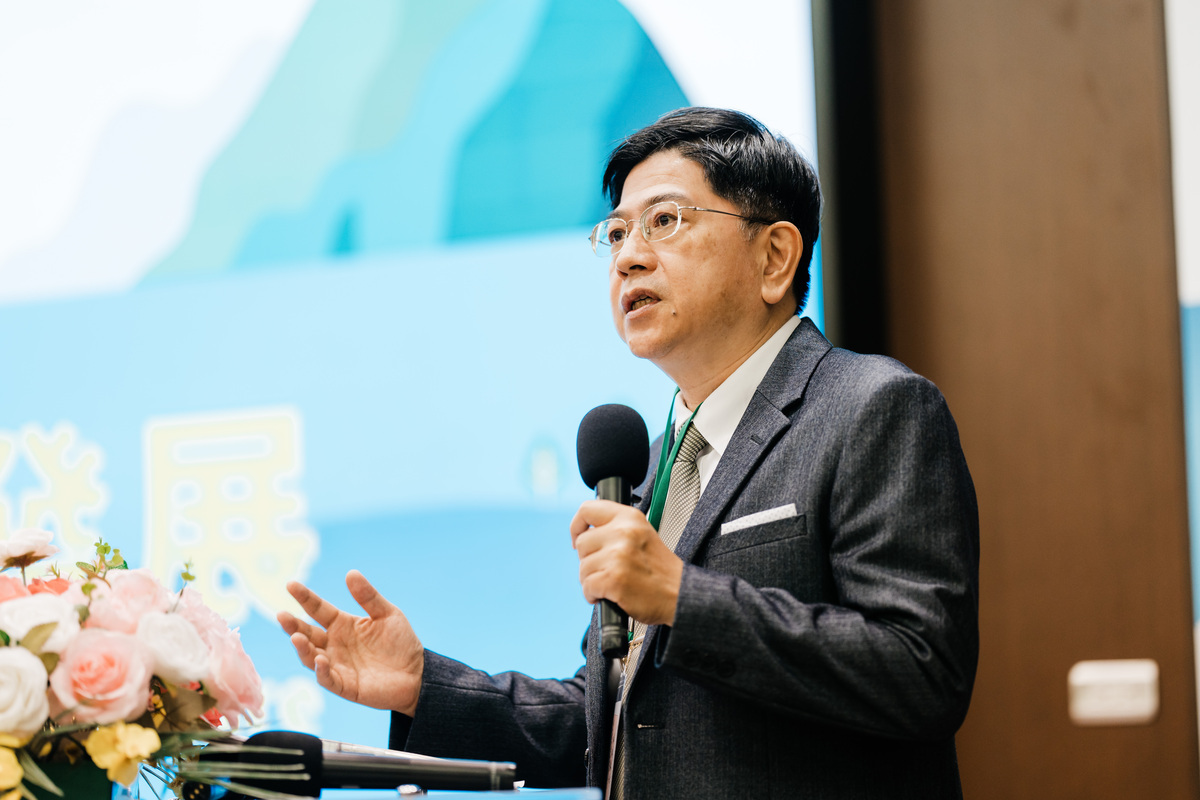
Professor Hung-Jeng Tsai, Director of the CCRS at NSYSU, believes that development studies have evolved through several phases since World War II. From the modernization theories of 1945 to the late 1960s, to the leftist dependency and world-systems theories of the 1970s, the field then shifted toward neoliberal deregulation in the 1980s. This gave rise to globalization theories and the United Nations' Sustainable Development Goals (SDGs) introduced in 2015. Each phase has involved different configurations of economic growth, social development, and ecological conservation. Professor Hung-Jeng Tsai emphasized that this year's conference focuses on the theme "Dynamic Development between Humans and Nature", introducing invited scholars to respond to and reflect on the developmental trends from diverse perspectives, triggering engaging discussions and idea exchange, fostering the construction of a broader network of development studies .
Associate Professor Sang-Ju Yu from the Institution of Public Affairs Management at NSYSU, and one of the organizers of the annual conference, stated that the world is currently facing severe challenges from climate change and ecological crises, and the increasing impact of extreme weather events underscores the significance of the theme of this event. He emphasized that, by hosting the annual conference in southern Taiwan for the first time, it was to offer an opportunity for participants to witness how Kaohsiung, a traditionally high-carbon heavy industrial city undergoing transformation, strives toward becoming a livable, sustainable, and low-carbon city, under the challenges of unequal urban competition and imbalanced regional development.
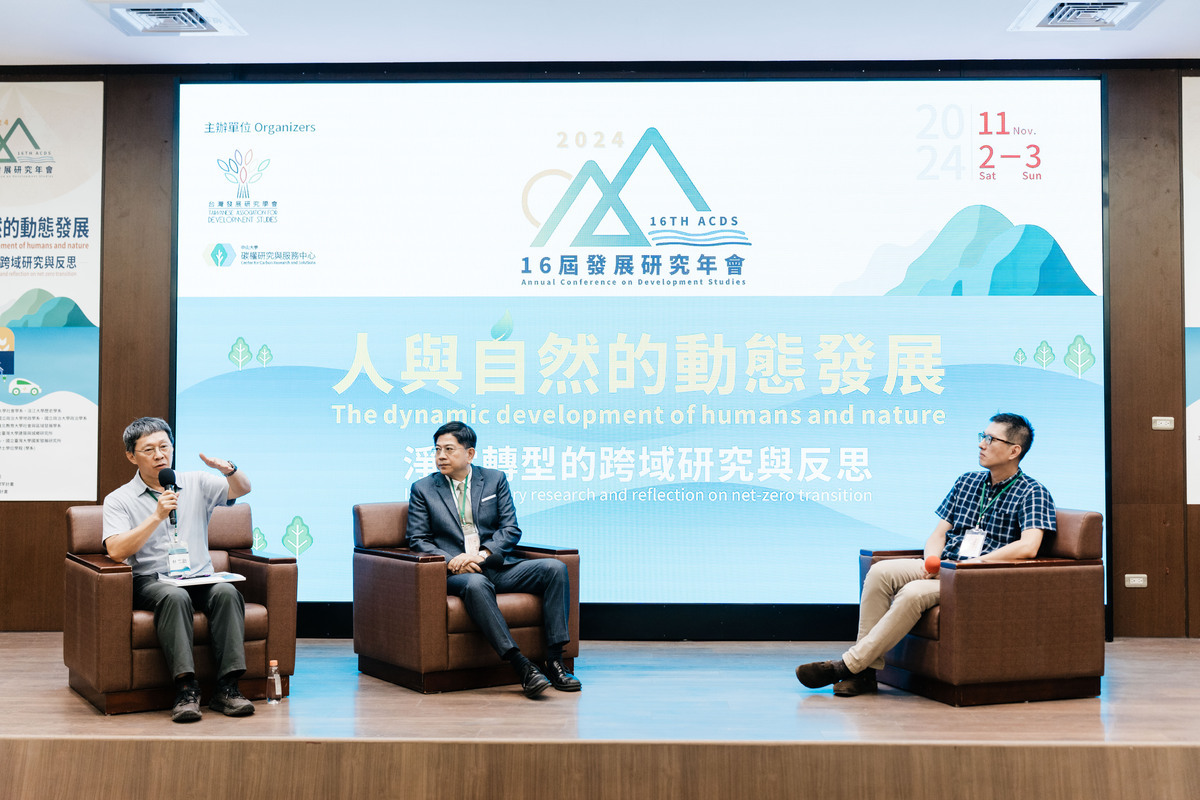
Representatives from NSYSU stated that the organizers invited experts and scholars from multiple fields to deliver three engaging feature lectures, creating an academic vibe for insight exchange. The first session featured Professor Hung-Jeng Tsai and Distinguished Professor Hsing-Juh Lin from the Department of Life Sciences at National Chung Hsing University, widely known as the father of blue carbon in Taiwan. They explored the significance and purpose of carbon credits, carbon pricing, and nature-based carbon sinks for both humanity and the environment, from the perspective of economic, social, and environmental development. The second session, led by Professor Hong-Zen Wang, Dean of Si Wan College at NSYSU, and Distinguished Professor Shiuh-Shen Chien from the Department of Geography at National Taiwan University, focused on "interdisciplinary research." They discussed topics ranging from climate governance and the shifting boundaries of academic disciplines, to studies on the sociocultural development of indigenous communities in Wutai and the need for inclusive public engagement on just transitions. They also shared their valuable experiences in field investigation and knowledge exploration. The third session was delivered by Professor Kuei-Tien Chou, Director of the Risk Society and Policy Research Center at National Taiwan University. He took developmental environmentalism and just transition as the main topic, examining how Taiwan responded to the challenges and impacts of transformation under the unique historical and socio-political contexts during different stages of development.
🔗Article Source:NSYSU NEWS