
[Think Tank] Why Does Each Carbon Credit Project Have a Different Price? A Brief Introduction to Co-Benefits
At the end of last year, the Taiwan Carbon Solution Exchange (TCX) completed its first batch of voluntary carbon credits (also known as carbon offset allowance) transactions, and several additional batches are to be listed this year. If paid with much attention, it's not hard to notice the price differences among these sold or upcoming credits. The general public may wonder, why is there such a significant price gap between different projects, even when each represents the same amount of tCO₂e?
In the previous article, we mentioned that carbon credit markets are somewhat similar to real estate markets, where project prices vary due to different project characteristics. The most crucial factor is whether the emission reductions claimed by a voluntary carbon credit project are truly valid. The industry typically uses the principle of "additionality" to assess this. To simply put, "additionality" means that the claimed emission reductions would not have occurred under the existing local natural or social conditions, instead, they are the result of the project's direct intervention.
In addition to the principle of "additionality", another important factor that influences the price of a carbon credit project is its "co-benefits". Simply put, this refers to the additional positive impacts followed by the implementation of a carbon reduction project. More detailed explanations of this concept will be presented in the following.
What is a co-benefit?
The so-called "co-benefits" generally refer to the additional positive outcomes that a project brings, not only by reducing greenhouse gases in the atmosphere, but also by providing other advantages to the local community and natural environment where the project is implemented. For example, in a reforestation project, if the primary goal is simply to plant fast-growing trees to quickly generate carbon credits, there is a risk of introducing invasive species that could harm the local ecosystem. However, if tree species are carefully selected, the project can help capture greenhouse gases, and also improve the ecological environment and restore local biodiversity.
Another example would be a project that converts a coal-fired power plant in a developing country into a wind power facility. If the construction process actively employs and trains local workers, it can also provide education opportunities and help lift the local community out of poverty. However, if the project relies solely on external labor, there wouldn't be such co-benefits.
In the early days, some carbon credit projects were poorly planned and occasionally caused harm to surrounding communities or the natural environment. To distinguish such projects, the "no net harm" principle was established as a quality benchmark. This also led to discussions of concepts like "fair carbon" and "social carbon". However, in recent years, as more projects are carefully designed and implemented, the expectation has shifted from simply avoiding harm to actively delivering benefits to local communities and ecosystems. This evolution has turned into a standard for assessing "co-benefits".
How to define “co-benefits”?
Although institutions and scholars generally share a basic understanding of what constitutes "co-benefits", there is still no unified, precise definition or standard. As a result, there is a wide range of practices for quantifying and certifying co-benefits in the market, with varying levels of quality. A common approach is to reference the United Nations’ "Sustainable Development Goals" (SDGs) to identify and categorize co-benefits. The SDGs consist of 17 goals, including eradicating poverty and hunger, promoting health and sanitation, improving education, innovation, infrastructure and economic growth, advancing equality and justice, and achieving environmental sustainability and ecological conservation. Developers of carbon credit projects may claim that their projects contribute to certain SDGs. However, whether these claims are valid, will be determined by the respective voluntary carbon credit certification bodies which they claim to perform further evaluations.
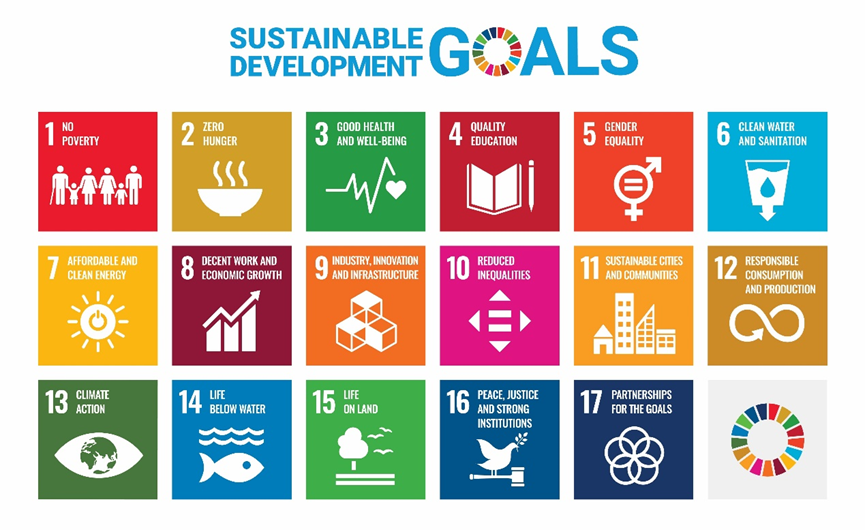
However, when it comes to so-called "verification", some industry insiders have pointed out that it often involves merely reviewing paper documents submitted by project developers. A common scenario is that certain projects launched before 2015 also claim to have achieved specific SDGs, however, since the SDGs were only introduced by the United Nations in 2015, such claims are essentially retroactive and are likely based solely on document reviews. In response, some voluntary carbon credit certification bodies have recently introduced specific certification labels for SDG compliance.
Take "Verra", the certifying body behind the Verified Carbon Standard (VCS) as an example. Verra has recently introduced the Sustainable Development Verified Impact Standard (SD VISta) label. When project developers register for voluntary carbon credit certification from VCS, they can also apply for the SD VISta label (with an additional fee), then Verra will commission third-party organizations to conduct both document-based and on-site verification for the project, specifically to ensure the qualification of SDGs. These third-party verifiers are subject to separate regulations and undergo regular audits, thus are capable of performing a certain level of verification work.
In addition to the SDGs, Verra has recently collaborated with other international environmental organizations to promote the "Climate, Community and Biodiversity (CCB) Standards" for carbon credit projects in agriculture, forestry, and other land-use sectors. These standards provide a more rigorous assessment of co-benefits. To obtain a CCB certification, projects must undergo both documentary and on-site audits by independent third-party organizations, and follow verified accounting methodologies for long-term monitoring and verification.
The premium brought by co-benefits
In general, projects with co-benefits tend to command higher prices in the market. According to a report by Ecosystem Marketplace, in 2022, projects with co-benefits were on average priced about US $4.66/tCO₂e (78%) higher than those without. This indicates that careful planning and additional efforts made for the benefit of local communities or the natural environment can be partially rewarded by the market. However, since different institutions vary in credibility and in their verification/certification methods, the market clearly perceives differences in the quality of these certifications.
According to our analysis of data on the global voluntary carbon market, even when other conditions are held constant, different projects registered under different certification bodies command varying premiums, even if they claim to achieve the same SDGs and the certifying bodies state that these claims have been reviewed. Whether a project has obtained additional certifications (such as the CCB Standard) also contributes to further premiums. Moreover, the same SDG, taking "Life on Land" (SDG 15) as an example, may carry different implications when applied to nature-based projects versus other types of projects. Clearly, the market assigns varying premiums according to these distinctions.
In light of this, buyers selecting carbon credit projects should pay close attention to whether the claimed co-benefits are valid, which organizations have reviewed them or whether the project has obtained certification labels, and what type of project they fall under. Careful evaluation is essential to avoid spending money on credits that do not truly deliver co-benefits, which could increase the risk of being criticized for greenwashing. Governments should also be mindful of this issue when reviewing carbon credits for listing.
The author holds a Ph.D. in Economics from Boston University and is currently a faculty member in the Department of Business Management at National Sun Yat-sen University. He is also a member of the Center for Carbon Research and Solution (CCRS). The author believes that policy advancement and social transformation must be grounded in solid research and analysis, rather than relying solely on preconceived abstract ideas. The CCRS established in 2023, mainly focuses on research related to voluntary carbon credits/carbon offsets and mandatory carbon credits/emissions allowances. CCRS also performs research on issues such as net-zero emissions and environmental sustainability. Based on this foundation, CCRS provides educational outreach, carbon consulting services, and policy suggestions, aiming to become a leading green economy think tank in Taiwan.
🔗Article Source:Voicettank