
[Think Tank] Why Does Each Carbon Credit Project Have a Different Price? A Brief Introduction to Additionality
On December 22nd, 2023, the Taiwan Carbon Solution Exchange (TCX) completed its first batch of transactions for voluntary carbon credits (also known as carbon offsets). The traded carbon credit prices ranged from 3.9 to 12 USD per metric ton. Many people may be confused by the price differences between various carbon credit projects. Why does one metric ton of CO₂e value at different prices across different projects? This seems to contrast with the general public’s understanding of how markets work.
This is because the voluntary carbon market is more similar to real estate markets, where the trading products are heterogeneous. In the real estate market, different properties command different price-per-unit based on their unique characteristics, such as the developer company, materials, location,etc. Similarly, in the carbon market, each project’s distinct characteristics lead to price differences among carbon credits.
The characteristics of carbon credit projects are generally referred to as carbon project quality criteria. Common criteria include: “Is the project's emission reduction real as it claims?” and “Does the project bring additional benefits to the surrounding communities and environment?” These factors are the key considerations of price differences among carbon credit projects.
The key factor for assessing the quality of voluntary carbon credits: additionality
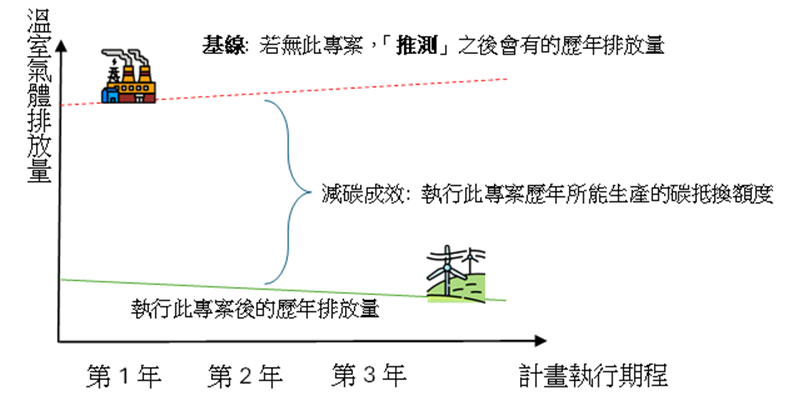
Among the characteristics that determine the quality of carbon credits, the most important characteristic is whether the project’s claimed emission reductions are truly real. To assess this, several criteria are commonly used. This article will introduce the most frequently discussed principle: additionality.
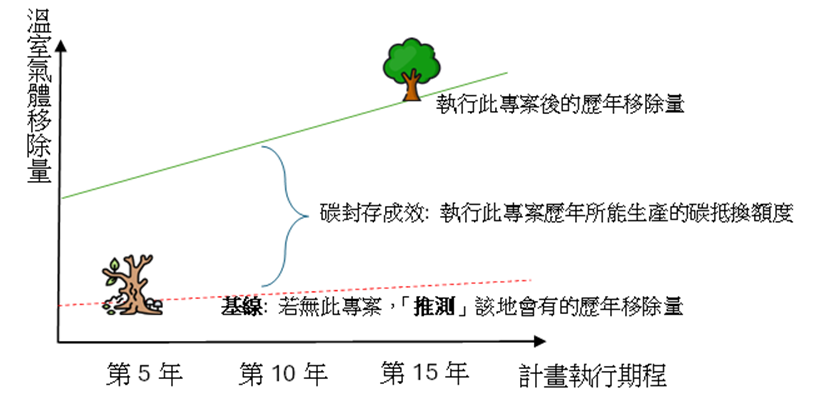
Whether a carbon credit project demonstrates additionality is closely tied to the baseline it sets. The baseline refers to the amount of greenhouse gas emissions or removals that would occur in the project area if the project were not implemented. For example, consider a bamboo forest where the landowner plans to convert the area into a campsite. Without the intervention of a carbon credit project, the removal of the bamboo would significantly reduce the site’s capacity for carbon absorption. This reduced capacity represents the baseline.
Another example would be a small town with a coal-fired power plant. If a carbon credit project does not intervene and the plant continues to burn coal for years, then the baseline would be the emissions produced by continued coal use.
"Additionality" refers to whether a carbon credit project can generate carbon reduction benefits beyond the baseline. Taking the bamboo forest mentioned earlier as an example, if a project intervenes and successfully persuades the landowner to preserve the bamboo instead of clearing them, the site retains its carbon absorption capacity compared to the baseline. Similarly, in the case of the coal-fired power plant, if a wind power project is introduced, it would reduce the area’s carbon emissions compared to the baseline where the coal use is continued. These additional amounts of carbon removed or emissions avoided can be certified by a verification body and then converted into carbon credits for sale in the market.
Since carbon credit projects are voluntary carbon removal or emission reduction initiatives done outside government-regulated sectors (such as steel or petrochemicals), there is no government-imposed emissions cap in place. As a result, project developers must define their own baseline to calculate the “additional” benefits. However, since the baseline is self-defined, though it will be reviewed by a third-party verification body, there is considerable room for manipulation.
Take the previously mentioned bamboo forest land as an example, if the land is located within a protected area where development is legally prohibited, and the landowner never intended to develop it, then the so-called “baseline” of converting it into a campsite is fraudulent. Similarly, in the case of the coal-fired power plant, if the plant was already planning to replace outdated equipment and had long intended to switch to renewable energy due to the lower cost of wind power, then claiming a “baseline” of continuing coal use would be false. Such inflated baseline carbon projects do not actually improve the state of greenhouse gases in the atmosphere, and therefore "additionality" does not exist. For third-party verifiers to correct these inflated baselines, they must have deep knowledge of local laws, markets, and socio-cultural contexts, which is not easy. As a result, some carbon credits may pass certification without truly guaranteeing additionality, and such occurrences do exist in the market.
Once a company invests resources into projects that lack additionality, it essentially ends up handing money to the developers without actually benefitting the environment. If the company then uses those credits to claim its products are carbon neutral, it risks being accused of greenwashing. Recently, Gucci faced backlash for using a controversial rainforest carbon credit project and had to withdraw its carbon neutrality claims for its products. Due to such risks, projects with uncertain quality and unverifiable additionality tend to be priced lower in the market.
Be cautious of purchasing low quality carbon credits
If the voluntary carbon credit market is properly developed, it can effectively channel corporate funding into environmental protection and community organizations. This not only promotes environmental conservation but also provides NGOs with an additional source of independent funding, strengthening civil society in Taiwan. However, as Taiwan’s carbon market is still in its early stages, market order has yet to be fully established. Moreover, carbon credits are intangible, many aspects of the market remain unclear, and there are sellers offering low-quality products (such as carbon credits lacking additionality), it remains difficult to hold those selling fraudulent credits accountable.
Currently,there are many organizations that claim to promote net-zero and sustainability in Taiwan. They offer various high-priced carbon credit courses, and also privately sell carbon credits sourced from other countries. Since these intermediaries are eager to offload their inventory, they often avoid informing the public about the risks and potential fraud in the market, profiting from the information gap. In fact, a closer look at some of the individuals behind these organizations reveals that a few even have histories of fraud or other criminal records.
In light of this, companies that wish to join the net-zero movement and invest in carbon credits should first pause, observe, and listen, to avoid falling into the traps of fraudulent schemes and wasting money. As a market intermediary and semi-official institution, the Taiwan Carbon Solution Exchange (TCX) should set its goals on establishing proper market order: promoting the trade of high quality carbon credits, eliminating inferior and fraudulent products, and building trust among buyers, sellers, and civil society. Therefore, the TCX should work closely with the Ministry of Environment to rigorously assess carbon credits listed on the platform, while also promoting comprehensive carbon credit knowledge to market participants and the general public.
The author holds a Ph.D. in Economics from Boston University and is currently a faculty member in the Department of Business Management at National Sun Yat-sen University. He is also a member of the Center for Carbon Research and Solution (CCRS). The author believes that policy advancement and social transformation must be grounded in solid research and analysis, rather than relying solely on preconceived abstract ideas. The CCRS established in 2023, mainly focuses on research related to voluntary carbon credits/carbon offsets and mandatory carbon credits/emissions allowances. CCRS also performs research on issues such as net-zero emissions and environmental sustainability. Based on this foundation, CCRS provides educational outreach, carbon consulting services, and policy suggestions, aiming to become a leading green economy think tank in Taiwan.
🔗Article Source:Voicettank