
Advocation on Science-Based Carbon Reduction, NSYSU Supports Enterprises to Achieve Net-Zero
To enhance corporate and societal knowledge and capability for carbon reduction and net-zero action, the Center for Carbon Research and Solution (CCRS) at National Sun Yat-sen University, Taiwan Carbon Solution Exchange (TCX), and Taiwan Stock Exchange (TWSE) jointly organized a series of courses on net-zero carbon management. This program focused on the scientific carbon reduction tools and internal carbon pricing strategies essential for enterprises to set net zero targets. With featured experts, the courses attracted over 100 participants to engage and exchange ideas.

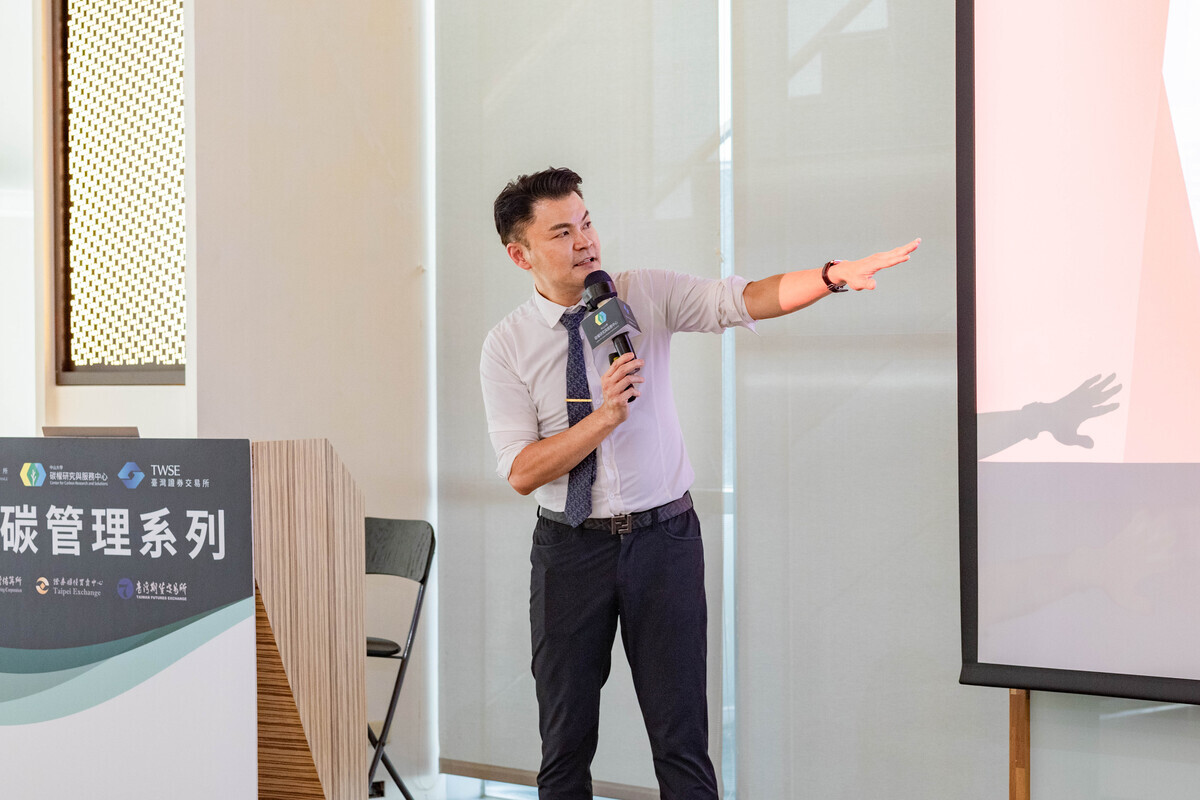
Edison Wang, Guest Lecturer of College of Management of NSYSU delivered a presentation titled "Aligning with Global Net-Zero Goals: Setting Science-Based Carbon Reduction Targets and Strategies for Corporations", emphasizing that corporations should establish carbon reduction targets based on scientific foundation. According to his recent observations, the demand for carbon reduction has significantly increased for corporations, alongside growing attention to science-based targets (SBTs), driven by efforts of various international organizations and climate advocations. The "Science-Based Target Initiative" (SBTi) is a global climate advocacy initiated by international coalitions aiming to enhance corporations to adopt scientific grounded methodologies in setting their short, mid and long-term greenhouse gas reduction goals. These targets undergo expert evaluation and approval, to limit global warming to no more than 1.5°C in order to tackle climate crisis.
Yu-Chieh Tseng, Policy Analyst of Chung-Hua Institution for Economic Research, shared her insights on "Corporate Net-Zero Governance: Implementing Internal Carbon Pricing", offering a clear and concise explanation of the diverse and complex strategies used by domestic and international corporations to implement internal carbon pricing (ICP). She pointed out that according to global trends, more and more corporations are adopting ICP mechanisms, assigning a cost to each ton of carbon emissions, and incorporating the cost into the enterprise's decision making process, to proactively drive internal emission reduction. Yu-Chien Tseng identified three key motivations behind the implementation of ICP: promoting low-carbon investment, changing internal behavior, and improving energy efficiency. When a corporation encourages the internal departments to perform carbon reduction, it will simultaneously support the enterprise's broader transition toward low carbon development and green investment.
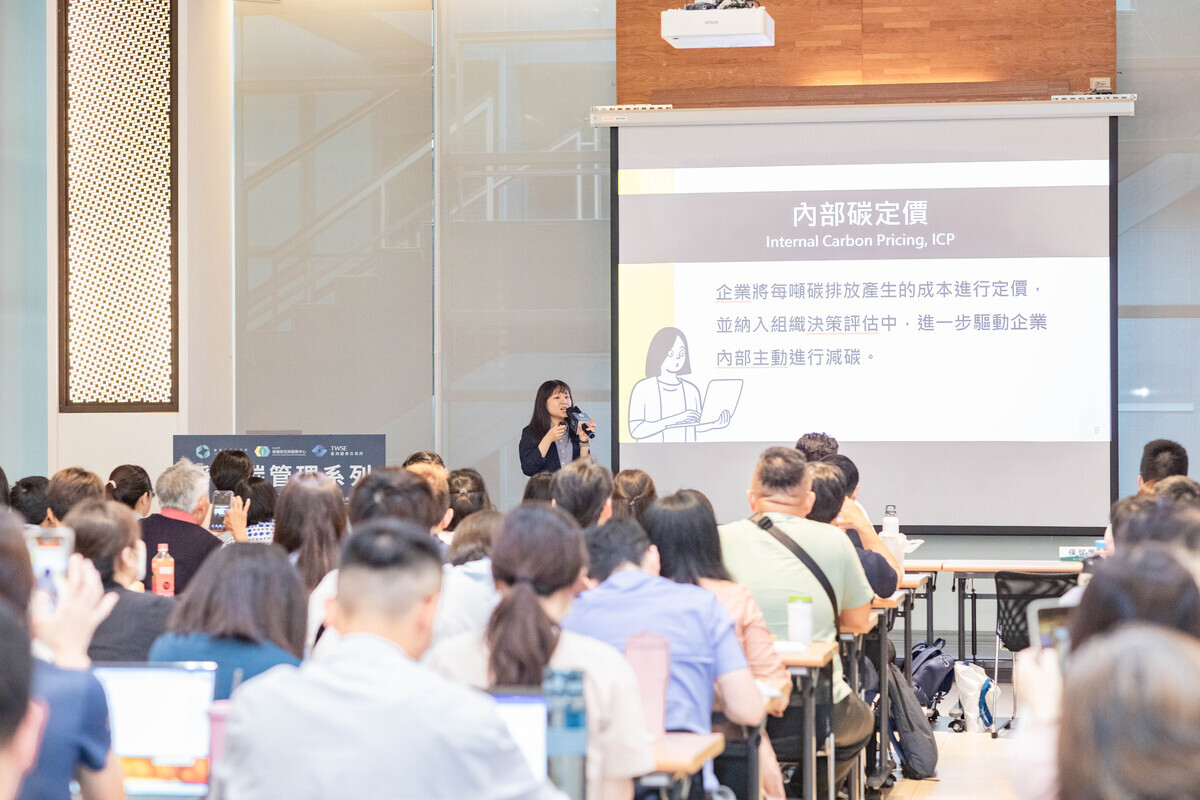
Yu-Chieh Tseng emphasized that the foundation for promoting ICP within a corporation lies in building a shared understanding and consensus on carbon reduction. By ensuring up-to-date data and information transparency, corporations can make more informed decisions, and set practical and achievable standards that employees can relate to, and implement within their scope of work. This approach will also ensure the flexibility and feasibility of the mechanism, without disrupting or even paralysing the company's operations. This is how a corporation can steadily advance toward their long term goal of transitioning to effective carbon asset management strategies.
The CCRS of NSYSU and the TCX are working together to cultivate talents in carbon reduction and net-zero talents, and will continue to offer systematic educational and outreach programs in the near future. For more information, please visit the CCRS.
🔗Article Source:NSYSU NEWS