NSYSU Offers Courses on CBAM Policy and Regulation, Decoding International Carbon Border Tax
The EU Carbon Border Adjustment Mechanism (CBAM) has begun to require the reporting of product carbon emissions since October, causing a wave of "carbon anxiety" among many Taiwanese exporters. To support exporters in responding to CBAM, especially the first wave of affected industries such as steel, cement, aluminum, fertilizers, and electricity, the Taiwan Carbon Solution Exchange (TCX), the Center for Carbon Research and Solution (CCRS) of National Sun Yat-sen University (NSYSU), and the Taiwan Stock Exchange (TWSE) jointly launched a course on “CBAM Policy and Regulations” on October 25. The course was led by Associate Professor Chien-Yuan Sher, Team Leader of the CCRS, and aimed to assist enterprises prepare and plan response strategies in advance, to react to the full implementation of CBAM in 2026.
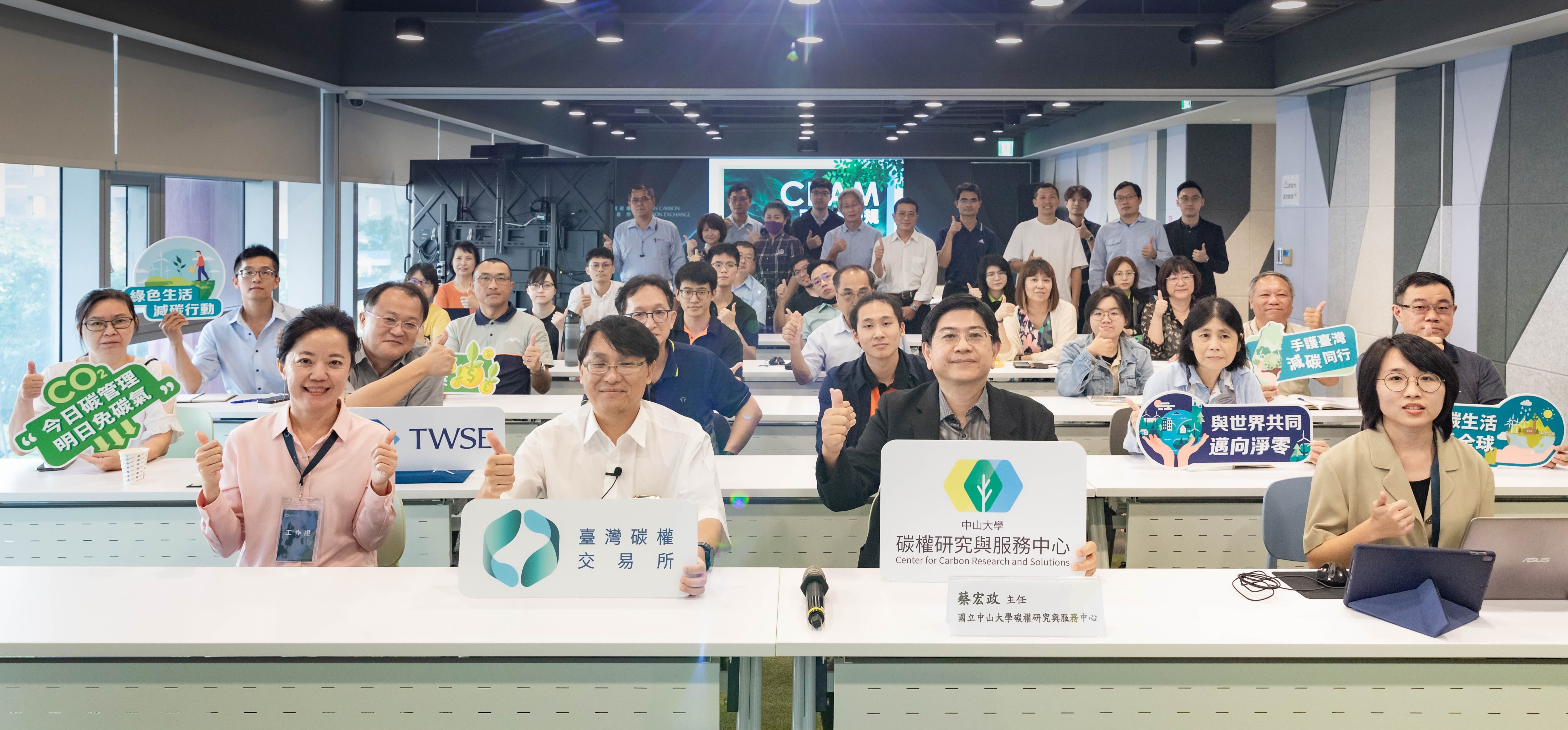
The course began by providing background information of the EU Emission Trading Scheme (EU ETS). The EU ETS operates under a cap-and-trade system, where the overall greenhouse gas emissions is set with a limit, and emission allowances are allocated to different sectors, which can be traded on the market. This mechanism is different from the upcoming voluntary carbon trading system in Taiwan. Chien-Yuan Sher explained that CBAM declarations must be submitted by May 31 each year, reporting the data of the previous year. The first official declaration will begin in 2027. Key reporting items include: the imported quantity of each type of good from the previous year, the total amount of greenhouse gas emissions of those goods, the carbon fees paid in the production country and the amount of free allowances granted under the EU ETS, and a copy of the verification report.
Chien-Yuan Sher also specifically explained that when calculating the embedded carbon emissions of products, Taiwan’s major export goods, such as steel and aluminum, are only required to account for direct emissions from the production process. However, screws and bolts manufacturers must also include the embedded carbon emissions of raw materials. This clarification was intended to help corporations better understand the complex regulations and policies under CBAM. At the end of the course, Chien-Yuan Sher reminded the participants of the key considerations regarding the submission of CBAM certificates, potential penalties, and what to watch out for during the transition period.
The course attracted registrations of nearly 100 participants, with more than half coming from enterprises in southern Taiwan. Attendees represented 27 different industries, including metal manufacturing, optoelectronics, and component manufacturing. In addition, the event provided vegetarian refreshments with zero-waste, low-carbon, made from organic and sustainably farmed ingredients. While promoting net-zero transformation within industries, the course also practiced sustainable living through action. Many participants expressed that they were touched by the vegetarian meal arrangement, realizing that even dietary choices can contribute to carbon reduction.
This "CBAM Policy and Regulations" course received an overwhelming number of registrations and positive feedback from participants. In response, additional sessions are planned to allow more enterprises to join. Coming up, the TCX will offer a series of courses on sustainability, carbon governance, and international certification standards in November and December. Please stay tuned with the most updated information on the official website, and don't miss the chance to register!
🔗Article Source:Taiwan Carbon Solution Exchange (TCX)