NSYSU Launches the “Center for Carbon Research and Solution” (CCRS) to help Achieve Net-Zero Target
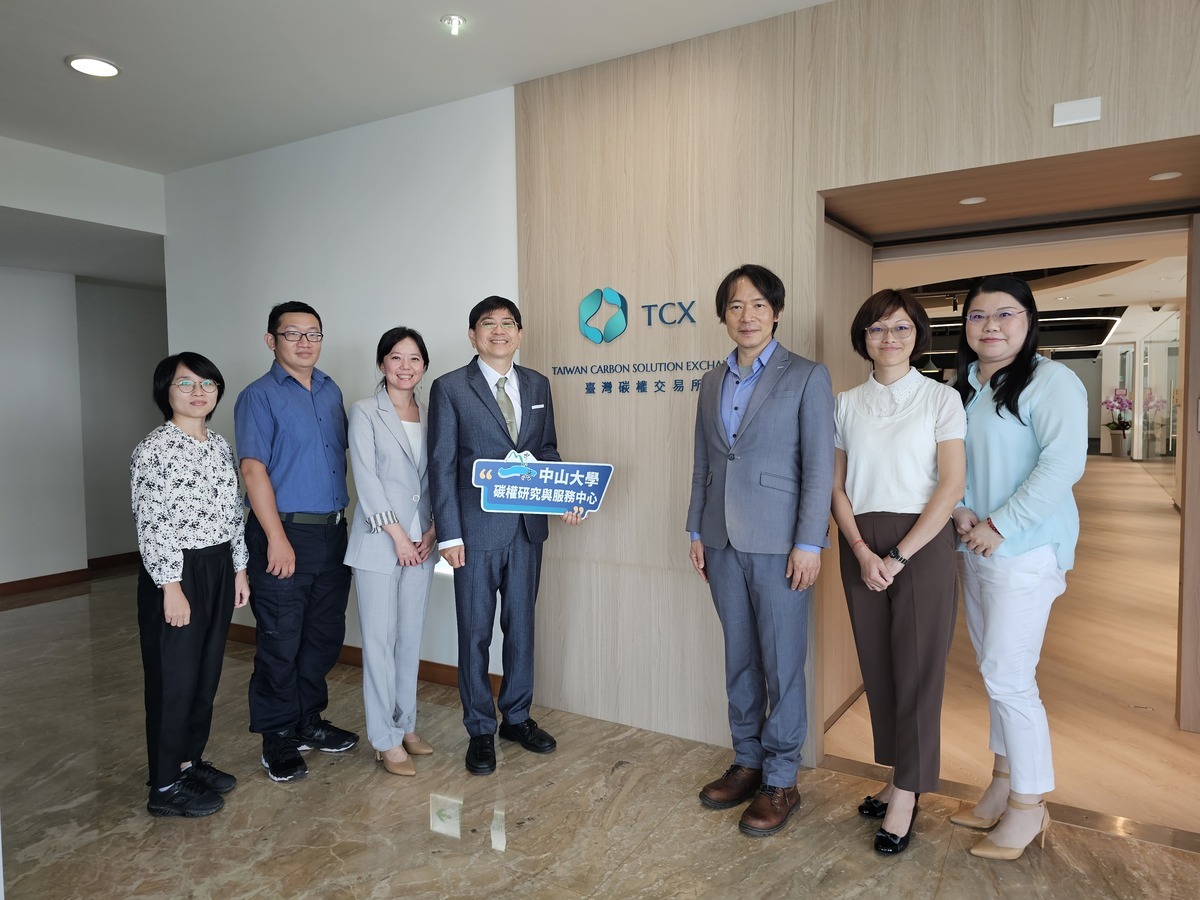
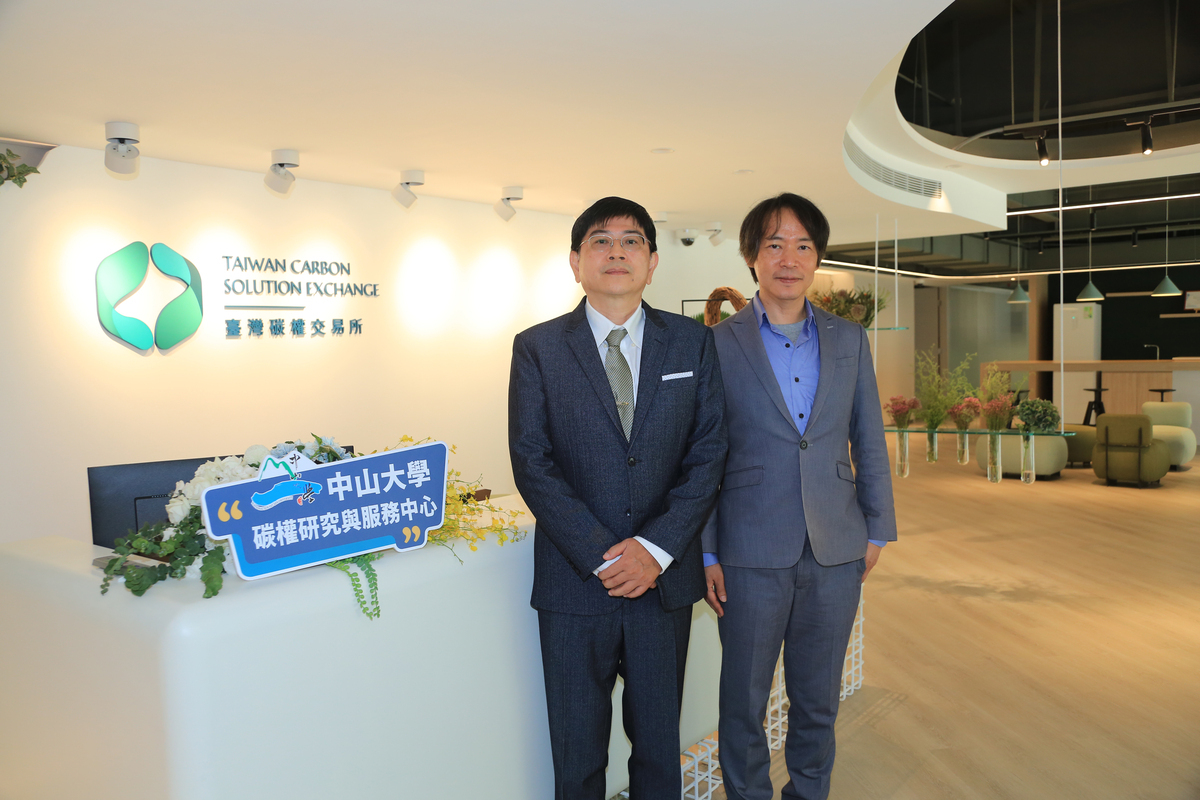
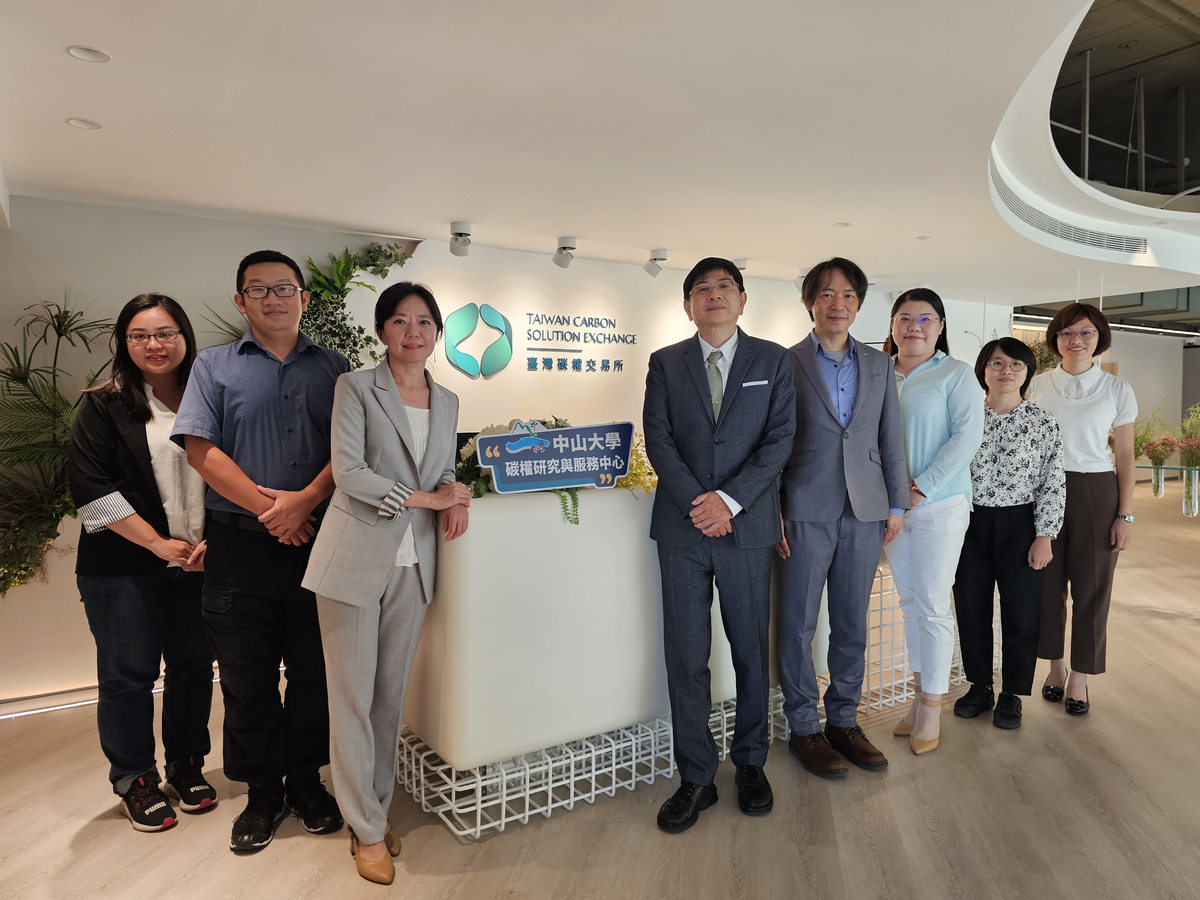
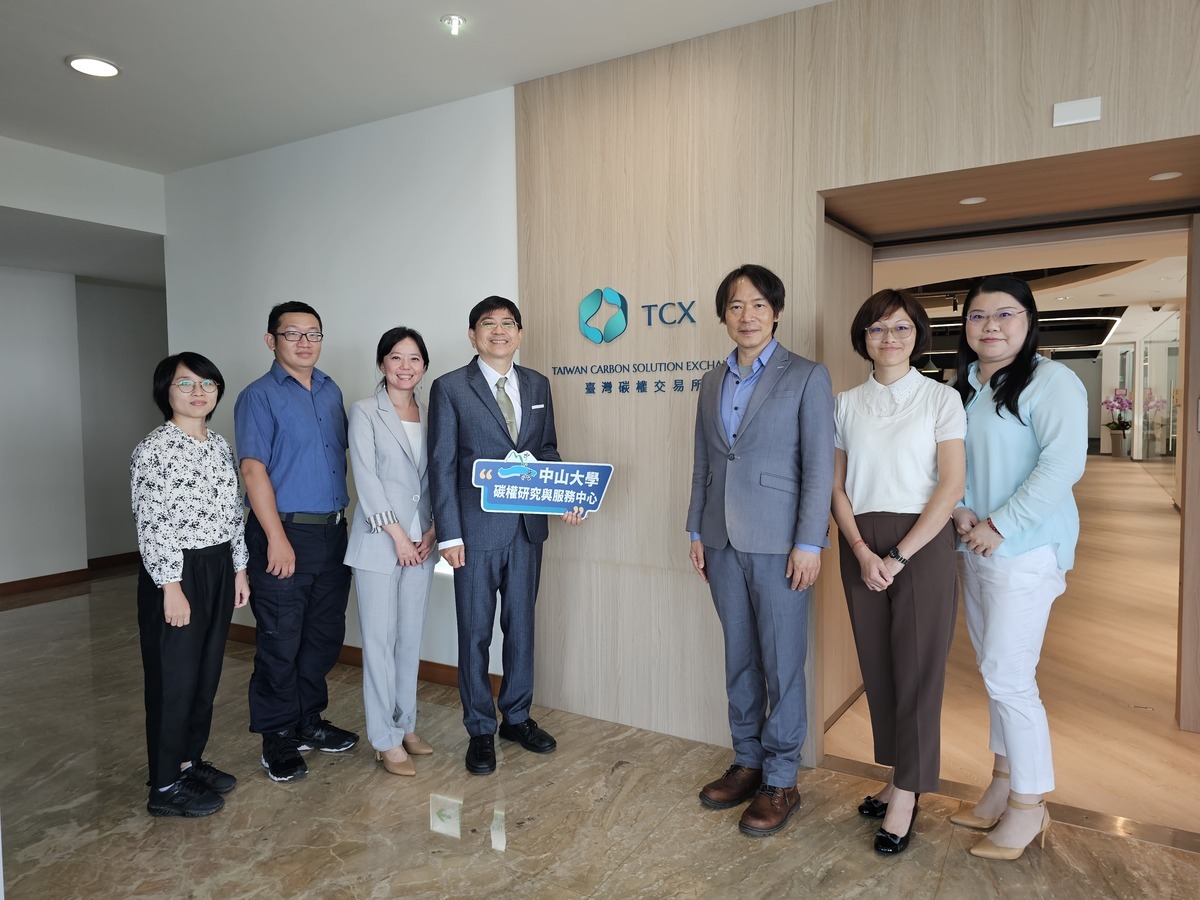
The Taiwan Carbon Solution Exchange (TCX) was officially launched in Kaohsiung on the 7th of this month, marking Taiwan’s entry into the global carbon trading market. To systematically research on topics such as net-zero and carbon reduction investments, technological innovation, international system establishment, and Taiwan’s alignment with global systems, as well as to provide related consulting services and course design, the National Sun Yat-sen University (NSYSU) established the “Center for Carbon Research and Solution” (CCRS). The Center is designated to conduct various research projects related to carbon credits, and also gather concrete and urgent issues faced by domestic industries, provide practical solutions, and assist the government in designing relevant policies and mechanisms.
The CCRS at NSYSU was established through financial contributions from the Taiwan Stock Exchange (TWSE) and affiliated institutions, including the Taipei Exchange (TPEx), Taiwan Futures Exchange, and Taiwan Depository & Clearing Corporation (TDCC). The Center aims to promote net-zero and circular economy initiatives across industries and public sectors, and support the development of net-zero circular economy systems and technologies. As the “environmental sustainability” issue is the main direction, the Center fosters collaboration among domestic academic institutions, public sectors, and local industries, to enhance academic communications through courses and forums on topics such as circular economy, greenhouse gases, water footprint, carbon footprint, energy management systems, and carbon neutrality. Moreover, the Center organizes exhibitions, educational programs, speeches, seminars, and community events periodically, to engage domestic and international professionals in relevant fields.
By focusing on President Ying-Yao Cheng of National Sun Yat-sen University pointed out that the concept of sustainable development, such as balancing economic growth, social progress, and environmental preservation, has driven today's global focus on ESG (Environmental, Social, and Governance) and the core issues: how to help enterprises achieve net-zero carbon emissions to tackle climate change, how to guide capital markets toward investing and developing green finance, and how to foster the development of carbon-reducing and carbon-negative technologies across industries. Net-zero and carbon reduction have become the key driver of the next generation of global industrial development, and have defined the core mission of Taiwan’s new stage of economic growth. “Currently, Taiwan still lacks a comprehensive, cross-disciplinary solution to this cross-sectoral issue,” President Cheng stated. “National Sun Yat-sen University will provide analysis and policy recommendations upon ESG, green finance, and the establishment of a carbon trading market, that are needed by the various efforts.”
Professor Hung-Jeng Tsai, Director of the CCRS at NSYSU, stated that the Center will offer carbon consulting services and training programs, including providing timely and practical solutions for domestic industries facing global carbon pricing, as well as precise definitions and practicing steps on topics such as carbon inventory, carbon credits, and emissions trading through educational training programs. In addition, the Center will systematically research on various ESG and net-zero topics, including investment strategies, technological innovation, international system establishment, and the alignment of Taiwan’s regulations with global systems. The Center aims to provide policy analysis essential for ESG, green finance, and the establishment of carbon trading markets, as well as to assist the government and enterprises in promoting awareness and techniques related to carbon inventory and carbon credit management, and in cultivating skilled professionals. The ultimate goal of the Center is to advance Taiwan’s carbon reduction technology chain, foster industry efforts, and build an industrial ecosystem that enhances the competitiveness of Taiwan in a low-carbon economy, enabling the achievement of 2050 net-zero emissions target.
🔗Article Source:NSYSU NEWS