Cultivating Green Collar Youths, Si Wan College and IER Join Forces to Launch a New Course
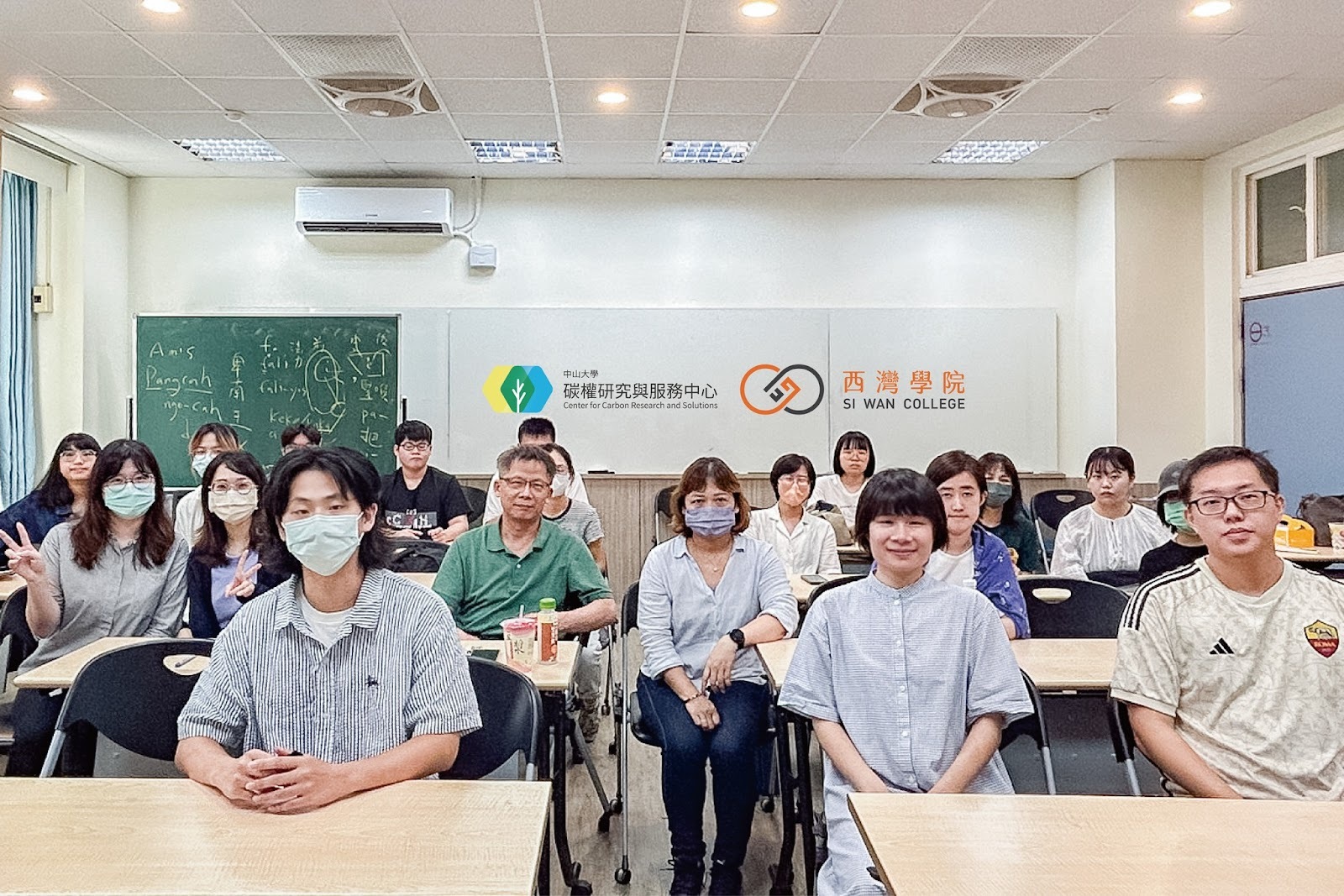
National Sun Yat-sen University Si Wan College joins forces with the Institute of Environment and Resources to launch the “Green Collar Youth Training Program”.
In response to Taiwan's twelve key strategies for achieving net-zero emissions by 2050, the General Education Center of Si Wan College at National Sun Yat-sen University (NSYSU) collaborated with the Institute of Environment and Resources (IER) to launch the Green Collar Youth Training Program. The course featured a lecture by Qi Huan Tan, Senior Manager at the CCRS of NSYSU, aimed at helping students to have better understanding of the international trends, domestic policy directions, and essential skills for career development. Through the course and sharing sessions, participating students gained insights into the challenges of global warming and climate change. They also developed a deeper understanding of Taiwan’s 2050 net-zero policy trends, carbon management related skills, and the growing demand for professionals in this field.
Qi Huan Tan possesses multiple professional certifications and Lead Verifier qualifications in the field of net-zero carbon emissions. She also previously served as a climate education coordinator for a non-governmental organization, focusing on promoting climate and sustainability education as well as environmental advocacy. Qi Huan Tan is currently responsible for researching trends in domestic and international carbon pricing policies, carbon management, and carbon credit systems at the CCRS of NSYSU.
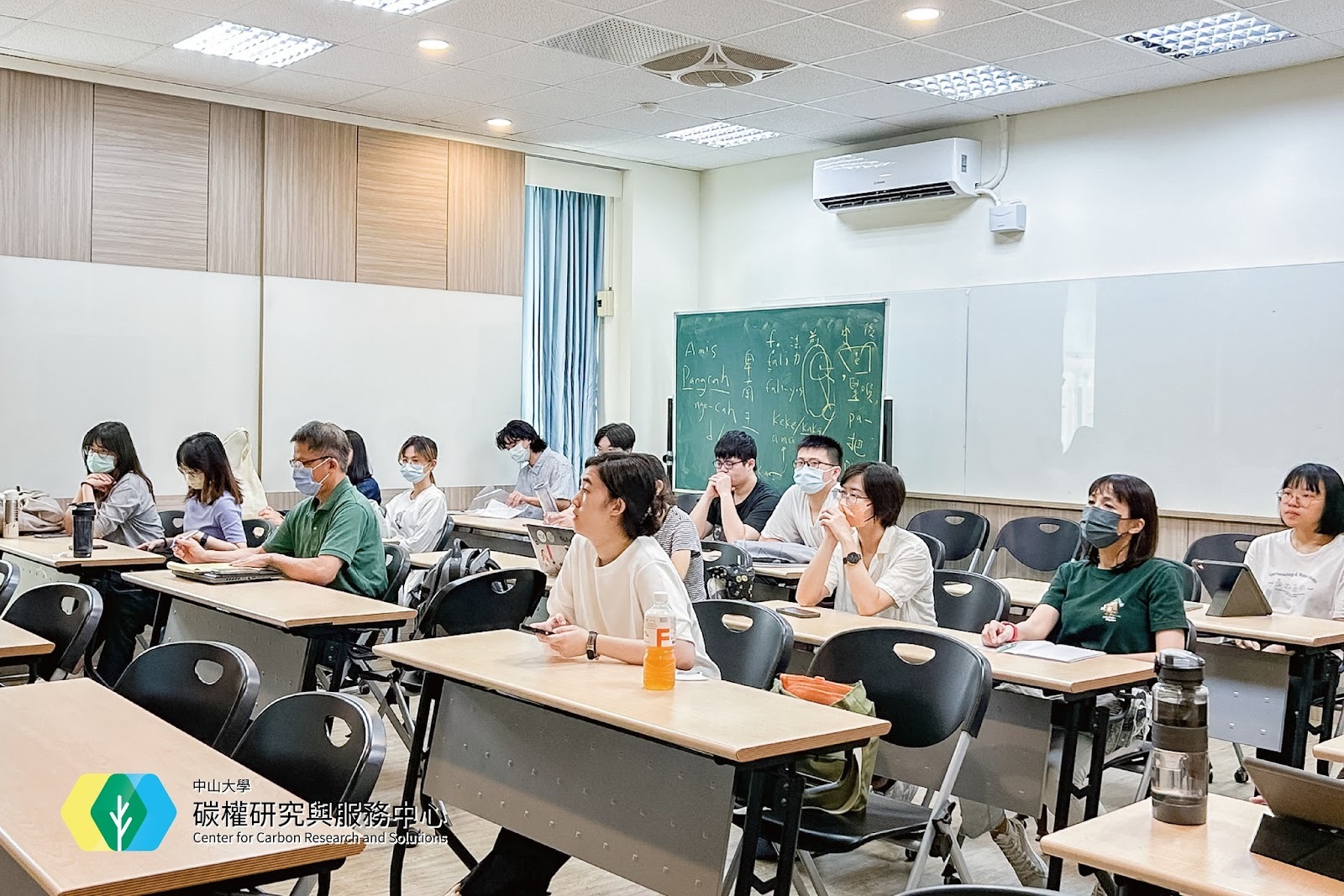
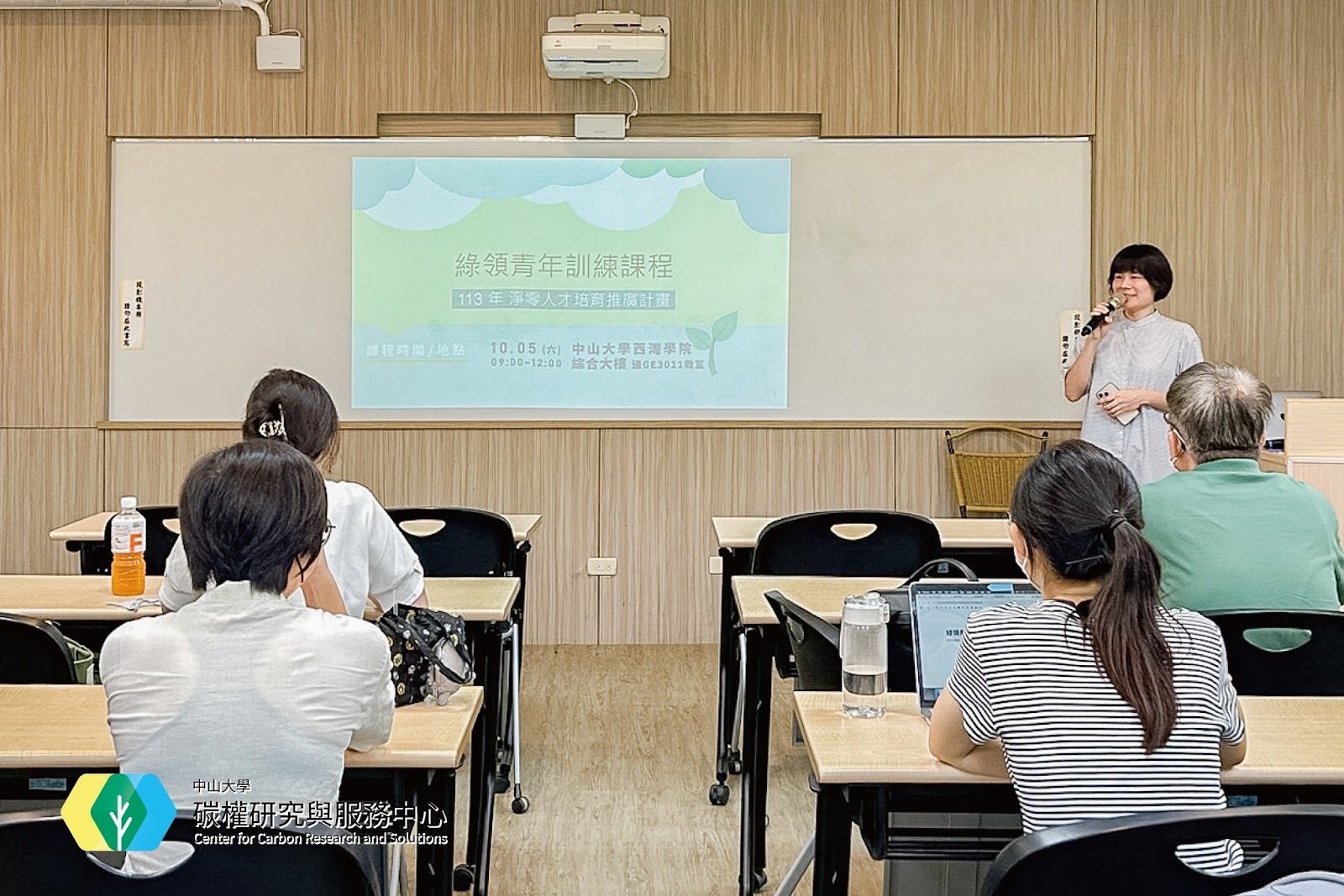
The “Green Collar Youth Training Program” started with the trend of global warming and climate change, guiding participants to understand that Taiwan is not exempt from these challenges. By using the concept of the “Remaining Carbon Budget” (RCB), the course illustrates the urgency for Taiwan to achieve the 2050 net-zero emissions goal. "Net-zero emissions" refer to the process of reducing greenhouse gas emissions as much as possible to near zero, and conserving natural carbon sinks such as oceans and forests to sequester any remaining emissions.
Qi Huan Tan shared the four main categories of green-collar professionals in corporate sectors: Chief Sustainability Officers, Sustainability Managers, ESG Strategists, Carbon Reduction Engineers and Carbon Auditors. Each of these roles requires relevant knowledge and training in carbon inventory and carbon disclosure. She also presented job vacancy statistics from the 104 Job Bank and net-zero workforce analyses from the National Development Council’s Department of Economic Development, highlighting the current shortage of green-collar professionals and the vast career development potential in this field, emphasizing that this is a trend that cannot be overlooked.
Participants in the course came from diverse backgrounds, including business management, applied mathematics, information technology, and optoelectronic engineering, even professionals from the semiconductor manufacturing and glass technology industries attended the program. Yi-Ting Lien, a first-year student in the International Business MBA (IBMBA) program at NSYSU, said that Qi Huan Tan prepared an abundance of information and introduced many core concepts within the short three-hour course, making it a highly rewarding experience.
🔗Article Source:NSYSU NEWS