
[2024 AI Factory Forum in Kaohsiung] AI and Net-Zero Transition Action Plan, Presented by Distinguished Speakers from Major Enterprises: MIRDC, IsCoolLab, IBM and CCRS
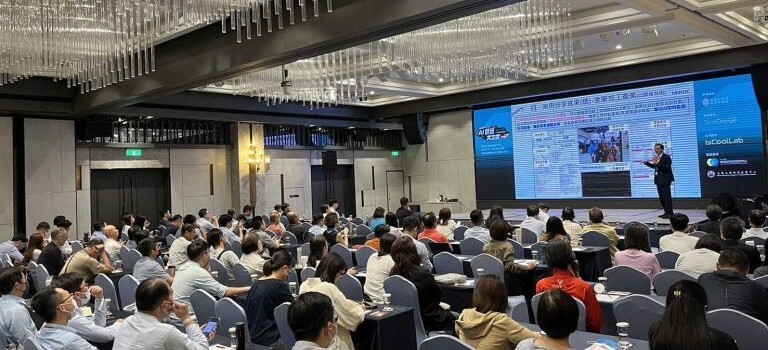
As AI applications inevitably take part in supply chains, how can the manufacturing industry break through data silos to truly unlock the value of data in this era of explosive AI application and carbon pricing, and secure a position in global industrial supply chains? TechOrange’s "2024 AI Smart Mega Factory" forum series headed to Kaohsiung on May 30, with the theme “Smart Supply Chain Management in Practice: Launching ESG-focused Industrial Carbon Emission Management and Developing Data-Driven Automation”. Bringing together experts from various fields, starting from the Asia New Bay Area to explore pathways for accelerating intelligent automation with AI and map out concrete strategies for net-zero transformation in manufacturing industries.
“In the past, when we talked about AI, it was often the kind of robot AI imagined in movies. Then came model-based AI, followed by AI that could play chess or video games with us. Now, we’re seeing GenAI that can directly assist us with our work,” said Tai-Hsiang Liao, Director General of Economic Development Bureau of Kaohsiung City Government, during his opening speech. He traced the evolution of AI and emphasized that Taiwan plays a crucial role in global AI development, especially between major semiconductor design companies and the local manufacturing industry. Tai-Hsiang Liao also noted that AI servers, cooling systems, and wiring equipment for these tech giants are all produced in Taiwan. “At the end of last year, NVIDIA’s computing center was completed in Kaohsiung’s Asia New Bay Area. However, do we have enough companies in Taiwan that can leverage the world’s best computing power to create new applications and services that boost overall productivity and efficiency? I believe that is what Taiwan must develop in the evolution of AI.”
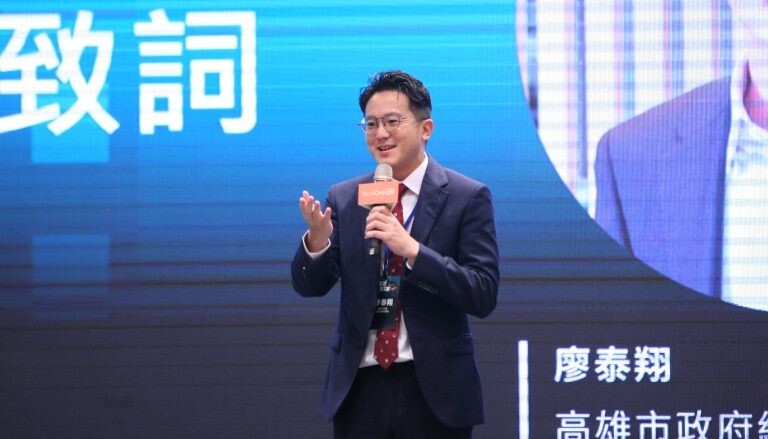 Tai-Hsiang Liao, Director General of Economic Development Bureau of Kaohsiung City Government, stated that Taiwan plays a crucial role in global AI development.
Lie-Chuan Lin, Deputy Executive Director of Metal Industries Research & Development Center (MIRDC), was the next on stage to share how AI is driving innovation in the fastener, drone, and metal processing industries. In the fastener industry, AI has resolved four major pain points: (1) mold development was a time-consuming process. With GenAI mold generation technology, development time can be reduced by 30 days. (2) traditional mold tuning relies heavily on the experience of skilled workers. AI-driven smart tuning reduces error rates and boosts efficiency by over 60%. (3) many manufacturers still rely on human inspectors, which carries a higher risk of overlooking defects. With AI analysis sensors, potential abnormalities can be detected earlier. (4) With the trend toward small-batch, high-variety orders, there's a growing need for visual representations of fastener designs. AI assistant engines can search past development projects for similar features, making prototype design easier and more efficient.
In terms of innovative applications in the drone industry, Lie-Chuan Lin pointed out that drone inspection systems with image recognition and real-time transmission technology can effectively detect defects as small as 4mm on wind turbine blades, reducing inspection costs by over 40%. This technology can also replace the traditional use of expensive helicopters for fish school scouting, helping fishing vessels save time and tens of millions of dollars annually. As for the metal processing industry, welding large structures often faces challenges in manpower and consistent quality. To overcome this problem, the MIRDC developed a "compact welding collaborative robot", which increases welding efficiency by over 90%. By leveraging AI image recognition, the system can analyze the 3D profile of the weld path and heat input, quickly generating reference coordinates for welding points and diagrams of multi-layer weld profiles.
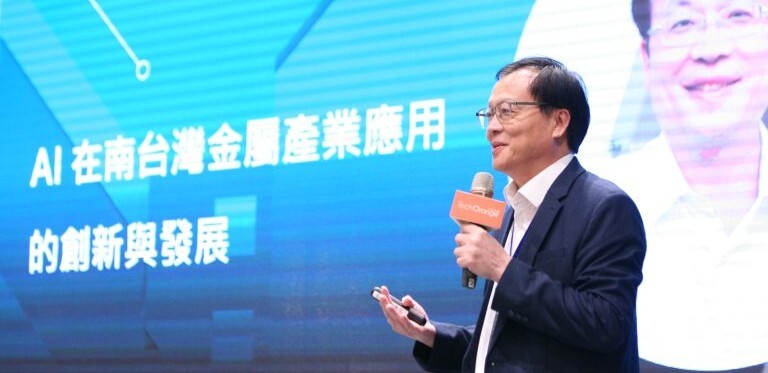 Lie-Chuan Lin, Deputy Executive Director of Metal Industries Research & Development Center (MIRDC). His presentation focused on the innovation and development of AI applications on metal industries in southern Taiwan. Through practical examples, Lie-Chuan Lin explained how AI assists in boosting efficiency in various industries.
“RPA offers a wide range of automation resources that help clients handle various complex scenarios,” said Yung-Pin Cheng CTO and co-founder of IsCoolLab, as automation becomes a key trend for innovation and enhancement in competitiveness for manufacturing. He explained that Robotic Process Automation (RPA) is essentially software robots designed to perform human tasks, and the current development trend is moving toward no-code solutions. However, when factories try to implement OA RPAs, they often encounter challenges, for example, many industrial computers cannot install software, connect to the internet, or use APIs, and some are locked inside cabinets that are difficult to access. These situations make data extraction difficult, resulting in isolated data silos. To solve these pain points, Yung-Pin Cheng presented the RPA solutions designed by IsCoolLab which can be used for process automation, automated data collection and validation, and seamless integration across systems for digital transformation. It can also monitor events and send real-time alerts, enabling fully unmanned machine operations without the need for human assistance. He further illustrated the benefits of RPA with two successful cases: one involving a major substrate manufacturer that used RPA to prevent human errors and ensure product specifications, and another where a semiconductor foundry used RPA to replace engineers for machine operations, demonstrating how RPA can significantly improve production efficiency and streamline workflows.
 Yung-Pin Cheng, CTO and Co-Founder of IsCoolLab, introducing how to integrate AI with RPA systems to realize intelligent manufacturing and smart process automation.
“The most important part of improving a process is identifying the pain points and changing them,” emphasized Wen-Chen Chao, Chief System Architecture Consultant of the Hardware Business Department at IBM Taiwan. He pointed out that while more decision makers are recognizing that generative AI can help enterprises mitigate risks and create strategic advantages, only 19% of supply chains are planning to adopt generative AI by 2025, including applications such as complex system simulation and modeling, transportation optimization, product lifecycle management, and customer service with real-time response. Wen-Chen Chao believed that the strength of generative AI platforms lies in their ability to enhance supply chain operations. For example, IBM leveraged generative AI to improve supply chain transparency, speed, and predict risks in advance. This enabled IBM to successfully deliver goods on time to customers during the global shipping crisis in 2021 and achieved zero-delayed deliveries during the pandemic.
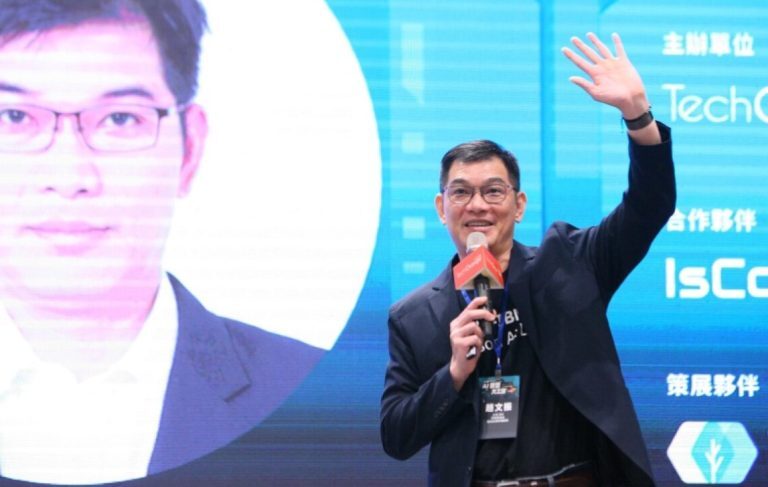 Wen-Chen Chao, Chief System Architecture Consultant of the Hardware Business Department at IBM Taiwan, stated that the three key elements of GenAI in supply chain management are data, productivity and predictability. Under this context, Wen-Chen Chao suggested decision makers to focus on optimizing models to build modernized supply chains, deploy AI assistants, and identify hidden pain points as the priority targets for improvement.
For the manufacturing industry, if AI represents a new opportunity, then "carbon" and "carbon tax" pose a significant pressure. This is not only due to national regulatory requirements, but also because many companies are now demanding their suppliers to comply with corresponding carbon standards. When this has become a trend, how can manufacturers grasp the carbon pricing momentum, develop carbon management plans, and turn pressure into business opportunities? Qi Huan Tan, Project Manager of the Center for Carbon Research and Solution (CCRS) at National Sun Yat-sen University (NSYSU), pointed out that carbon pricing is a process of internalizing external costs. On the path to carbon reduction, the most important first step is conducting a greenhouse gas inventory, followed by formulating a net-zero strategy, enhancing stakeholder communication through disclosures of data for sustainability, and finally leveraging green finance to drive transformation. Qi Huan Tan also reminded the participants that if a company has already implemented extensive carbon management across electricity usage, production, upstream and downstream supply chains, and even employee commuting, it may also consider carbon capture and removal technologies or purchases of carbon credits to achieve net-zero goals.
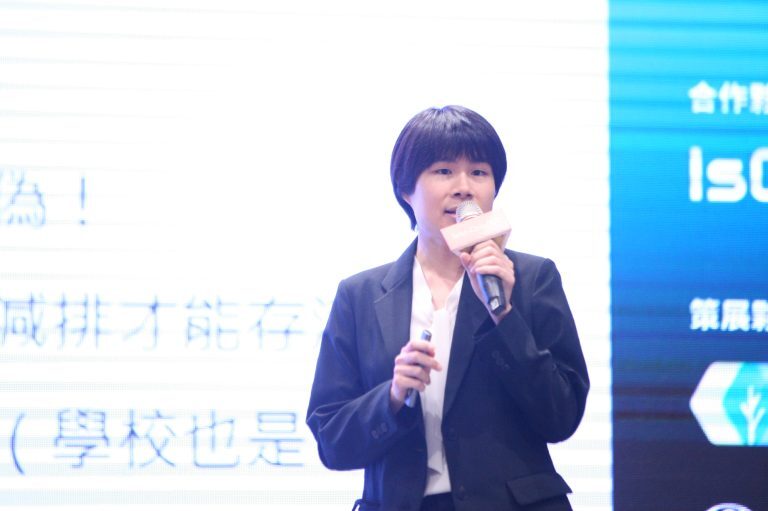 Qi Huan Tan, Project Manager of the CCRS at NSYSU, stated that corporations should adjust carbon management plans in response to different carbon pricing mechanisms.
The "2024 AI Smart Mega Factory” Kaohsiung Forum brought together experts from various fields to explore how AI and the net-zero transition can become key factors in helping Taiwan secure a position in the global industrial supply chain.
🔗文章來源:TechOrange