Nature Carbon Sinks and Carbon Credit in Practice, the Motives for Corporation Participation
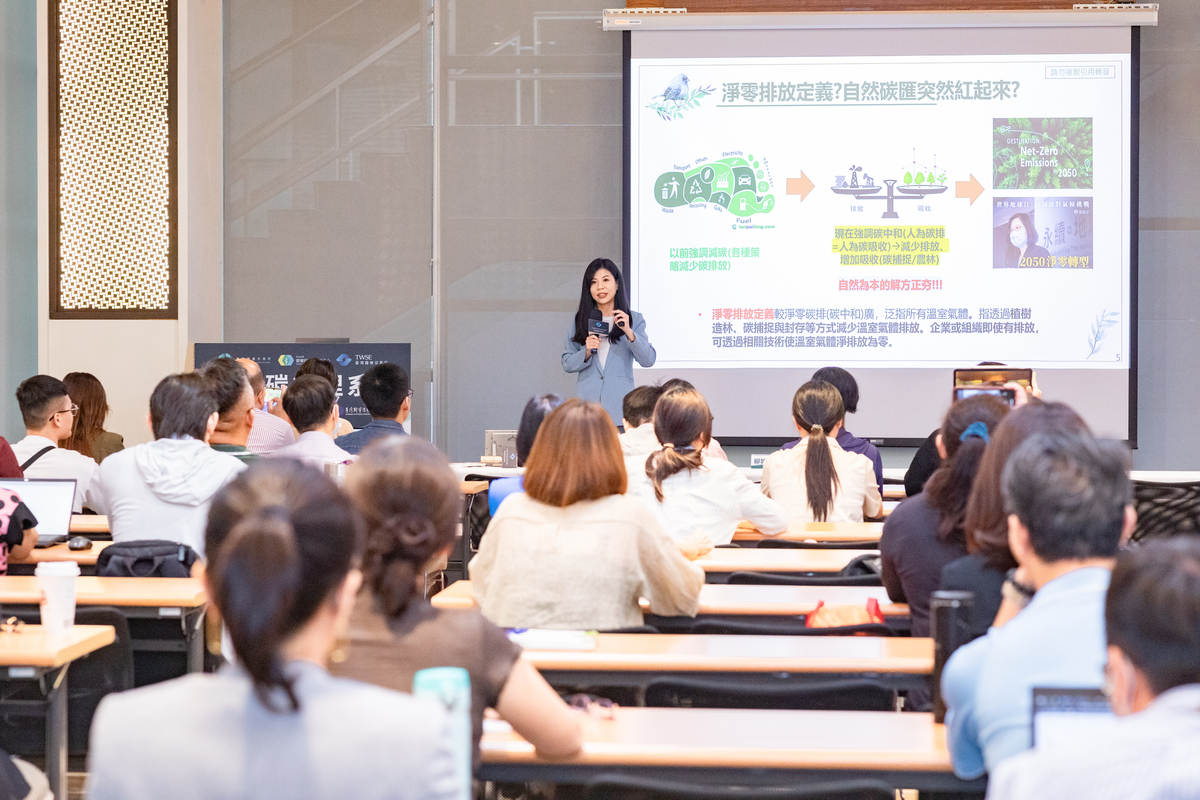 2024 Net-Zero Carbon Management course series - “Natural Carbon Sinks and Carbon Credit in Practice”.
“Carbon credit” has become a trending topic in recent years. To help corporations clarify the concept of carbon credits and support their planning for carbon reduction and net-zero target, the Center for Carbon Research and Solution (CCRS) of National Sun Yat-sen University (NSYSU), the Taiwan Carbon Solution Exchange (TCX), and the Taiwan Stock Exchange (TWSE) jointly organized the "2024 Net-Zero Carbon Management" course series. The session on “Natural Carbon Sinks and Carbon Credit in Practice” was presented by Professor Wan-Yu Liu, a Lifetime Distinguished Professor of Department of Forestry at National Chung Hsing University, also known as a "Green Pathfinder". She provided a systematic overview of the importance of natural carbon sinks and the challenges of certifying carbon sinks into carbon credits. The session attracted nearly a hundred participants from industry, government, and academia, all showing strong interest in the latest trends in carbon sinks and carbon credits.
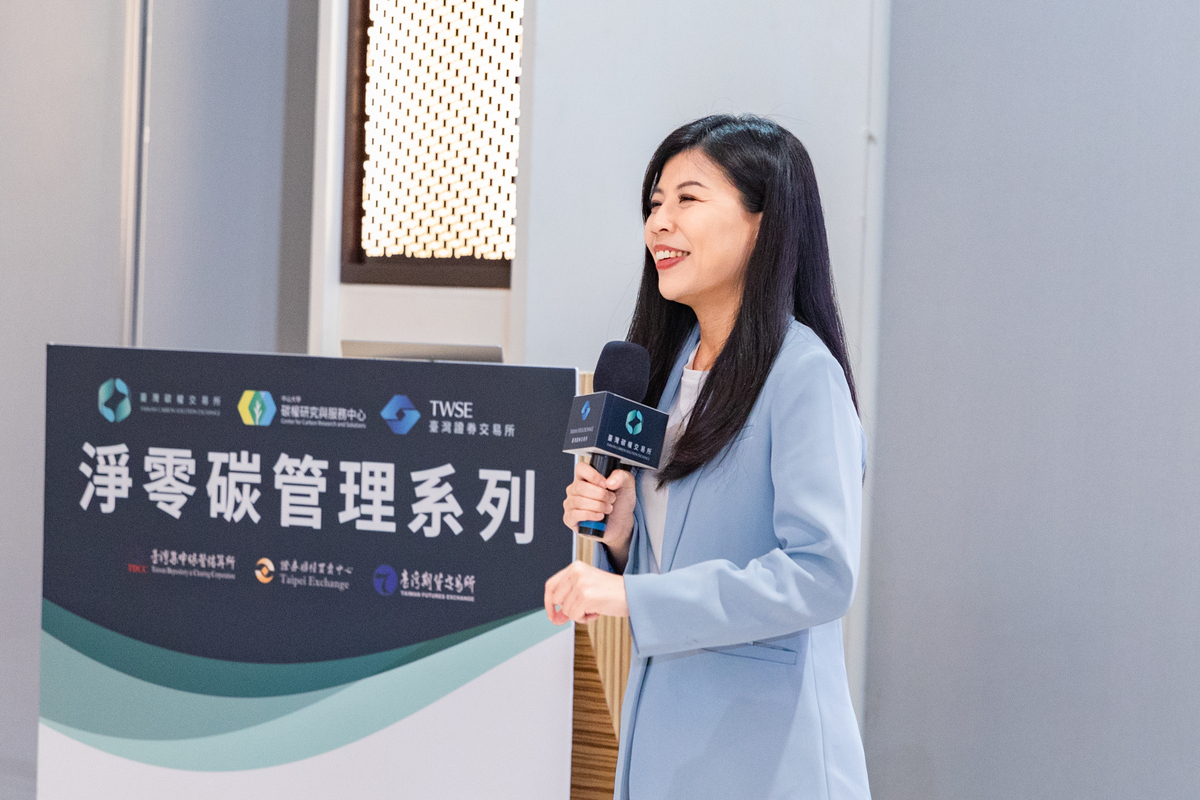
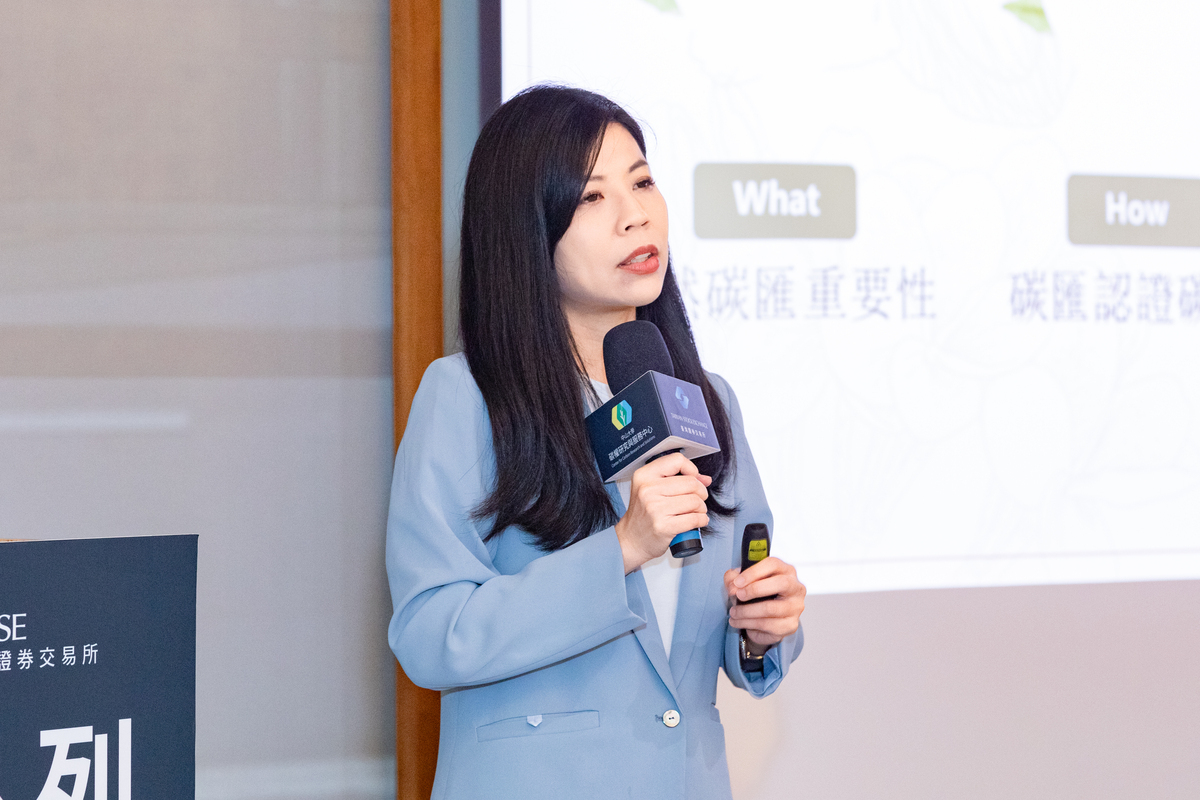 Professor Wan-Yu Liu, a Lifetime Distinguished Professor, provided a systematic overview of the importance of natural carbon sinks and the challenges of certifying carbon sinks into carbon credits.
Wan-Yu Liu emphasized that “natural carbon sinks play a crucial role in the path to net-zero.” Especially in efforts to reduce climate risks and mitigate the impacts of climate change, we must return to nature-based solutions to solve environmental problems, in order to truly alleviate the impacts of extreme weather, improve human life quality, and protect the sustainability of biodiversity. Wan-Yu Liu pointed out that natural carbon sinks such as forest carbon sinks (green carbon), soil carbon sinks (yellow carbon), and ocean carbon sinks (blue carbon), directly enhance carbon capture and storage capabilities. Taking Taiwan's forest carbon sink projects as an example, they can capture 21.44 million metric tons of CO₂e annually, accounting for about 7.8% of the total greenhouse gas emissions in Taiwan. These projects also indirectly contribute to environmental education and the circular economy.
Wan-Yu Liu believes that when Taiwan is under the pressure of achieving the national goal of net-zero emissions by 2050, the challenge of transformation is no longer limited to traditional industries. Hospitals, schools, the defense sector, local governments, chain restaurants, and food stalls must now take this issue seriously. Although the government passed the Climate Change Response Act in 2023, incorporating carbon pricing and climate change adaptation into legal regulations, carbon sinks are not the same as carbon fees. Wan-Yu Liu further emphasized that there are four essential principles for registering carbon credits, all of which must be met: artificially planted saplings used for afforestation must be less than 22 years old; data is required for proving carbon sink increase beyond the baseline emissions; implementation must be done according to officially announced methodologies; projects are required to go through a third-party validation and verification. Only by fulfilling these criteria can carbon sinks be converted into carbon credits and traded in the voluntary carbon market. Taking forest carbon sinks as an example, different tree species have different carbon sequestration capacities. Project developers can select tree species and do calculations according to the "carbon sequestration coefficients" published by the government. Broad-leaved species generally perform better than conifers, and tree species such as Taiwan Acacia, Formosan Ash, Taiwan Zelkova, and Taiwan Incense Cedar each have a carbon sequestration capacity exceeding 250 metric tons of CO₂e. However, tree species must be selected based on local conditions, in order to support biodiversity conservation and enhance local economic development, and thereby generate co-benefits.
As natural carbon sinks show a growing trend toward diversification and localization worldwide, Wan-Yu Liu remains optimistic about the opportunities for Taiwan and she encouraged the participating local enterprises to participate and offer support. Wan-Yu Liu emphasized that natural carbon sinks are no longer merely for public good, they can now offer corporations with an additional option for carbon offsetting, providing financing advantages in the face of climate risks. At the same time, natural carbon sinks can help enterprises build up green balance sheet assets, enhance ESG performance and corporate image, and create opportunities to strengthen CSR benefits and align with the SDGs values.
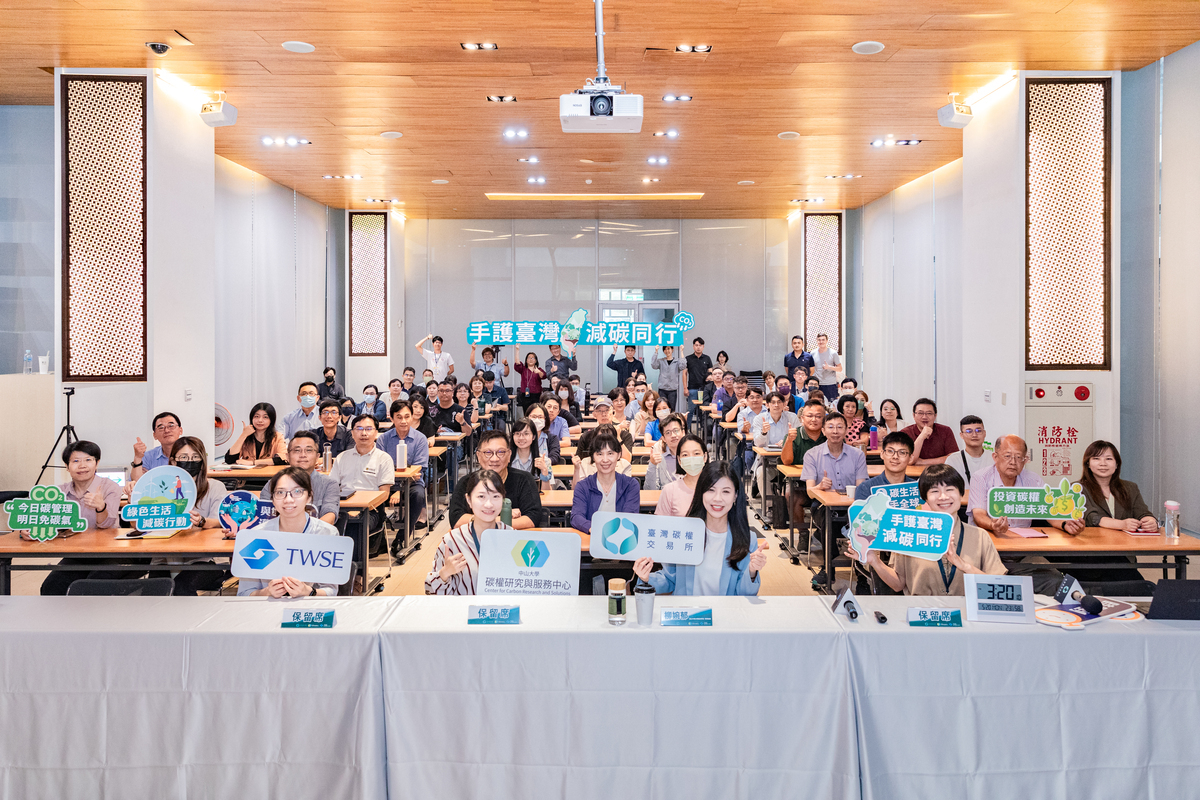
The CCRS of NSYSU is organizing the "Net-Zero Carbon Management" free educational outreach courses, to deepen the understanding of carbon capture issues, guiding enterprises and the public to know more about the current technologies for carbon reduction and net-zero. For more course information, please visit the CCRS website.
🔗Article Source:NSYSU NEWS