
Analyzing the International Trend of Carbon Pricing, CCRS and TCX Offer Net-Zero Courses
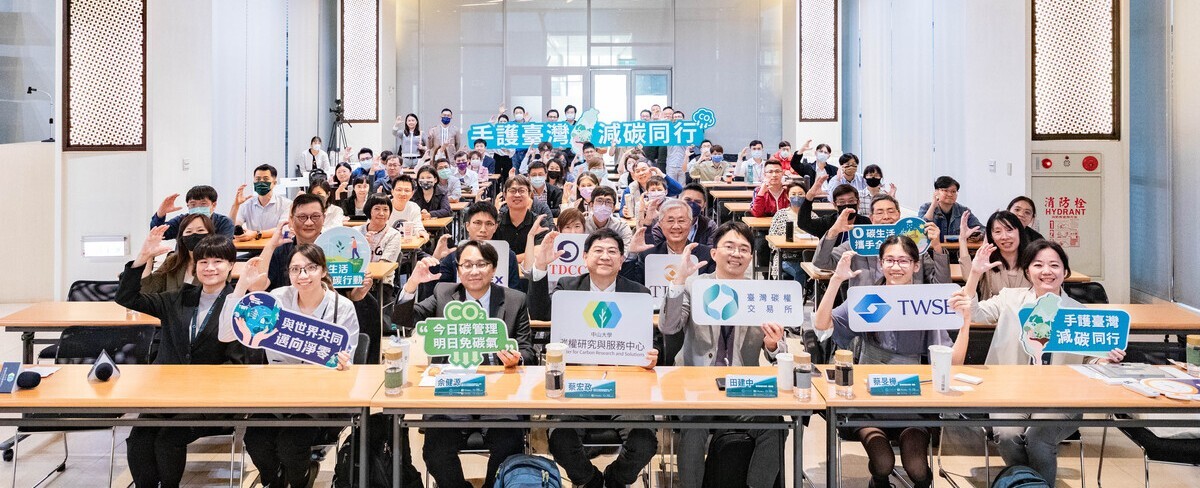
The growing impacts of climate change has caused "net-zero emissions by 2050" to become a global consensus. Countries around the globe must reach the net-zero target by 2050 to keep global warming within the critical threshold that prevents ecosystem collapse. In alignment with global commitment, Taiwan has joined the movement and is actively advancing climate governance, measures include the establishment of Taiwan Carbon Solution Exchange (TCX) and the Center for Carbon Research and Solution (CCRS) at the National Sun Yat-sen University. TCX and CCRS have expanded the "Net-Zero Carbon Management" series of free educational lectures, with the first course focusing on "global trends in carbon pricing" which attracted wide attendance from industry, government and academia fields. This session delved into the latest development in carbon management and net-zero strategies, aiming to promote carbon credit trading as economic incentives for enterprises to reduce emissions, and to drive the development of low-carbon technologies and cultivation of net-zero talents.
Professor Hung-Jeng Tsai, Director of the CCRS of NSYSU, started the session by exploring the global net-zero trends and policy considerations. He provided a thorough explanation on the evolution of global attention on sustainability issues, the progression of international agreement governing national greenhouse gas emissions, and the various policies and systems that have emerged around the concept of putting a price on carbon emission. Professor Hung-Jeng Tsai analyzed the differences, effectiveness and limitations between the three primary carbon pricing systems, and led the participants to understand that each country's choice of carbon pricing policy involves critical considerations and significant challenges.
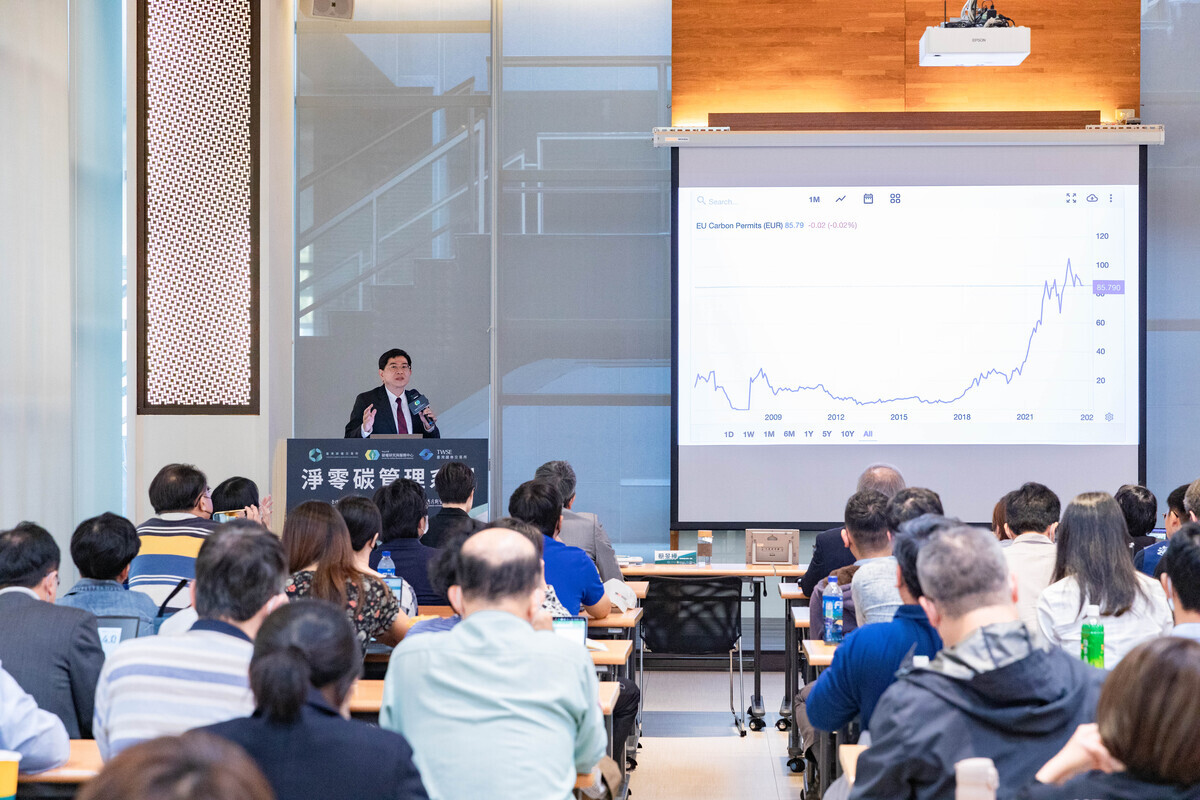 Professor Hung-Jeng Tsai, Director of the CCRS of NSYSU, started the session by exploring the global net-zero trends and policy considerations.
What makes a good carbon credit? Associate Professor Chien-Yuan Sher, Team Leader of the CCRS of NSYSU, guided the participants through the fundamentals of carbon credits, what they are, how they are generated and certified, and most importantly, how carbon credit quality is assessed. The term "carbon credit" can refer to two entirely different concepts and systems: "carbon emission allowance" and "carbon offset credit". These two terms are often confused nowadays, so Associate Professor Sher laid out the essential distinctions to establish clear understandings of the two. Through vivid analogies and explanations, he introduced the concept and application process of carbon allowance, additionally, he thoroughly described the key criteria for verifying carbon credit quality, such as additionality, permanence, and co-benefits, urging the participants to approach carbon market and trading with caution. This session was a good reference to answer the questions that the participants were strongly concerned about, particularly the quality of carbon credit projects.
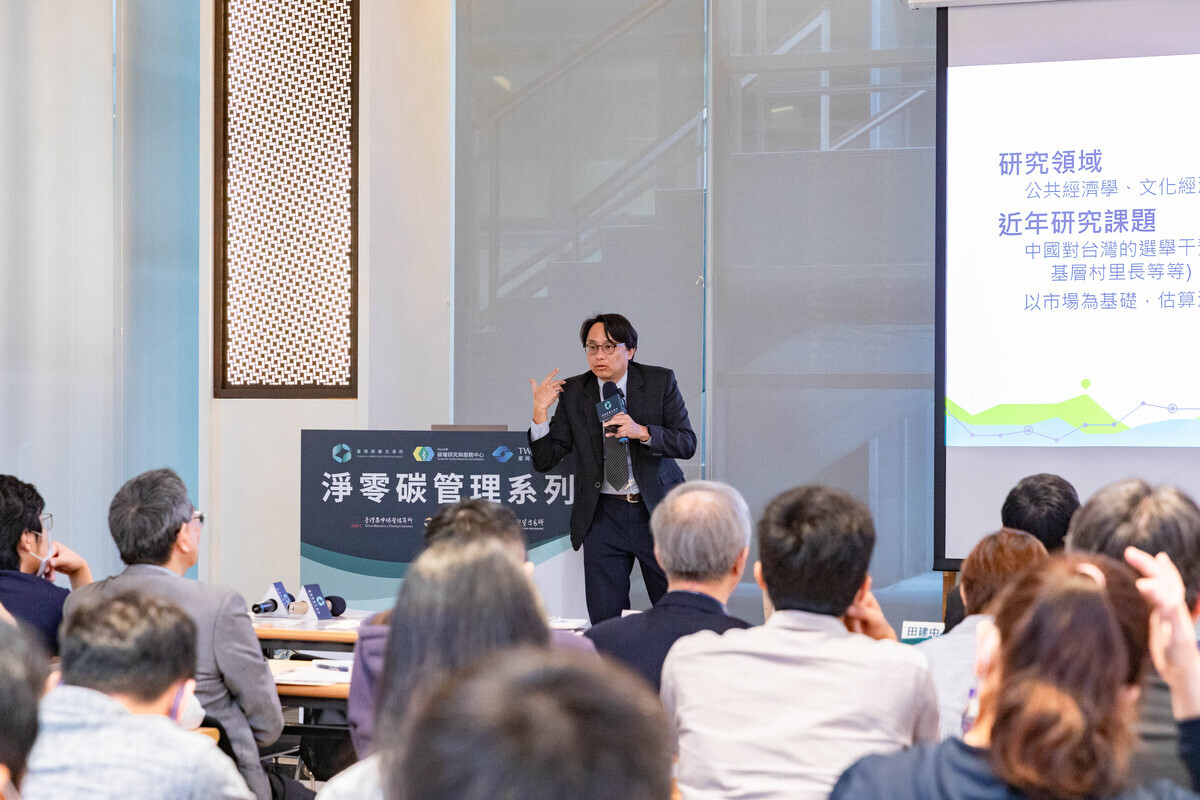
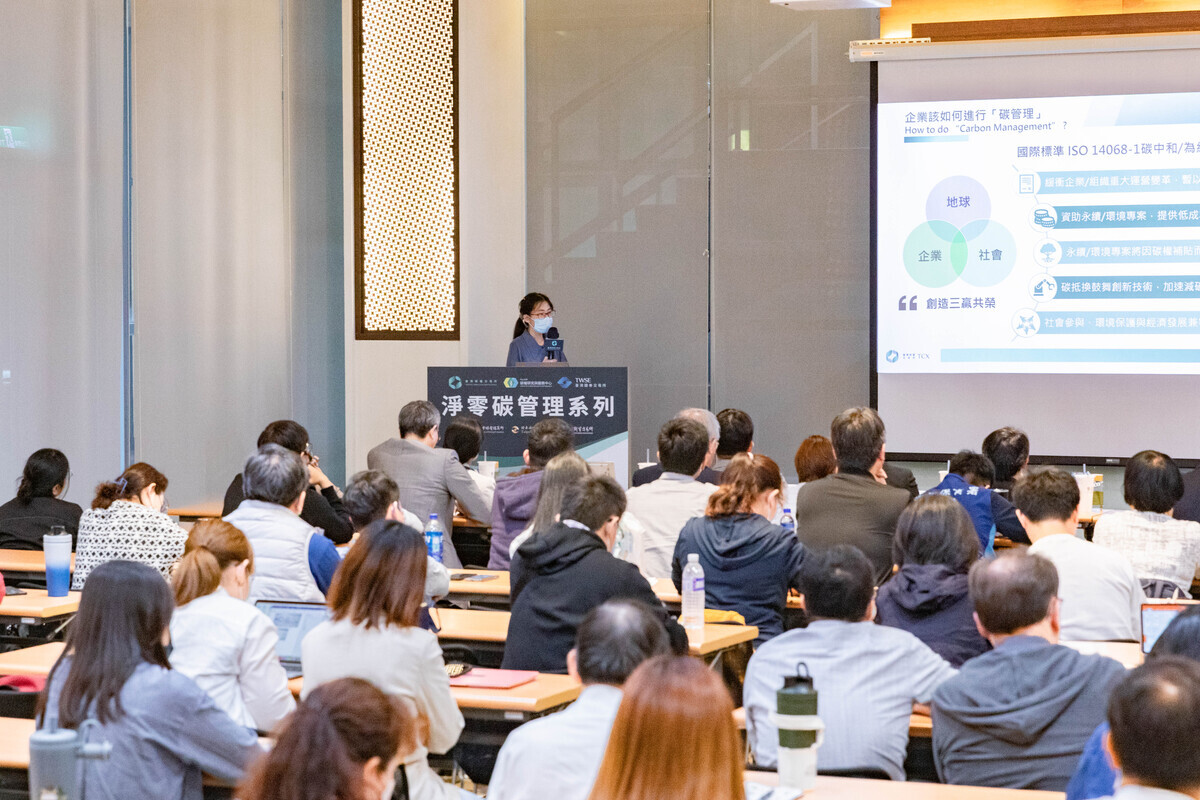
Min-Hua Tsai, Senior Manager of TCX analyzed several international brand case studies that have incorporated carbon credits into carbon reduction projects. She invited the participants to brainstorm the possibility of transforming carbon cost into business opportunities for enterprises. Tsai also shared how developing a credible carbon neutrality project and adopting the latest international ISO 14068 standard can create significant value for enterprises. Furthermore, she introduced the steps of opening an international carbon trading accoung with the TCX, emphasizing that the TCX uses "trust accounts" for transactions and establishes international standards for listing carbon credits, these approaches provide important safeguards for domestic buyers. Joshua Tien, General Manager of TCX, pointed out that globally, voluntary carbon credit inventories only account for 2% of annual greenhouse gas emissions from the fossil fuel industry. He stressed that global emission reduction must be delivered at a much larger scale and faster pace to possibly achieve the long term sustainability goal for both humanity and the environment.
Min-Hua Tsai, Senior Manager of TCX analyzed several international brand case studies that have incorporated carbon credits into carbon reduction projects. She invited the participants to brainstorm the possibility of transforming carbon cost into business opportunities for enterprises. Tsai also shared how developing a credible carbon neutrality project and adopting the latest international ISO 14068 standard can create significant value for enterprises. Furthermore, she introduced the steps of opening an international carbon trading accoung with the TCX, emphasizing that the TCX uses "trust accounts" for transactions and establishes international standards for listing carbon credits, these approaches provide important safeguards for domestic buyers. Joshua Tien, General Manager of TCX, pointed out that globally, voluntary carbon credit inventories only account for 2% of annual greenhouse gas emissions from the fossil fuel industry. He stressed that global emission reduction must be delivered at a much larger scale and faster pace to possibly achieve the long term sustainability goal for both humanity and the environment.
🔗Article Source:NSYSU NEWS