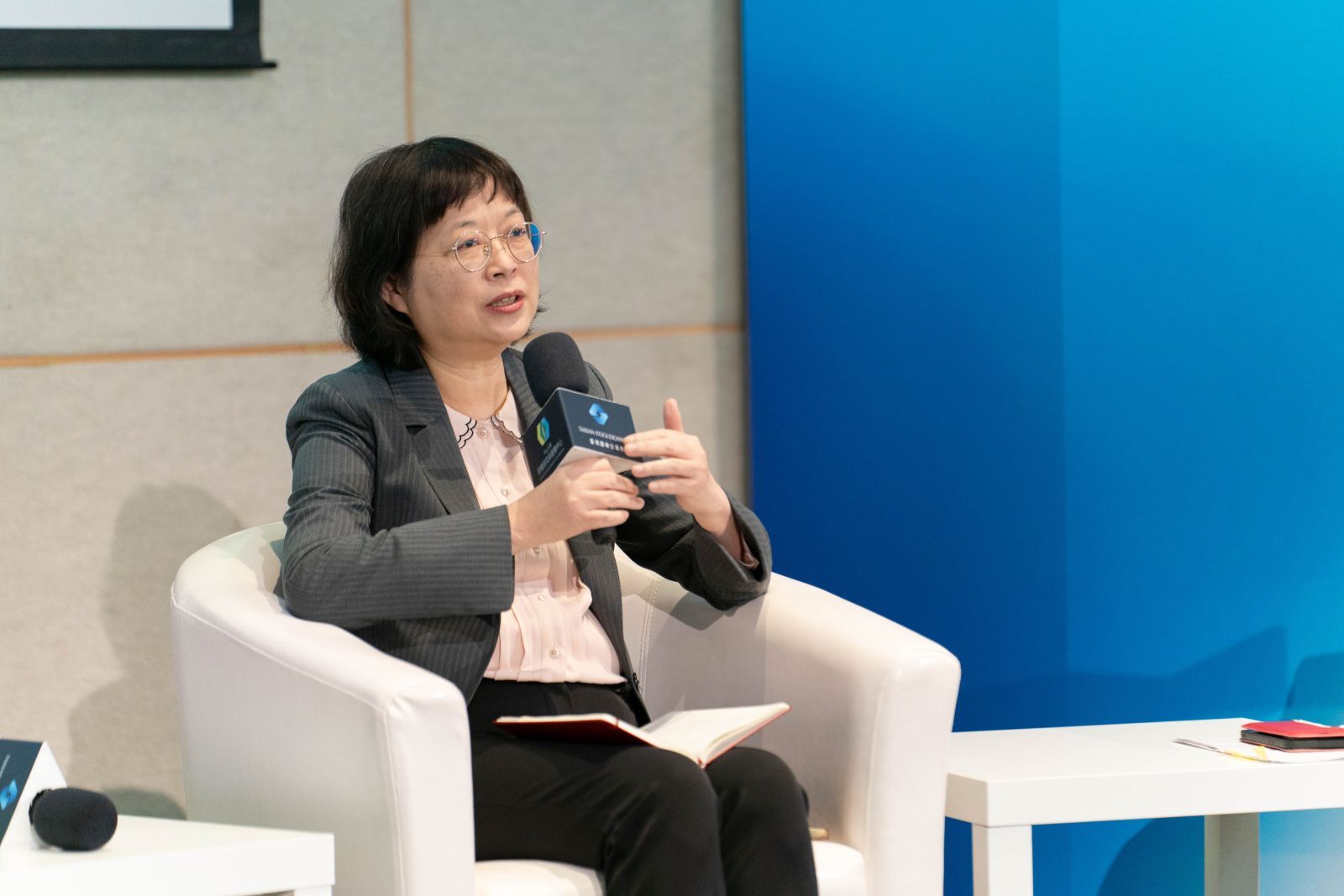
[1/17 Taiwan CBAM Seminar Minutes] Director Tsai Ling-yi: Climate Change Response Act and Carbon Border Adjustment Mechanism
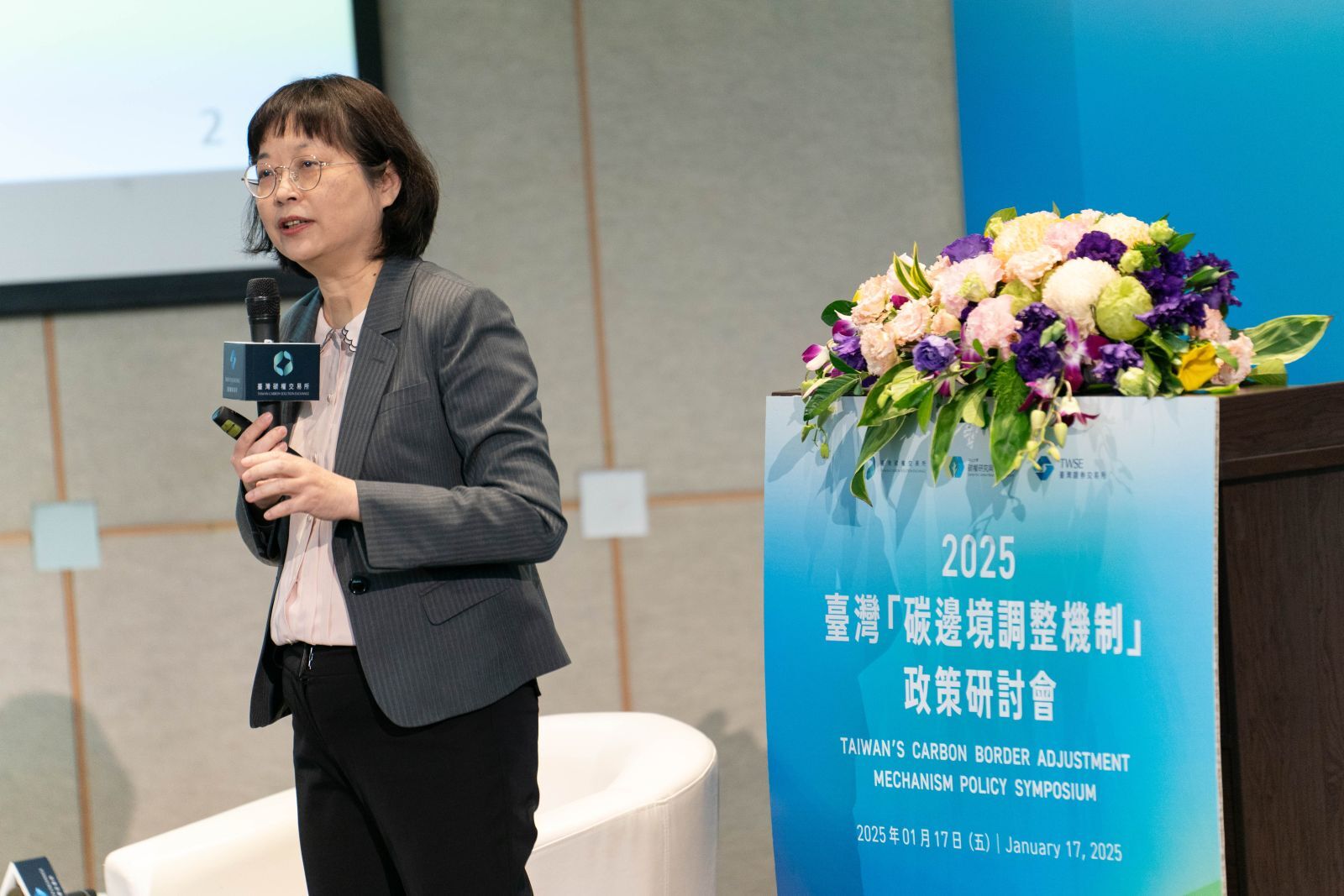
As the European Union's implementation of the Carbon Border Adjustment Mechanism (CBAM) draws near, many major trading countries are paying close attention. What measures will Taiwan take in response to the international trend? On January 17, 2025, the Taiwan Carbon Exchange, the Center for Carbon Research and Service at National Sun Yat-sen University, and the Taiwan Stock Exchange jointly hosted the "2025 Taiwan Carbon Border Adjustment Mechanism Policy Forum", inviting representatives from academia, industry, and government to share their observations and suggestions.
At the official representative sessions, EPA Climate Change Office Director Tsai Ling-yi, Deputy Chief Negotiator of the Office of Trade Negotiations of the Executive Yuan Yan Hui-xin, Director of the Trade Section of the European Economic and Trade Office Christoph Saurenbach, and Director of the Energy and Environment Research Center of the Chung-Hua Institution for Economic Research Liu Che-liang, respectively, explained the current plans and their views.
Commissioner Tsai Ling-yi: Climate Change Act and Carbon Border Adjustment Mechanism
Regarding the EU's CBAM, Commissioner Tsai Ling-yi believes "we need to accurately understand the mechanism of the EU's CBAM, so as not to disrupt our own efforts." She explained that the EU imposes fees on high-carbon products manufactured within its borders and also requires imported high-carbon products to pay corresponding carbon costs, in order to achieve total emission control through trading and ensure fair trade, which is a very important tool for reducing carbon emissions.
During the transitional period before its official implementation, the EU began collecting data on imports declared by various countries, linking it to the overall quantity control and emission trading system (ETS) implemented within its borders. However, Tsai Ling-yi added, "In combating climate change, everyone has a common but differentiated responsibility. The EU cannot require other countries to bear the same costs as it does, because each country's production and national income, as well as other conditions, are different. When implementation begins, imported products from third countries will also need to undergo corresponding deductions, and the calculation method may only be released this year (2025)."
How Does Taiwan's Carbon Pricing Mechanism Respond, and Who Are the Main Targets of Collection?
Taiwan's Climate Change Response Act, which was passed in 2023, also includes carbon pricing regulations. The main targets of collection are emission sources with annual emissions exceeding 25,000 tons. There are approximately 280 companies and their affiliated factories nationwide that fall within this range. The general carbon pricing rate is NT$300 per ton, but if the targets are willing to propose their own emission reduction plans and the proposed 2030 reduction targets meet the regulations set by the Environmental Protection Administration, they can enjoy preferential rates, paying only NT$100 per ton. More aggressive targets can even pay as low as NT$50 per ton. "We hope to encourage these factories to expand their carbon reduction incentives through preferential rates."
Tsai Ling-yi also emphasized: "We must implement carbon pricing in Taiwan, if we don't bear the cost of carbon ourselves, how can we discuss it with the EU?"
Charging is not the goal, reducing carbon is the objective
The EU imposes a levy on high-carbon leakage risk industries, such as those with high emission intensity and high trade intensity, initially providing nearly 100% free allowances, which will decrease to 51% by 2030, and by 2034, all will be subject to a fee, thereby avoiding carbon leakage. Similarly, Taiwan provides a coefficient of 0.2, meaning that businesses only need to pay for 20% of their carbon emissions, reducing the competitive burden with imported products.
Tsai Ling-yi explained: "With our set of tools, the carbon fees we can collect are actually very minimal, but by 2030, we estimate that we can create a reduction of 37 million tons of carbon emissions." Meanwhile, 88% of Taiwan's fee-payers are willing to propose their own voluntary reduction plans.
However, for the sake of fair trade, Taiwan needs to carefully consider which imported products to subject to declaration and how to conduct verification of reduction quotas. Cai Lingyi emphasized: "The purpose of CBAM is to hope that the world will reduce carbon emissions together. Instead of doing so, we can use this perspective to strengthen our ability to investigate and verify emission sources and factory carbon emissions, and then implement domestic carbon pricing. More importantly, our industries must move towards low-carbon production and substantial carbon reduction."