[1/17 Taiwan CBAM Seminar Minutes] Director Liu Zhe-liang: Conceptual Analysis of CBAM Financial Adjustment
As the European Union's implementation of the Carbon Border Adjustment Mechanism (CBAM) draws near, many major trading countries are closely watching. What measures will Taiwan take in response to the international trend? On January 17, 2025, the Taiwan Carbon Exchange, the Center for Research and Service of Carbon Rights at National Sun Yat-sen University, and the Taiwan Stock Exchange jointly hosted the "2025 Taiwan Carbon Border Adjustment Mechanism Policy Forum", inviting representatives from academia, industry, and government to share their observations and suggestions.
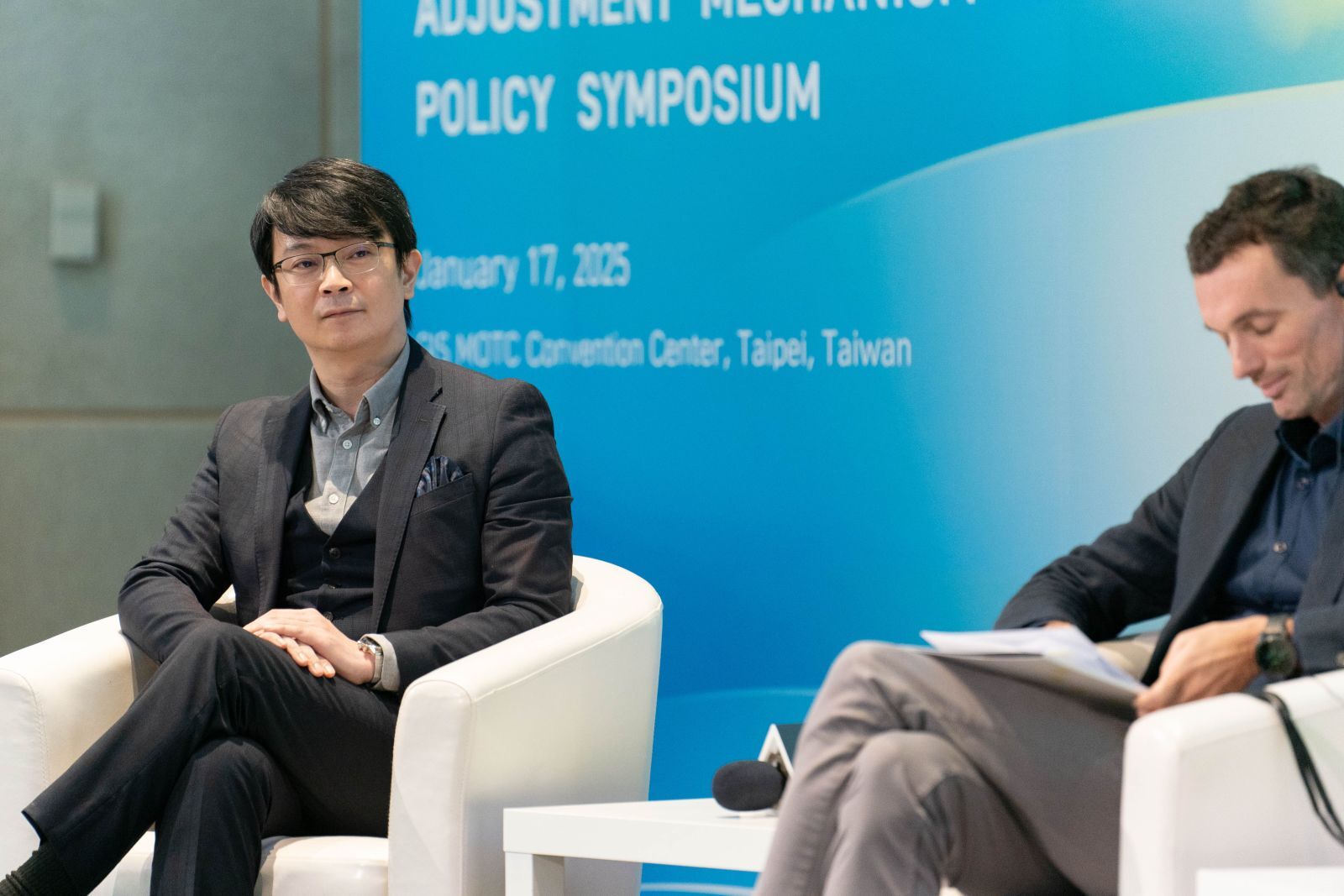
At the official representative session, EPA Climate Change Office Director Tsai Ling-yi, Deputy Chief Negotiator of the Office of Trade Negotiations of the Executive Yuan Yan Hui-xin, Director of the Trade Section of the European Economic and Trade Office Christoph Saurenbach, and Director of the Energy and Environment Research Center of the Chung-Hua Institution for Economic Research Liu Che-liang, respectively, explained the current plans and views.
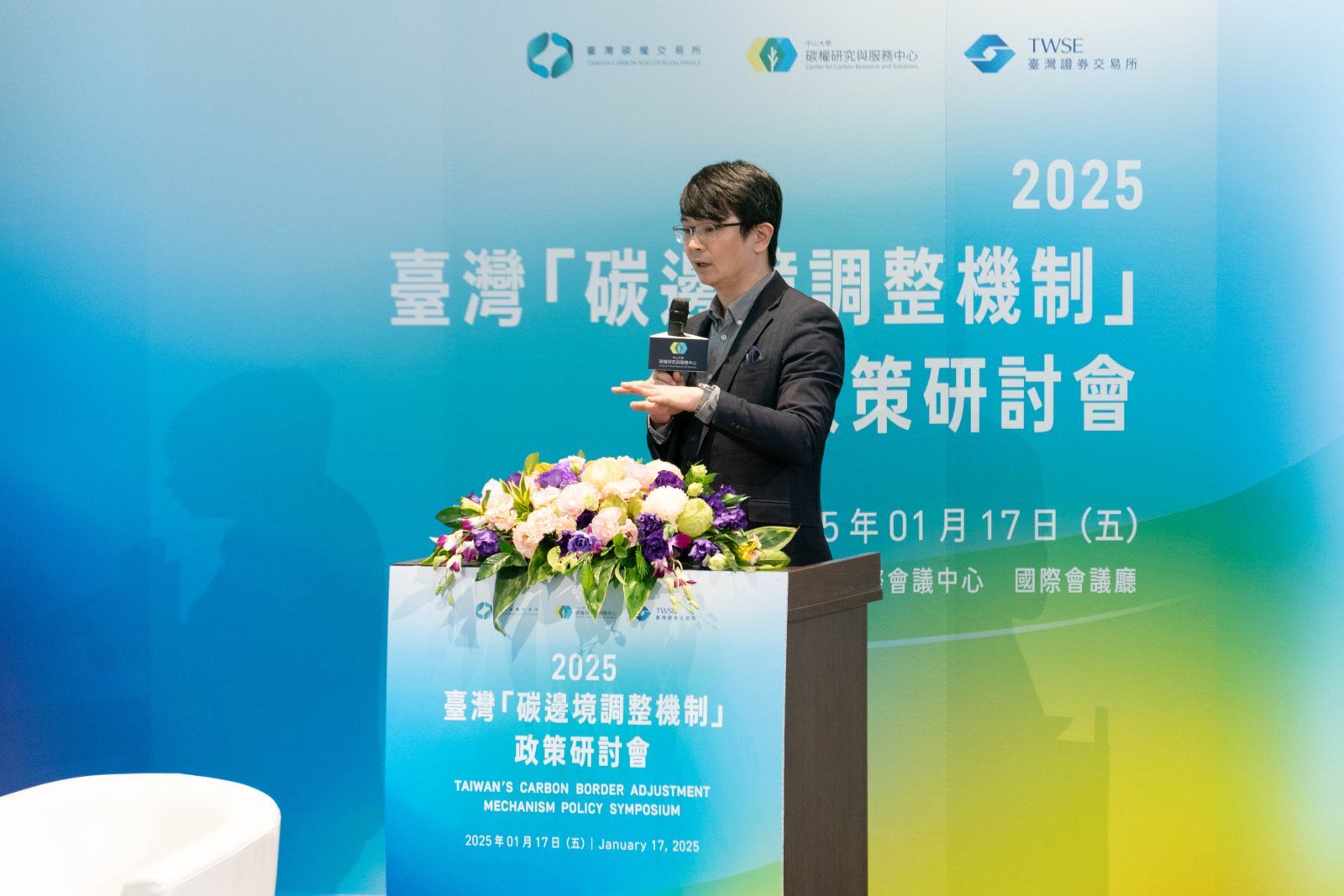
The EU's "total quantity control and emission trading" within its borders mainly controls the total emissions of facilities, granting the right to emit, and any excess emissions must be offset by purchasing certificates, which becomes a cost for companies. In contrast, Taiwan levies a carbon fee on both direct and indirect emissions of regulated entities.
Liu Zhe-liang pointed out that "the EU can only regulate if it has a list of controlled items within its borders." The first phase includes electricity, cement, hydrogen, aluminum products, steel products, and fertilizers. Taiwan's main exports to the EU are aluminum products, steel products, and fertilizers, with steel products accounting for the highest proportion, at an export value of around NT$50-60 billion.
Can Taiwan's carbon fees be deducted from the EU's CBAM?
If Taiwan and the EU impose carbon fees in different ways, can they be mutually deducted? Liu Zhe-liang explained: "As long as you have paid carbon fees in your country of production or a third country, regardless of whether it is in the form of taxes, levies, tariffs, or fees that form carbon costs, you can deduct them. In fact, Taiwan is already included."
In fact, the EU and Taiwan regulate the same entities, which are factory emission sources, with Taiwan referring to them as "enterprises" and the EU as "facilities". However, there is a significant difference in the scope of regulation between the two. Taiwan requires payment of carbon fees for both direct and indirect emissions (such as electricity consumption), while the EU primarily only holds companies responsible for direct emissions. Additionally, whether in Taiwan or the EU, the overall emissions of a factory are used for calculation, with the total emission cost of a factory allocated to each product. "But if you produce ten products, how do you allocate the entire factory's cost to the ten products? This is a practical challenge we face."
Moreover, even if the EU's carbon price is around NT$2,000 per ton, and Taiwan only charges NT$300, it does not mean that Taiwan's exported products subject to regulation need to pay an additional NT$1,700. Liu Zhe-liang explained: "CBAM actually compares the carbon cost borne by each product, rather than comparing it using the carbon price seen in the market."
How Does Taiwan Make Financial Adjustments for Carbon Costs?
Liu Zhe-liang believes: "We must first have a stable carbon pricing mechanism to form costs, as well as carbon emission data for all product levels. Only when we have both can we implement CBAM." As for whether payment is always required, "It's not necessarily the case. It depends on whether your products are regulated in the EU and how they are regulated, which will determine how much you need to pay."
Finally, Liu Zhe-liang suggested: "I think the way to handle it is to interpret it reasonably, so that we can respond correctly, and as soon as possible, transform and naturally, we will not have carbon anxiety."
How Can Companies Prepare?
Faced with the impending CBAM, companies do not need to panic. Liu Zhe-liang believes: "The strategy should be to think with a timeline, looking at the long term. Low-carbon transformation and moving towards net zero are global trends that will eventually need to be done, because our KPI is to achieve global net zero by 2050." To achieve low-carbon transformation, the four main milestones are: inventory, reduction, carbon neutrality, and net zero.
The upstream of the supply chain will not be subject to any requirements in the short term, but it is suggested to take some time to understand the rules of the game and determine whether the product will be regulated in the near future. Liu Zhe Liang said: "If you find that you are the one being regulated, hurry up and conduct an inspection, a product level inspection. Before you are subject to any regulations, you have sufficient time to transform, but that doesn't mean you don't need to transform."
If reduction needs to be implemented, Liu Zhe-liang suggests: "It must start with the cheapest options, such as energy conservation and electricity savings, and then proceed to process optimization, such as scheduling, in the second phase. Use the logic of 'doing the cheap things first' to lay out your simple strategy, and never start with the expensive options, as the expensive ones will become cheaper later. Eventually, we will be required by the supply chain to move towards net zero."