[2/21 Conference Minutes] Secretary-General Lin Jun-Cheng: Forest Carbon Sinks | Estimated Potential Scale of Domestic Voluntary Emission Reduction Quota Market
Net-zero by 2050 is a clearly defined goal for Taiwan. To achieve this, Taiwan is actively developing diverse carbon pricing policies, with a carbon fee system set to be officially implemented in 2025, accompanied by multiple mechanisms such as voluntary reduction and issuance of reduction quotas, in the hope of promoting and increasing domestic carbon reduction efforts.
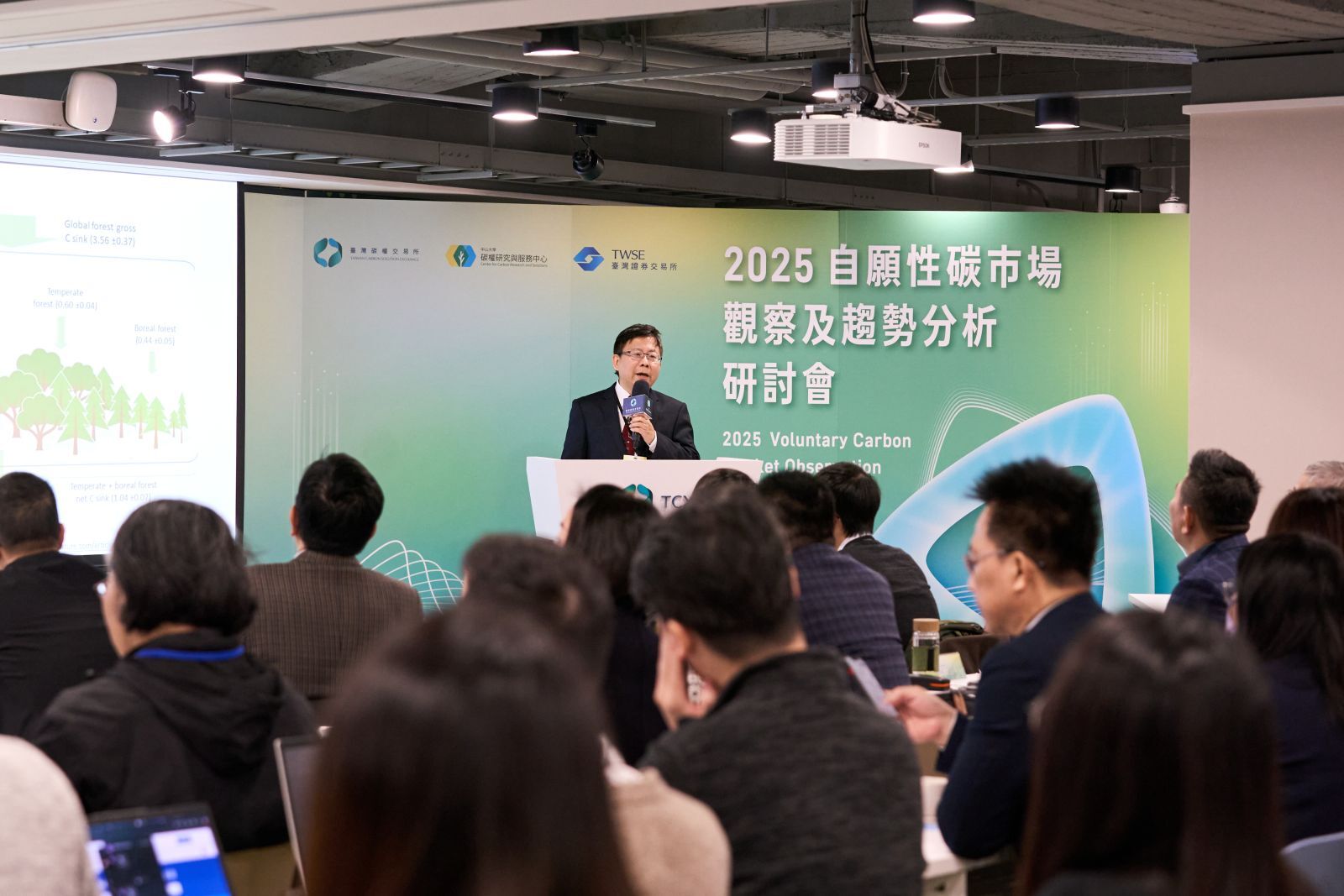
What potential does Taiwan's voluntary emission reduction quota market hold? What options are available for those looking to develop voluntary reduction projects? On February 21, 2025, the Taiwan Carbon Trading Platform, the Carbon Rights Research and Service Center of National Sun Yat-sen University, and the Taiwan Stock Exchange jointly hosted the "2025 Voluntary Carbon Market Observation and Trend Analysis Seminar". Representatives from academia, industry, and government gathered to discuss the current state and development of the voluntary carbon market.
The second session of the seminar featured presentations by Lin Jun-cheng, a researcher from the Forest Management Division of the Forestry Experiment Division of the industrial sector, Xu Ying-qi, the R&D manager of the Green Technology Division of the Central Taiwan Office of the Industrial Technology Research Institute, and Huang Zhen-wei, the general manager of the Southern Taiwan Business Division of the Xanadu Lighting Group, who shared the carbon reduction potential and carbon rights opportunities in their respective fields.
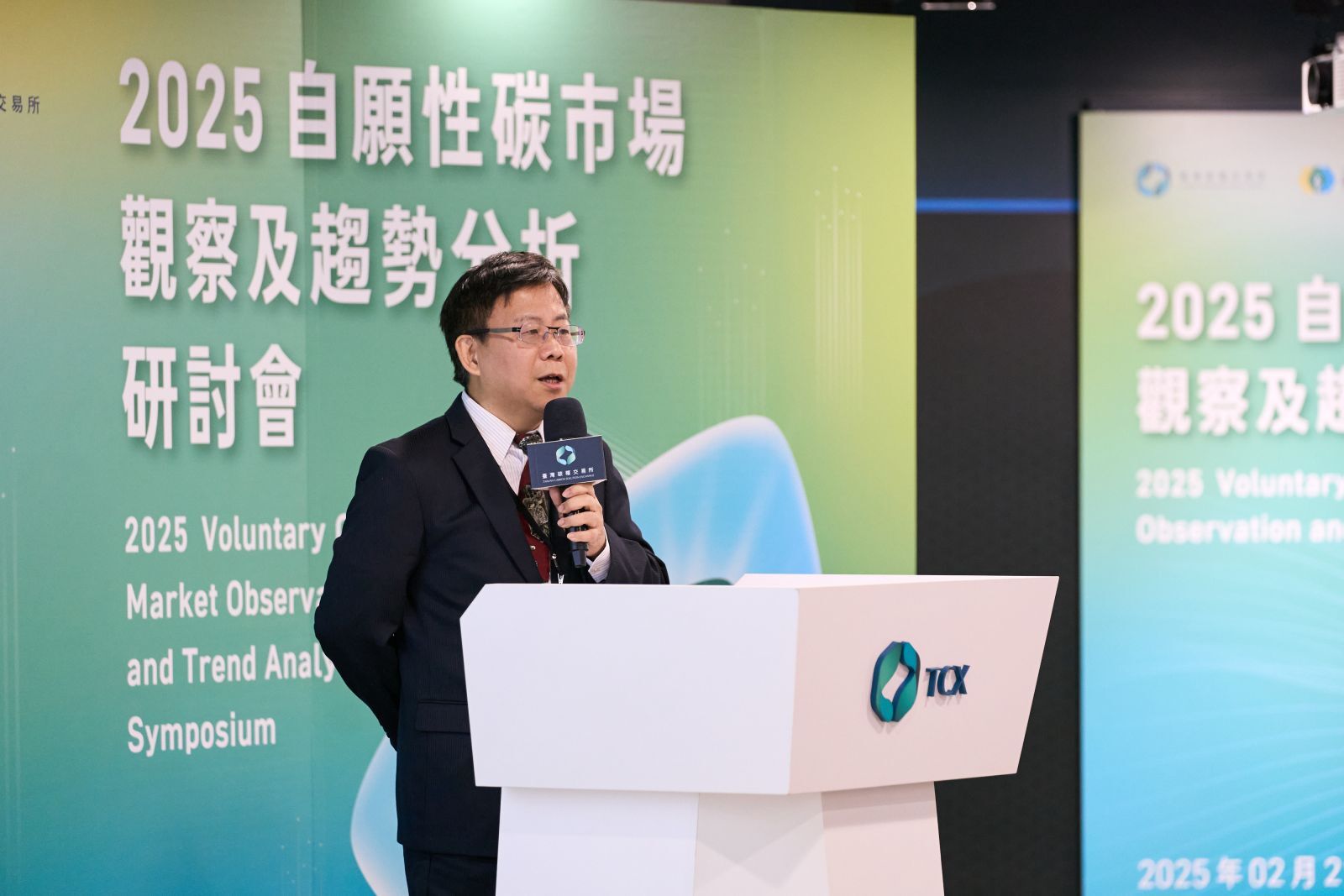
Lin Juncheng from the Forestry Research Institute shared: "Forests also experience birth, growth, illness, and death. Through reasonable management, we can increase opportunities for forest regeneration on existing land and enhance the so-called forest carbon sink." He stated that natural carbon sinks or forest carbon sinks are closely linked to nature, "Climate change affects biodiversity, and the impact of biodiversity loss will, in turn, affect climate change." Therefore, proper utilization and management of forests can help mitigate climate change, which is a complementary measure.
In Taiwan's 2050 net-zero emission pathway and strategy, there are twelve key strategies, with the ninth being the natural carbon sink issue. Carbon sinks include "natural carbon sinks" and "artificial carbon sinks". Natural carbon sinks comprise forest carbon sinks, blue carbon, and agricultural soil carbon sinks, while artificial carbon sinks involve carbon capture and storage (CCS) and other engineering technologies.
How Does Taiwan Achieve Forest Carbon Sinks?
Lin Jun-cheng frankly stated that Taiwan's forest management is excellent, but over 99% of the timber used is imported, which indirectly leads to the deforestation of other countries. This approach is worth reevaluating for its rationality. He believes that if forest management includes planning for logging, it can increase the utilization of domestic timber and expand the area of afforestation. Only when policies are coordinated can a net-zero effect be achieved.
"Assuming we always thought that protecting forests and not creating any productive plantations would lead to our country's self-sufficiency rate of domestic timber not being able to increase, and the area of afforestation not being able to expand," Lin Juncheng put forward a concept often discussed in public, which holds that "having many forests means possessing carbon rights," but in fact, this is not entirely true.
He explained: "In fact, carbon sequestration or carbon rights trading requires what is called additionality, and there must be additional performance to become a carbon rights product." For forests, if they are created from scratch or the carbon sequestration capacity is increased, they can become a reduction quota in the market. Although the increase in carbon sequestration from forest management is not as much as that from afforestation, the area of forest management can be larger than that of afforestation. Recently, Taiwan has passed a project to "strengthen forest management", "we manage the existing forests better, and in the process, some forest products (editor's note: processed products made from wood) become our fixed carbon quantity, and the harvested timber may promote the growth of retained wood, while the remaining vacant land can be renewed and reforested."
The concept of bamboo forest management is similar, where the renovation of abandoned bamboo forests can increase forest carbon sinks through reasonable management, allowing forest farmers to obtain some output and reducing the probability of forest fires. This shows that forest carbon sinks have multiple benefits, rather than just the reduction of carbon fees.
Standards Must Be Observed for Natural Carbon Sinks
To obtain reduction quotas from carbon sinks, it is necessary to meet the requirements of carbon standards. In Taiwan, this may involve referencing the Ministry of Environment's Voluntary Reduction Project. Internationally, it may be necessary to comply with standards set by independent organizations, such as the VCS (Verified Carbon Standard) or Gold Standard, which are international voluntary carbon credit certification bodies. Certain countries may also have specialized institutions, for example, if a factory is to be set up in the United States, it may be necessary to purchase American ACR (American Carbon Registry) or CAR (Climate Action Reserve) carbon credits; if a factory is to be set up in Japan, it would be necessary to purchase Japan's J-Credit (Japanese Carbon Offset Credits).
In fact, the number of natural carbon sink projects is not large, but they are still highly favored by enterprises. In Taiwan, there are four main types of natural carbon sink reduction methodologies related to forestry: afforestation and reforestation carbon sink projects, enhanced forest management carbon sink projects, bamboo forest management carbon sink projects, and low-stock forest carbon sequestration projects. Those currently under review include: improved agriculture, soil management, seagrass restoration, and mangrove conservation.
Additionally, the administrative cost of Taiwan's voluntary greenhouse gas reduction is still relatively high, because there are fewer cases, and third-party verification is required, which may result in costs exceeding the implementation of the project itself. Lin Jun-cheng pointed out that there are several aspects of domestic implementation that need attention:
-
Acquiring land and verifying whether the farmland is qualified;
-
Currently, there are only two verification bodies in Taiwan, and many people who want to provide projects are hindered by the capacity of these verification bodies;
-
The professionalism of project implementation is very important, and it is necessary to ensure that there is a project plan and a monitoring plan;
-
The growth performance during the accounting period is uncertain, and the power of nature cannot be clearly seen like replacing a boiler or lighting fixtures, so there is still risk;
-
The project review process and administrative operations may encounter more communication barriers.
Thus, it can be seen that Taiwan's voluntary carbon reduction market still needs continuous communication and cooperation from all parties to achieve mature and thriving development.